 Back
BackATP and Enzyme Function in Cellular Metabolism
Study Guide - Smart Notes
 Tailored notes based on your materials, expanded with key definitions, examples, and context.
ATP Powers Cellular Work by Coupling Exergonic and Endergonic Reactions
Types of Cellular Work
Cells perform three main types of work: chemical (driving endergonic reactions), transport (pumping substances across membranes), and mechanical (movement, such as muscle contraction or vesicle transport). To accomplish these tasks, cells use energy coupling, where the energy released from exergonic reactions is used to drive endergonic reactions. The molecule ATP (adenosine triphosphate) is central to this process.
The Structure and Hydrolysis of ATP
ATP consists of three main components: a ribose sugar, an adenine base, and three phosphate groups. The bonds between the phosphate groups, especially the terminal phosphate bond, are high-energy bonds that can be broken by hydrolysis, releasing energy for cellular work. The energy released is due to the chemical change to a state of lower free energy, not the phosphate bonds themselves.
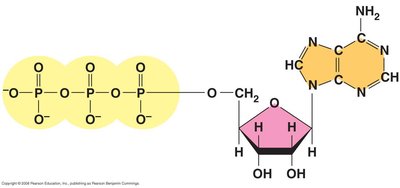
ATP Hydrolysis and Energy Coupling
Hydrolysis of ATP yields ADP (adenosine diphosphate), inorganic phosphate (Pi), and energy. This energy is used to drive endergonic reactions by phosphorylation—the transfer of a phosphate group to another molecule, making it more reactive. The recipient molecule is said to be phosphorylated.
How ATP Performs Work
ATP hydrolysis powers cellular work in three ways:
Chemical work: Driving endergonic reactions (e.g., synthesis of macromolecules).
Transport work: Phosphorylation of transport proteins to move substances across membranes.
Mechanical work: ATP binds to motor proteins and is hydrolyzed, causing conformational changes that result in movement.
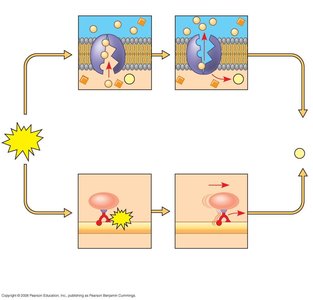
The Regeneration of ATP
ATP is a renewable resource, regenerated by the addition of a phosphate group to ADP. The energy for this phosphorylation comes from catabolic (exergonic) reactions in the cell. Thus, ATP acts as an energy shuttle, linking catabolism and cellular work.
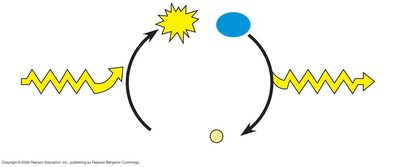
Enzymes Speed Up Metabolic Reactions by Lowering Energy Barriers
Enzymes as Catalysts
A catalyst is a chemical agent that speeds up a reaction without being consumed. Enzymes are biological catalysts, usually proteins. For example, the enzyme sucrase catalyzes the hydrolysis of sucrose into glucose and fructose.
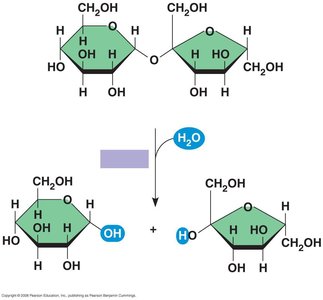
The Activation Energy Barrier
Every chemical reaction requires an initial input of energy, called activation energy (EA), to break bonds in the reactants. This energy is often supplied as heat. Enzymes lower the activation energy barrier, allowing reactions to proceed more rapidly at cellular temperatures.
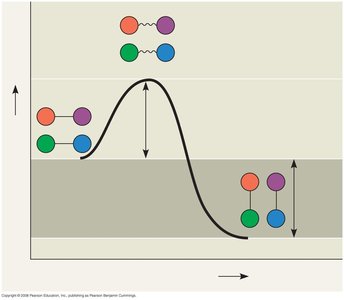
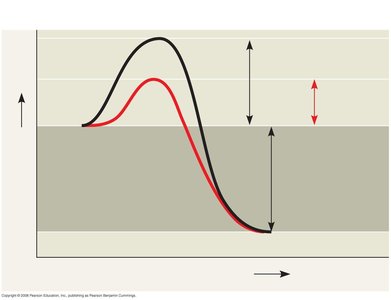
How Enzymes Lower the Activation Energy Barrier
Enzymes do not affect the overall change in free energy (ΔG) of a reaction; they only lower the activation energy, making it easier for the reaction to occur. This increases the rate of reaction without altering the final equilibrium.
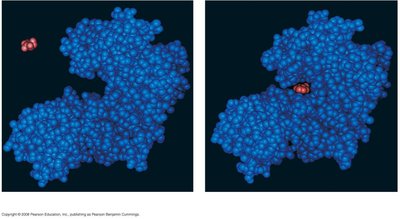
Substrate Specificity of Enzymes
The substrate is the reactant that an enzyme acts upon. The enzyme binds its substrate at the active site, forming an enzyme-substrate complex. The induced fit model describes how the enzyme changes shape to better fit the substrate, enhancing catalysis.
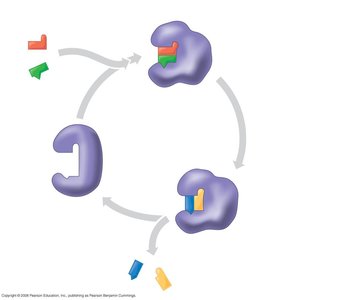
Catalysis in the Enzyme’s Active Site
Enzymes lower activation energy by:
Orienting substrates correctly
Straining substrate bonds
Providing a favorable microenvironment
Covalently bonding to the substrate
Effects of Local Conditions on Enzyme Activity
Enzyme activity is affected by environmental factors such as temperature and pH. Each enzyme has an optimal temperature and pH at which it functions best. Deviations can reduce activity or denature the enzyme.
Cofactors and Coenzymes
Cofactors are nonprotein helpers required for enzyme function. They can be inorganic (e.g., metal ions) or organic. Organic cofactors are called coenzymes, which often include vitamins.
Enzyme Inhibitors
Enzyme activity can be regulated by inhibitors:
Competitive inhibitors bind to the active site, blocking substrate binding.
Noncompetitive inhibitors bind elsewhere, changing the enzyme's shape and reducing activity.
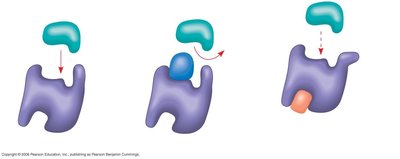
Regulation of Enzyme Activity and Metabolic Control
Allosteric Regulation of Enzymes
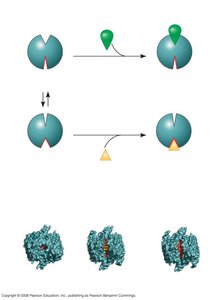
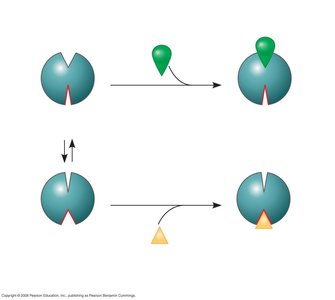
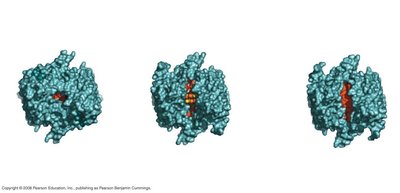
Allosteric regulation involves regulatory molecules binding to sites other than the active site, stabilizing either the active or inactive form of the enzyme. This can either inhibit or stimulate enzyme activity. Most allosterically regulated enzymes are composed of multiple subunits.
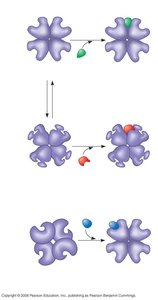
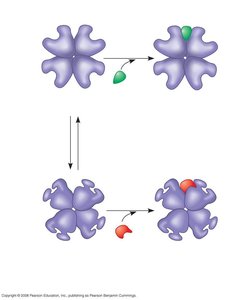
Cooperativity
Cooperativity is a form of allosteric regulation where substrate binding to one active site increases the activity at other active sites, amplifying the enzyme's response to substrates.
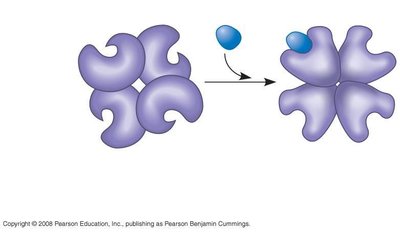
Identification of Allosteric Regulators
Allosteric regulators are important in drug development. For example, inhibition of proteolytic enzymes called caspases can help manage inappropriate inflammatory responses.
Feedback Inhibition
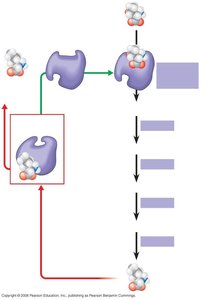
Feedback inhibition occurs when the end product of a metabolic pathway inhibits an enzyme involved earlier in the pathway. This prevents the cell from wasting resources by overproducing products.
Localization of Enzymes Within the Cell
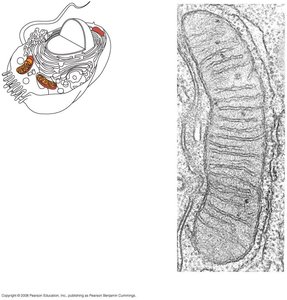
Enzymes are often localized within specific cellular structures or organelles, which helps organize and regulate metabolic pathways. For example, enzymes for cellular respiration are found in mitochondria.
Summary Table: Types of Enzyme Regulation
Type of Regulation | Mechanism | Effect | Example |
|---|---|---|---|
Competitive Inhibition | Inhibitor binds active site | Blocks substrate binding | Drugs, toxins |
Noncompetitive Inhibition | Inhibitor binds elsewhere | Changes enzyme shape | Heavy metals |
Allosteric Regulation | Regulator binds allosteric site | Stabilizes active/inactive form | ATP, ADP regulation |
Feedback Inhibition | End product inhibits pathway | Prevents overproduction | Isoleucine synthesis |
Key Equations
ATP Hydrolysis:
Free Energy Change:
Study Questions
Distinguish between catabolic and anabolic pathways; kinetic and potential energy; open and closed systems; exergonic and endergonic reactions.
Explain the second law of thermodynamics and why it is not violated by living organisms.
Describe how cells obtain energy to do cellular work.
Explain how ATP performs cellular work.
Explain why activation energy is necessary to initiate a spontaneous reaction.
Describe mechanisms by which enzymes lower activation energy.
Describe how allosteric regulators may inhibit or stimulate enzyme activity.
