 Back
BackBacteria and the Microbiome: Diversity, Function, and Human & Environmental Health
Study Guide - Smart Notes
 Tailored notes based on your materials, expanded with key definitions, examples, and context.
Bacteria and the Microbiome
Introduction to the Microbiome
The microbiome refers to the collective genomes of microorganisms—such as bacteria, viruses, fungi, and archaea—that inhabit a particular environment. These communities are found in diverse habitats, including the human body, soil, oceans, and coral reefs. The study of the microbiome is essential for understanding health, disease, and ecological processes.
Defining the Microbiome
Microorganisms are microscopic living organisms, including bacteria, archaea, fungi, and viruses.
The microbiome encompasses all the genetic material of these microorganisms in a specific environment.
Microbiomes are studied in various contexts: human health, environmental science, and biotechnology.
Omics Methods for Studying the Microbiome
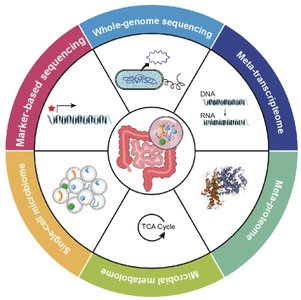
Modern research utilizes omics approaches to analyze the composition and function of microbiomes. These methods provide comprehensive data on the genetic, transcriptomic, proteomic, and metabolic profiles of microbial communities.
Whole-genome sequencing: Determines the complete DNA sequence of all organisms in a sample.
Marker-based sequencing: Targets specific genes (e.g., 16S rRNA) to identify and classify bacteria.
Meta-transcriptomics: Analyzes RNA to study gene expression in microbial communities.
Metaproteomics: Examines the protein composition to understand functional capabilities.
Metabolomics: Profiles small molecules and metabolites produced by the microbiome.
Universal Genes in Bacteria: The 16S rRNA Gene
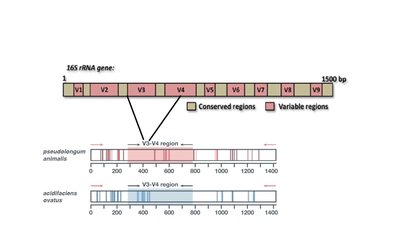
The 16S rRNA gene is a highly conserved genetic marker used to identify and classify bacteria. It contains both conserved and variable regions, allowing for phylogenetic analysis and microbial diversity studies.
Conserved regions: Enable universal primer binding for PCR amplification.
Variable regions (V1–V9): Provide species-specific sequence information.
Commonly used in marker-based sequencing to profile bacterial communities.
The Human Microbiome
The Human Microbiome Project
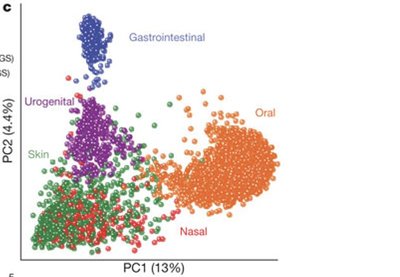
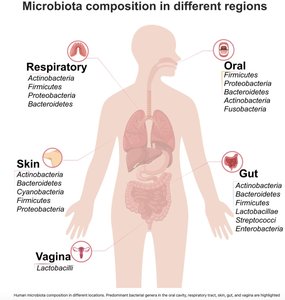
The Human Microbiome Project (HMP) was a large-scale initiative to characterize microbial communities across different body sites in healthy humans. It revealed that microbial composition varies significantly by location (e.g., skin, gut, oral cavity, urogenital tract).
Distinct microbial communities are associated with specific body sites.
Microbiome composition is influenced by factors such as diet, environment, and genetics.
Variation in Human Gut Microbiomes Across Populations
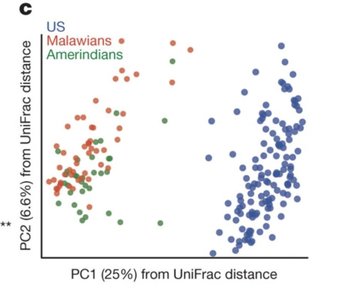
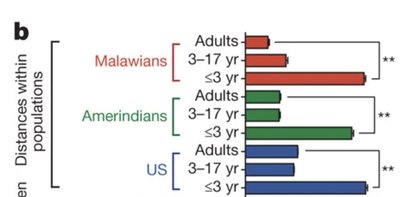
Studies comparing the gut microbiomes of individuals from different geographic regions (e.g., US, Malawi, Amerindians) have shown clear differences in microbial composition and diversity. These differences are shaped by diet, lifestyle, and environmental exposures.
Population-specific patterns in gut microbiota are observed.
Shared features of gut microbiome maturation occur during early childhood across populations.
Microbiome analysis is important for understanding human development and health disparities.
Microbiome and Human Health
The human microbiome plays a crucial role in maintaining health and preventing disease. Disruptions in the microbiome, known as dysbiosis, are linked to various conditions.
Benefits: Protection from pathogens, immune system training, nutrient synthesis.
Diseases linked to dysbiosis: Obesity, inflammatory bowel disease (IBD), diabetes, allergies, and mental health disorders.
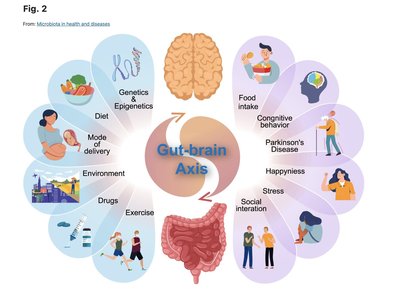
Gut-brain axis: The bidirectional communication between the gut microbiota and the brain influences mood, behavior, and neurological health.
Environmental Microbiomes
The Earth Microbiome Project
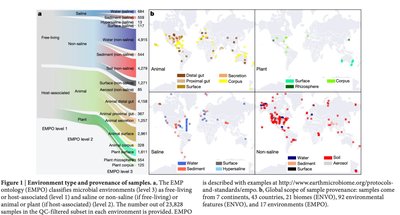
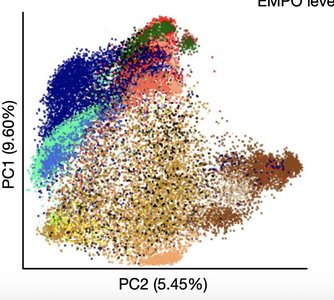
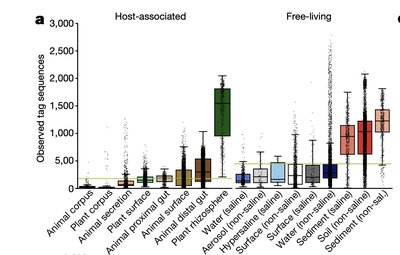
The Earth Microbiome Project (EMP) is a global initiative to catalog microbial diversity and function across diverse environments. It aims to understand the roles of microorganisms in ecosystems and their impact on planetary health.
Samples are collected from soil, water, plants, animals, and built environments.
Microbial communities are shaped by environmental factors such as temperature, pH, and nutrient availability.
The Coral Microbiome
What is a Coral?
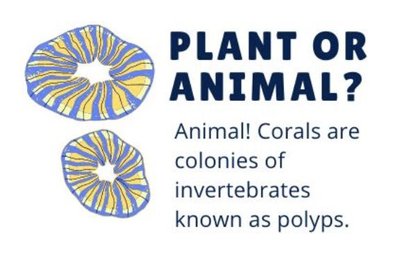
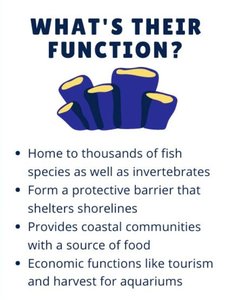
Corals are colonies of invertebrate animals known as polyps. They form the structural foundation of coral reefs, which are among the most biodiverse ecosystems on Earth.
Corals are animals, not plants.
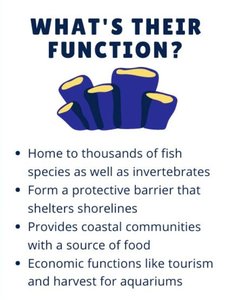
They provide habitat, food, and protection for numerous marine species.
Coral reefs have ecological and economic importance, including coastal protection and tourism.
Anatomy of a Coral Polyp
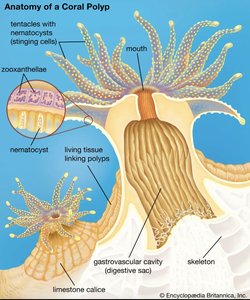
Coral polyps possess specialized structures for feeding, defense, and symbiosis with photosynthetic algae (zooxanthellae). Their anatomy supports complex interactions with microbial communities.
Tentacles with stinging cells (nematocysts) capture prey.
Gastrovascular cavity serves as a digestive sac.
Skeleton provides structural support.
Zooxanthellae are symbiotic algae that supply nutrients via photosynthesis.
The Global Coral Microbiome Project
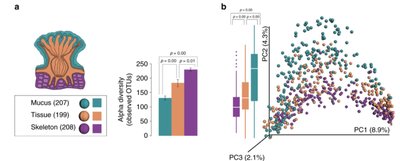
This project investigates the diversity and function of microbial communities associated with corals. Coral microbiomes vary by body site (e.g., mucus, tissue, skeleton) and play roles in coral health and disease resistance.
Distinct microbial communities are found in different coral compartments.
Microbiome composition influences coral resilience to environmental stress and disease.
Coral Disease and the DDAM Model
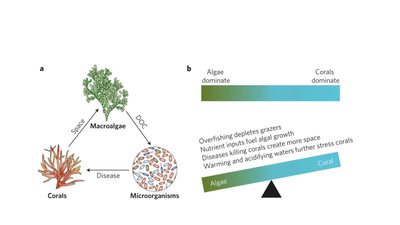
The DDAM model (Dissolved Organic Carbon, Disease, Algae, and Microbes) describes the interactions among these factors in coral reef ecosystems. Disruptions can lead to coral disease outbreaks and shifts from coral to algal dominance.
Algal overgrowth increases dissolved organic carbon, fueling microbial growth and disease.
Coral disease is exacerbated by environmental stressors such as warming and pollution.
Understanding microbial dynamics is key to coral conservation.
Summary Table: Key Microbiome Projects and Their Focus
Project | Focus | Key Findings |
|---|---|---|
Human Microbiome Project | Human body sites | Microbial diversity varies by site; links to health and disease |
Earth Microbiome Project | Global environments | Microbial communities shaped by environment; high diversity in soil/sediments |
Global Coral Microbiome Project | Coral reefs | Distinct microbiomes by coral body site; role in coral health and disease |
Additional info: The study of microbiomes integrates concepts from evolution, ecology, genetics, and physiology, making it a central topic in modern biology. Advances in sequencing technologies and bioinformatics have revolutionized our ability to characterize and manipulate microbial communities for health and environmental applications.
