 Back
BackBacteria, Archaea, and Microbiomes: Diversity, Structure, and Ecological Roles
Study Guide - Smart Notes
 Tailored notes based on your materials, expanded with key definitions, examples, and context.
Chapter 27: Diversity and Evolution of Bacteria and Archaea
Overview of Prokaryotic Diversity
Bacteria and Archaea are the most abundant and diverse organisms on Earth, collectively known as prokaryotes due to their lack of a nucleus. They occupy a wide range of habitats and display remarkable adaptability, including survival in extreme environments.
Domain Archaea and Domain Bacteria are the two main prokaryotic domains.
Prokaryotes are not a monophyletic group; eukaryotes emerged from within the Archaea, specifically the Asgard archaea.
Shared features between Archaea and Eukaryotes include histone proteins, several ribosomal proteins, and similar RNA polymerases.
Adaptations and Survival in Extreme Environments
Bacteria and Archaea have evolved to survive in a variety of extreme conditions, demonstrating their adaptability and evolutionary success.
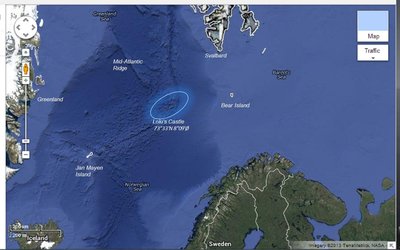
Outer Space: Unique bacterial strains (e.g., Methylobacterium) have survived and evolved on the International Space Station.
Deep Space: Bacteria have been found living on the exterior of the ISS, enduring vacuum, temperature extremes, and radiation.
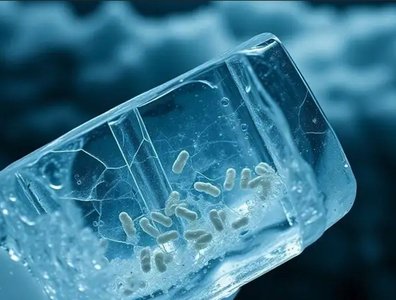
Ancient Ice Caves: Psychrobacter species have been discovered in ancient ice, showing resistance to modern antibiotics.
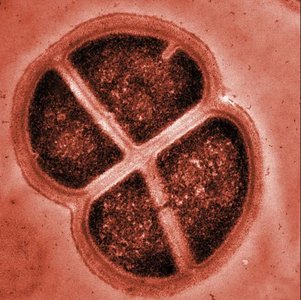
Toxic Radioactive Waste: Deinococcus radiodurans can survive radiation doses thousands of times higher than lethal human exposure.
Chapter 27: Structure and Unique Features of Archaea
Membrane Lipids and Extremophily
Archaea possess unique membrane lipids that confer resilience to extreme conditions, allowing many to thrive as extremophiles, though some also inhabit moderate environments.
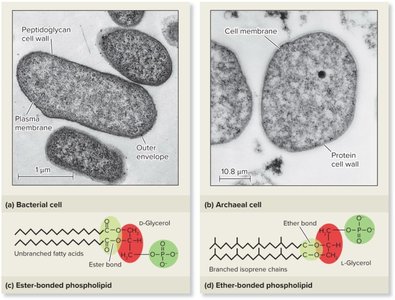
Ether-bonded lipids in Archaea are more resistant to heat and chemical stress than the ester-bonded lipids of Bacteria.
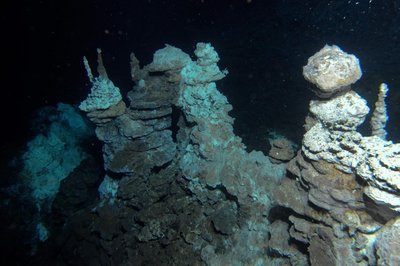
Extremophiles include halophiles (high salt), acidophiles (acidic), methanogens (high methane), and hyperthermophiles (high temperature).
Example: Methanopyrus grows at 98°C in deep-sea vents; Sulfolobus thrives in acidic hot springs at pH 3.
Chapter 27: Domain Bacteria
Bacterial Diversity and Symbiosis
Bacteria are classified into approximately 50 phyla, with many structural and metabolic features still unknown. Most bacteria prefer moderate environments, but some are extremophiles. Many bacteria form symbiotic relationships with eukaryotes.
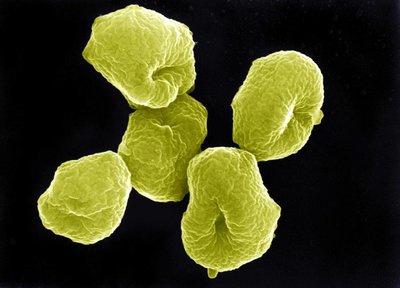
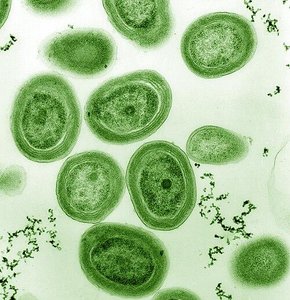
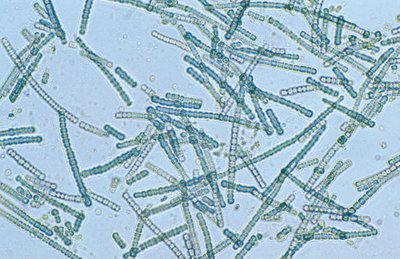
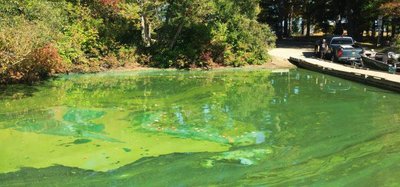
Cyanobacteria are photosynthetic bacteria that generate oxygen and are crucial for the evolution of plastids in algae and plants.
Cyanobacteria display structural diversity: unicells, colonies, and filaments.
They play essential ecological roles in carbon fixation and nitrogen fixation, but can also cause harmful algal blooms (HABs).
Proteobacteria Subgroups
Proteobacteria are a diverse group with various forms and metabolic capabilities. They include ancestors of mitochondria and important genera such as Rhizobium, Agrobacterium, Nitrosomonas, and pathogens like Neisseria gonorrhoeae, Vibrio cholerae, Salmonella, and Escherichia coli.
Horizontal Gene Transfer
Horizontal gene transfer (HGT) is the movement of genes between species, increasing genetic diversity and enabling rapid adaptation. It is common among prokaryotes and has played a significant role in their evolution.
Contrasts with vertical gene transfer (parent to offspring).
Example: At least 17% of E. coli genes originated from other bacteria.
About 80% of prokaryotic genes have been involved in HGT at some point.
Chapter 27: Structure and Movement
Cell Size and Growth
Bacteria and Archaea are typically a few micrometers in diameter, much smaller than most eukaryotic cells. Their small size allows for rapid growth and division, but limits the amount of material each cell can contain.
Cellular Structure
Prokaryotic cells are simpler than eukaryotic cells but possess specialized adaptations.
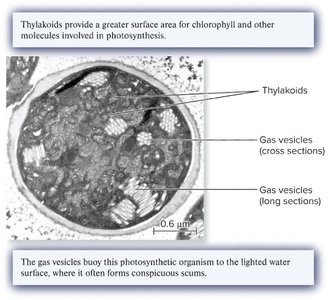
Thylakoids: Plasma membrane ingrowths that increase surface area for photosynthesis.
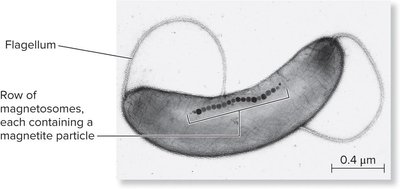
Magnetosomes: Magnetite crystals that help bacteria orient in low-oxygen environments.
Cell Shape
Bacteria and Archaea exhibit five major shapes:
Cocci: Spheres
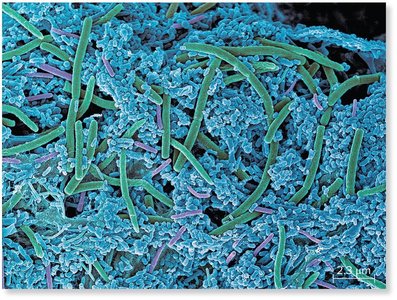
Bacilli: Rods
Vibrios: Comma-shaped
Spirochaetes: Spiral-shaped, flexible
Spirilla: Spiral-shaped, rigid
Slimy Mucilage (Glycocalyx)
Many prokaryotes secrete a protective layer of polysaccharides and proteins called mucilage or glycocalyx. This structure helps evade host defenses, form biofilms, and enables quorum sensing for collective behavior.
Cell Wall Structure and Gram Staining
Most prokaryotes have a rigid cell wall outside the plasma membrane, which maintains cell shape, protects against attack, and prevents lysis in hypotonic solutions.
Bacterial cell walls: Usually contain peptidoglycan.
Archaeal cell walls: Often protein-based, lacking peptidoglycan.
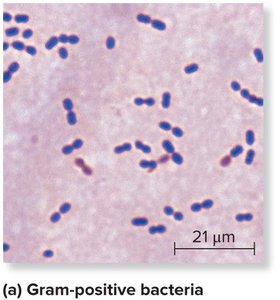
Gram staining differentiates bacteria based on cell wall structure:
Gram-positive: Thick peptidoglycan layer, stains purple, vulnerable to penicillin.
Gram-negative: Thin peptidoglycan, outer lipopolysaccharide envelope, stains pink, more resistant to antibiotics.
Motility
Prokaryotes move to favorable conditions using various mechanisms:
Flagella: Used for swimming; structurally different from eukaryotic flagella and function like an outboard motor. Species differ in number and location of flagella.
Pili: Threadlike structures for twitching or gliding across surfaces; also involved in reproduction and disease processes.
Chapter 27: Reproduction and Growth
Binary Fission
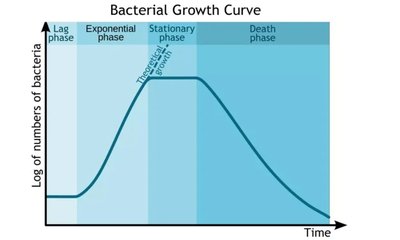
Bacteria and Archaea reproduce asexually by binary fission, where a single cell splits into two identical daughter cells. This process underlies methods for detecting and counting bacteria, such as colony formation on agar plates or using fluorescent dyes to bind DNA.
Chapter 27: Nutrition and Metabolism
Autotrophs
Autotrophs produce their own organic compounds from inorganic sources.
Photoautotrophs: Use light energy to synthesize organic compounds from CO2 or H2S.
Chemoautotrophs: Use energy from chemical modification of inorganic compounds.
Heterotrophs
Heterotrophs require at least one organic compound from the environment.
Photoheterotrophs: Use light for ATP production but require organic compounds for carbon.
Chemoheterotrophs: Obtain both energy and carbon from organic molecules.
Classification by Oxygen Response
Obligate aerobes: Require oxygen.
Obligate anaerobes: Cannot tolerate oxygen.
Aerotolerant anaerobes: Do not use oxygen but are not harmed by it.
Facultative aerobes: Can use oxygen but can also grow without it.
Chapter 27: Ecological and Symbiotic Roles
Ecological Roles
Bacteria and Archaea play vital roles in global biogeochemical cycles, especially the carbon cycle.
Producers: Synthesize organic compounds used by other organisms.
Decomposers (saprobes): Break down dead organisms, releasing minerals for reuse.
Methanogens: Produce methane.
Methanotrophs: Consume methane.
Symbiotic Relationships
Symbiosis refers to close associations between different species. Types include:
Mutualism: Both partners benefit (e.g., Alivibrio fischeri bioluminescent bacteria in squid).
Commensalism: One benefits, the other is unaffected.
Parasitism: One benefits at the expense of the other.
Example: Alivibrio fischeri forms a mutualistic partnership with squid, providing bioluminescence.
Additional info: The notes above integrate and expand upon the provided lecture content, ensuring coverage of all major topics relevant to Chapter 27: Bacteria and Archaea, as outlined in a typical college biology curriculum.
