 Back
BackBIOL 1406 Course Syllabus and Study Guide: Foundations of Biology
Study Guide - Smart Notes
 Tailored notes based on your materials, expanded with key definitions, examples, and context.
Course Overview
Introduction to Biology
This course, BIOL 1406, covers the fundamental principles of living organisms, including their physical and chemical properties, organization, function, evolutionary adaptation, and classification. It also addresses concepts of reproduction, genetics, and scientific reasoning. The course is designed for biology majors and is transferable to most senior institutions and vocational schools.
Prerequisites: TSI Compliant in all areas; recommended completion of Intermediate Algebra (MATH 0350) or equivalent skills.
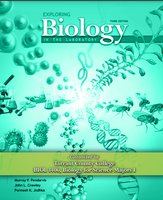
Required Text: Exploring Biology in the Laboratory, 3rd edition (Customized for Tarrant County College Northwest Campus BIOL 1406)
Course Structure and Evaluation
Lecture and Lab Activities
The course consists of both lecture and laboratory components, with a total of 6 contact hours per week. Students are expected to spend significant time outside of class preparing for lectures and labs.
Lecture Activities: Unit exams, quizzes, Mastering Biology homework, and a cumulative final exam.
Lab Activities: Unit exams, quizzes, lab reports, and practical specimen-based questions.
Extra Credit: Dynamic Study Modules and case studies available for additional points.
Point Distribution and Grading Scale
Grades are based on a combination of lecture and lab activities, with the following distribution:
Activity | Points | Percentage |
|---|---|---|
Lecture Unit Exams (4 x 100 pt) | 400 | 45% |
Final Cumulative Exam | 120 | 12% |
Lecture Quizzes (5 x 20 pt; drop 1 lowest) | 90 | 4% |
Mastering Biology Homework (12 x 9 pt; drop 2 lowest) | 90 | 9% |
Total Lecture | 700 | 70% |
Lab Unit Exams (3 x 70 pt) | 210 | 21% |
Lab Quizzes (8 x 10 pt; drop 1 lowest) | 70 | 7% |
Lab Report (1 x 20 pt) | 20 | 2% |
Total Lab | 300 | 30% |
Grading Scale:
Grade | Percentage | Points |
|---|---|---|
A | 100 – 89.5% | 1000 – 895 |
B | 89.4 – 79.5% | 894 – 795 |
C | 79.4 – 69.5% | 794 – 695 |
D | 69.4 – 59.5% | 694 – 595 |
F | < 59.4% | < 594 |
Course Goals and Learning Outcomes
Core Topics Covered
Upon successful completion, students will demonstrate understanding in the following areas:
Characteristics of Life: Structural levels, emergent properties, scientific method, and evidence of evolution.
Chemical Concepts: Elements, subatomic particles, chemical bonds, acids, bases, buffers, and macromolecules.
Energy Concepts: Thermodynamics, entropy, enzyme function and regulation, feedback mechanisms, anabolism vs. catabolism, endergonic vs. exergonic reactions.
Cell Structure and Function: Cell theory, prokaryotes vs. eukaryotes, organelles, plasma membrane, cell walls, intracellular junctions, passive and active transport.
Cellular Respiration: Summary equation, sites, steps (glycolysis, Krebs cycle, electron transport), fermentation, phosphorylation, chemiosmosis.
Photosynthesis: Summary equation, light characteristics, cyclic/noncyclic photosynthesis, autotrophs vs. heterotrophs, oxidation/reduction, photosystems.
DNA Structure and Protein Synthesis: Discoverers, mutagenesis, transcription/translation, mRNA processing, base-pairing, DNA replication, genetic code, gene hypotheses.
Cell Cycle and Genetics: Eukaryotic cell cycle, mitosis, meiosis, binary fission, viral replication, cell and virus structure.
Principles of Inheritance: Mendel’s laws, Punnett squares, probability, trait types, monohybrid/dihybrid crosses, phenotype vs. genotype.
Global Issues: Importance of global cooperation and solutions to biological challenges.
Course Calendar and Topics
Weekly Schedule
The course follows a structured weekly schedule, covering the following chapters and topics:
Ch. 1: Evolution, Themes of Biology, Scientific Inquiry
Ch. 2: Chemical Context of Life
Ch. 3: Water and Life
Ch. 4: Carbon and Molecular Diversity
Ch. 5: Structure & Function of Large Molecules
Ch. 6: Tour of the Cell
Ch. 7: Membrane Structure & Function
Ch. 8: Introduction to Metabolism
Ch. 9: Cellular Respiration & Fermentation
Ch. 10: Photosynthesis
Ch. 11-19: Cell Cycle, Meiosis, Mendelian Genetics, Chromosomal Inheritance, Molecular Basis of Inheritance, Gene Expression, Viruses
Lab topics are closely aligned with lecture content, including safety, microscopy, cell structure, diffusion/osmosis, enzymes, cellular respiration, photosynthesis, cell division, meiosis, PCR, and transformation experiments.
Policies and Student Responsibilities
Attendance and Participation
Regular and punctual attendance is mandatory.
Students are responsible for all material and announcements.
Absences may result in being dropped from the course at the instructor’s discretion.
Academic Honesty
Cheating, plagiarism, and self-plagiarism are strictly prohibited.
Penalties include failing grades, written reports, and possible dismissal.
Technical and Device Support
Students needing devices should request them from the campus library.
Technical support is available for course platforms and assignments.
Accessibility and Support Services
Students with documented disabilities should contact Student Accessibility Resources (SAR) for accommodations.
Academic assistance is available through Supplemental Instruction and free tutoring.
Summary
This syllabus provides a comprehensive overview of the BIOL 1406 course, including its structure, evaluation methods, learning outcomes, weekly schedule, and policies. Students are expected to engage actively in both lecture and lab components, adhere to academic integrity standards, and utilize available resources for success.
