 Back
BackBiology: The Scientific Study of Life – Chapter 1 Study Notes
Study Guide - Smart Notes
 Tailored notes based on your materials, expanded with key definitions, examples, and context.
Biology: The Scientific Study of Life
Introduction to Biology
Biology is the scientific study of life, encompassing the vast diversity of living organisms and the processes that sustain them. Life is recognized by the unique characteristics and behaviors exhibited by living things.
Definition: Biology is the study of living organisms, their structure, function, growth, origin, evolution, and distribution.
Key Question: What is life? Life is defined by a set of properties common to all living things.
Seven Properties of Life
All living organisms share seven fundamental properties that distinguish them from non-living matter.
Order: Life is characterized by highly ordered structures and organization.

Reproduction: Organisms reproduce their own kind, ensuring the continuation of their species.
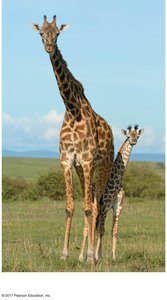
Growth and Development: Inherited genetic information controls the growth and development of organisms.
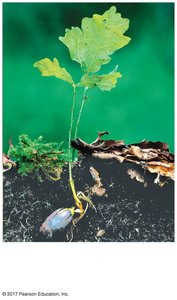
Energy Processing: All organisms take in energy and use it to power their activities, such as metabolism and movement.
Response to Environment: Organisms respond to environmental stimuli, adapting their behavior or physiology as needed.
Regulation: Organisms have regulatory mechanisms that maintain an internal environment, such as homeostasis.

Evolutionary Adaptation: Adaptations evolve over many generations as individuals with traits best suited to their environment have greater reproductive success.
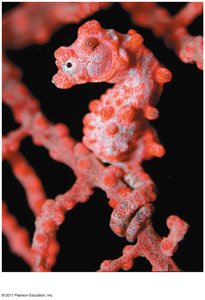
Additional info: All organisms are made of cells and possess DNA as their genetic material.
Diversity and Classification of Life
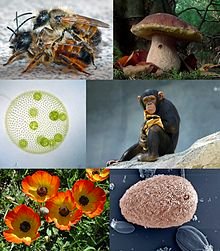
Diversity is a hallmark of life, with millions of species identified and classified. Scientists organize this diversity using taxonomy, which groups organisms into hierarchical categories.
Species: The basic unit of classification; each species is given a two-part scientific name (genus and species).
Domains: The broadest classification groups. There are three domains of life:
Bacteria: Cells without a nucleus.
Archaea: Bacteria-like organisms, also without a nucleus.
Eukarya: Organisms with cells containing a nucleus.
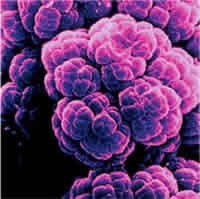
Kingdoms in Domain Eukarya
Kingdom Plantae: Multicellular plants.
Kingdom Animalia: Multicellular animals.
Kingdom Fungi: Multicellular and unicellular fungi.
Protists: Multiple kingdoms of single-celled eukaryotes.
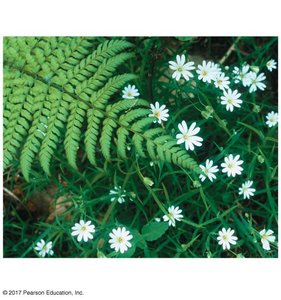
Life’s Hierarchy of Organization
Biologists study life across a broad range of scales, from molecules to the biosphere. This hierarchy helps organize the complexity of living systems.
Levels of Organization:
Biosphere
Ecosystem
Community
Population
Organism
Organs and Organ Systems
Tissue
Cell
Organelle
Molecule
Emergent Properties: At each level, new properties arise that were not present at the previous level. The cell is the lowest level of life, possessing all seven properties.
Types of Cells
Prokaryotic Cells: Lack a nucleus; DNA is not enclosed.
Eukaryotic Cells: Have a nucleus; DNA is enclosed within a membrane.
Five Unifying Themes in Biology
Biology is unified by five major concepts that connect all living systems.
Evolution: The core theme explaining the unity and diversity of life.
Information: Life depends on the flow of genetic information (DNA).
Structure and Function: Biological structures are closely related to their functions.
Energy and Matter: Life depends on the transfer and transformation of energy and matter.
Interactions: Life depends on interactions within and between systems.
Evolution: The Core Theme of Biology
Evolution explains both the unity and diversity of life. Charles Darwin introduced the theory of evolution by natural selection in 1859.
Evolution: The change in characteristics of a species over several generations.
Natural Selection: The mechanism by which advantageous traits become more common in a population.
Darwin’s Observations and Inferences
Individuals in a population vary in heritable traits.
Species produce more offspring than the environment can support, leading to competition.
Individuals with traits best suited to their environment are more likely to survive and reproduce.
Over time, advantageous traits become more common, potentially leading to new species.
Evolutionary Relationships
Evolutionary relationships are often illustrated with tree-like diagrams showing ancestors and descendants.
Learning Outcomes
Describe seven properties common to all life.
Name the three domains of life.
Name the levels of biological organization from molecules to the biosphere.
Understand the concept of emergent properties.
Describe the process of natural selection.
