 Back
BackBryophytes and Seedless Vascular Plants: Ancestry, Diversity, and Adaptations
Study Guide - Smart Notes
 Tailored notes based on your materials, expanded with key definitions, examples, and context.
Kingdom Plantae: Ancestry and Diversity
Overview of Plantae
The Kingdom Plantae consists of multicellular, eukaryotic organisms whose cells are surrounded by a cell wall containing cellulose. Plant cells contain plastids, such as chloroplasts, and most plants live on land. Plants evolved from green algal ancestors that lived in aquatic habitats, but are distinguished from their modern algal relatives by adaptations to terrestrial life.
Cellulose cell wall: Provides structural support.
Plastids: Organelles such as chloroplasts for photosynthesis.
Terrestrial adaptations: Enable survival and reproduction on land.
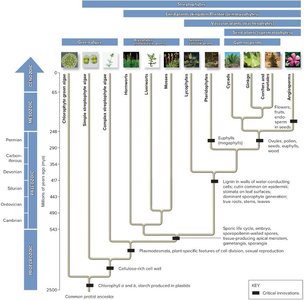
Streptophyte Green Algae and the Origin of Land Plants
Streptophyte Algae
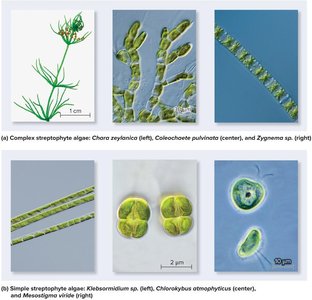
Modern plants and their closest green algal relatives are collectively known as streptophytes. Plantae originated from a photosynthetic protist ancestor classified among the streptophyte algae. Complex streptophyte algae share several derived traits with land plants:
Distinctive cytokinesis
Plasmodesmata: Cytoplasmic connections between cells
Sexual reproduction: Involving large eggs and smaller sperm
Adaptations for Terrestrial Life
Key Innovations in Land Plants
Land plants are distinguished from their algal relatives by several features that represent early adaptations to terrestrial habitats:
Three-dimensional tissues: Allow for increased complexity and specialization.
Apical meristems: Regions of cell division at growing tips.
Specialized tissues and organs: For various functions such as photosynthesis and support.
Increased ability to avoid water loss: Essential for survival on land.
Alternation of Generations
Life Cycle Adaptations
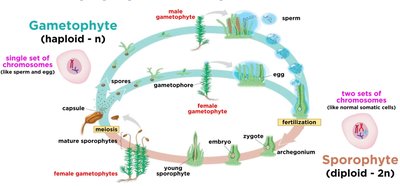
One of the most important adaptations in land plants is the alternation of generations, where two types of multicellular bodies alternate in time:
Sporophyte (2n): Diploid generation that produces spores by meiosis.
Gametophyte (n): Haploid generation that produces gametes by mitosis.
Embryo protection: The sporophyte embryo is nourished and protected by maternal tissues.
Tough-walled spores: Enable survival and dispersal in dry air.
Major Plant Phyla
Classification of Plant Groups
Land plants are classified into several major phyla, including both non-vascular and vascular groups:
Liverworts – Hepatophyta
Mosses – Bryophyta
Hornworts – Anthocerophyta
Lycophytes – Lycophyta
Pteridophytes – Pteridophyta (ferns and relatives)
Ginkgos – Ginkgophyta
Conifers – Coniferophyta
Flowering plants (angiosperms) – Anthophyta
Bryophytes: Non-Vascular Plants
General Features
Bryophytes include liverworts, hornworts, and mosses. They are small, non-vascular plants that are most common and diverse in moist habitats. Bryophytes lack true leaves and stems; their body is called a thallus. They do not have vascular tissue for transporting water and nutrients.
Monophyletic phyla: Each group forms a distinct evolutionary lineage.
Moist habitat preference: Due to lack of vascular tissue and reliance on water for reproduction.
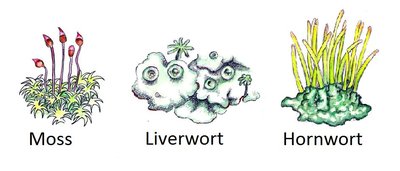
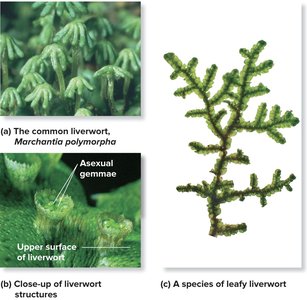
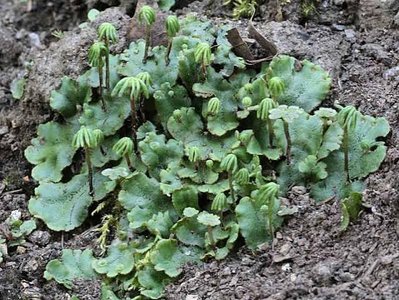
Liverworts (Hepatophyta)
Liverworts are small, simple bryophytes often found in moist environments. They reproduce both sexually and asexually (via gemmae).
Thalloid or leafy forms
Asexual reproduction: Gemmae cups produce clones.
Mosses (Bryophyta)
Mosses are ecologically versatile, occupying habitats from deserts to arctic tundra. They are important for soil stabilization and early ecological succession.
Desiccation tolerance: Survive drying out and rehydrate when water is available.
Succession: Colonize disturbed or rocky substrates.
Hornworts (Anthocerophyta)
Hornworts are bryophytes that form symbiotic relationships with Nostoc cyanobacteria, enabling nitrogen fixation in nutrient-poor soils. They require moist habitats for reproduction due to flagellated sperm.
Nitrogen fixation: Symbiosis with cyanobacteria.
Moisture dependence: For sexual reproduction.
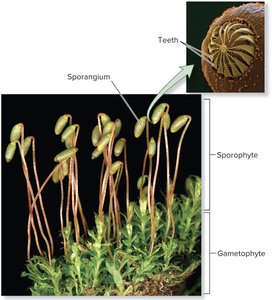
Bryophyte Reproduction
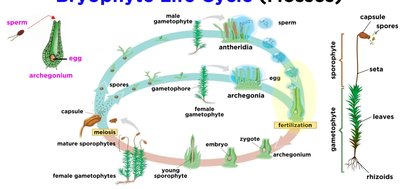
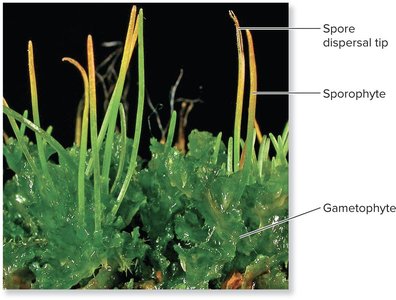
In bryophytes, the gametophyte is the dominant generation, while the sporophyte is dependent on the gametophyte and is typically small and short-lived.
Gametophyte dominance: Main photosynthetic and persistent stage.
Sporophyte: Grows from the gametophyte and produces spores.
Seedless Vascular Plants
Lycophytes and Pteridophytes
Seedless vascular plants include lycophytes and pteridophytes (ferns and their relatives). These plants possess vascular tissues (xylem and phloem) for transporting water and nutrients, allowing them to grow larger and inhabit a wider range of environments than bryophytes.
Lycophytes: Evolved before ferns; now represented by about 1,000 small species.
Pteridophytes: Include ferns, horsetails, and whisk ferns; over 12,000 species.
Structure and Adaptations
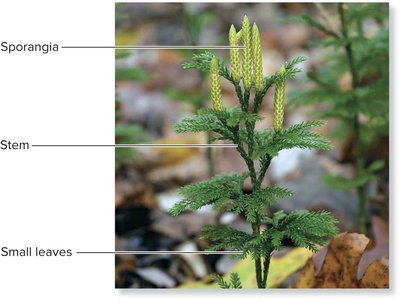
Seedless vascular plants have specialized organs:
Stems: Produce leaves and sporangia; contain vascular tissues.
Roots: Specialized for water and mineral uptake.
Leaves: Main site of photosynthesis.
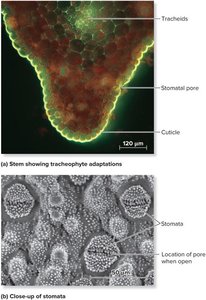
Adaptations for internal water conservation include a waxy cuticle, cutin to block pathogens, and stomata for regulated gas exchange.
Evolutionary Success of Ferns
Ferns first evolved roughly 360 million years ago and became dominant during the "Age of the Ferns" due to their efficient vascular systems and ability to thrive in diverse environments.
Group | Vascular Tissue | Dominant Generation | Habitat |
|---|---|---|---|
Bryophytes | No | Gametophyte | Moist |
Lycophytes & Pteridophytes | Yes | Sporophyte | Varied |
Example: Ferns, horsetails, and club mosses are examples of seedless vascular plants that played a major role in Earth's prehistoric landscapes.
*Additional info: Table inferred to summarize key differences between bryophytes and seedless vascular plants for clarity.*
