 Back
BackCellular Respiration and Fermentation: Pathways of Energy Production
Study Guide - Smart Notes
 Tailored notes based on your materials, expanded with key definitions, examples, and context.
Cellular Respiration & Fermentation
Overview: Life is Work
Living cells require energy to perform work, which they obtain from external sources. Animals acquire energy by consuming other animals or feeding on photosynthetic organisms such as plants and algae. The process of extracting energy from organic molecules is central to cellular metabolism.
Catabolic Pathways Yield Energy by Oxidizing Organic Fuel
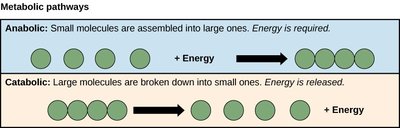
Catabolic pathways break down energy-rich organic molecules into simpler molecules, releasing energy that is used to generate ATP for cellular work. The degradation of molecules such as glucose is a key example. Energy released from catabolic processes is partly used for ATP synthesis and partly lost as heat.
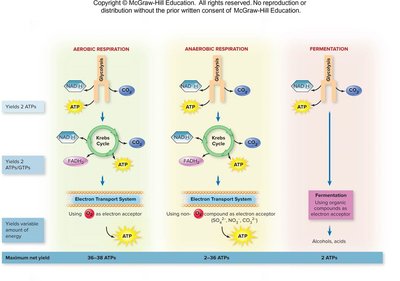
Aerobic respiration: Complete catabolism of organic molecules, consumes O2, generates CO2, H2O, and ATP.
Anaerobic respiration: Partial catabolism, uses molecules other than O2 as electron acceptors, generates CO2 and ATP.
Fermentation: Partial catabolism without O2, generates little ATP and various waste products.
Redox Reactions in Cellular Respiration
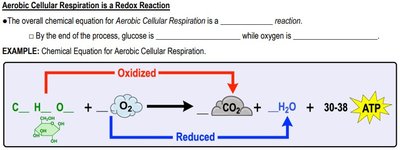
Cellular respiration involves oxidation-reduction (redox) reactions, where electrons are transferred between molecules. Oxidation is the loss of electrons, resulting in a less energized molecule, while reduction is the gain of electrons, resulting in a more energized molecule. The energy released during these reactions is used to synthesize ATP.
Electron Carriers: NAD+ and FAD
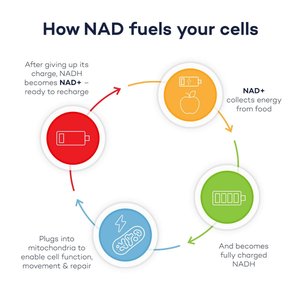
Electrons from organic compounds are transferred to electron carriers such as NAD+ and FAD. These carriers shuttle electrons between reactions, storing energy in their reduced forms (NADH and FADH2), which is later used to generate ATP.
NAD+: Electron acceptor, functions as an oxidizing agent.
NADH: Reduced form, stores potential energy for ATP synthesis.
Stages of Cellular Respiration
Harvesting Energy from Glucose
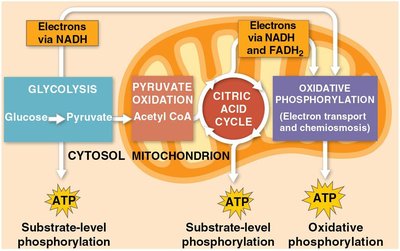
Cellular respiration occurs in three main stages:
Glycolysis: Breaks down glucose into two molecules of pyruvate in the cytosol.
Pyruvate Oxidation and Citric Acid Cycle: Completes the breakdown of glucose in the mitochondria (eukaryotes) or cytoplasmic membrane (prokaryotes).
Oxidative Phosphorylation: ATP production via the electron transport chain and chemiosmosis.
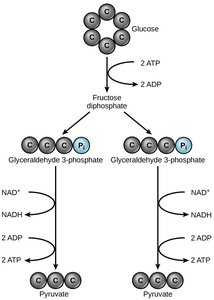
Glycolysis: Harvesting Chemical Energy by Oxidizing Glucose to Pyruvate
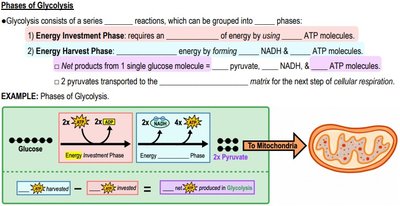
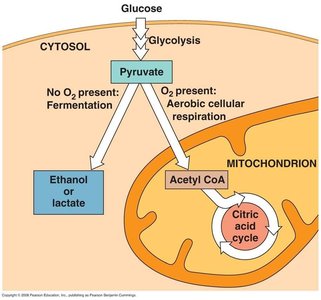
Glycolysis is the first step in both aerobic respiration and fermentation. It splits a 6-carbon glucose molecule into two 3-carbon pyruvate molecules, does not require oxygen, and occurs in the cytoplasm.
Input: 1 glucose, 2 ATP
Output: 4 ATP (gross), 2 ATP (net), 2 NADH, 2 pyruvate, H2O
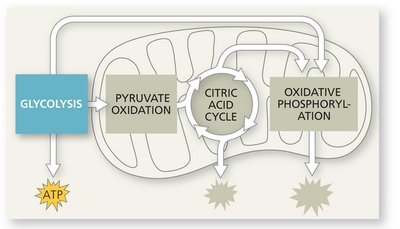
After Pyruvate is Oxidized: The Citric Acid Cycle
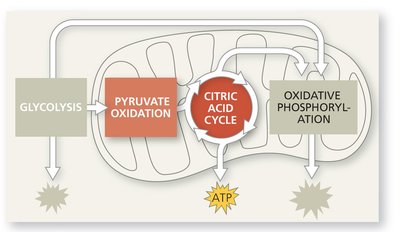
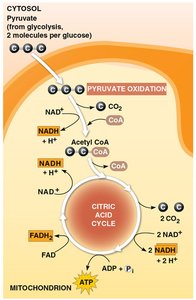
If oxygen is present, pyruvate enters the mitochondrion and is converted to acetyl CoA, linking glycolysis to the citric acid cycle. The citric acid cycle completes the oxidation of glucose, generating CO2, ATP, NADH, and FADH2.
Input: 2 acetyl CoA
Output: 2 ATP, CO2, NADH, FADH2
Oxidative Phosphorylation: Chemiosmosis and Electron Transport Chain
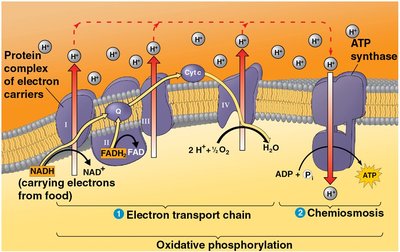
Most ATP is produced during oxidative phosphorylation, which involves the electron transport chain and chemiosmosis. NADH and FADH2 donate electrons to the chain, powering ATP synthesis.
Electron Transport Chain: Transfers electrons from NADH and FADH2 to O2, pumping H+ to create a proton gradient.
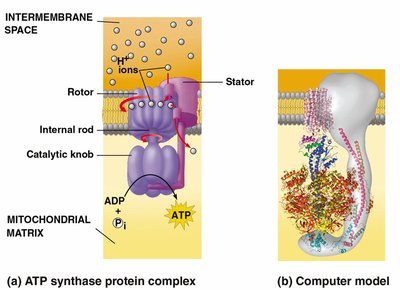
Chemiosmosis: ATP synthase uses the proton gradient to phosphorylate ADP, generating ATP.
Fermentation & Anaerobic Respiration: ATP Production Without Oxygen
Anaerobic Respiration
Anaerobic respiration uses an electron transport chain with molecules other than O2 as the final electron acceptor (e.g., sulfur or nitrogen compounds). It is conducted by certain bacteria, archaea, and yeast, and yields variable amounts of ATP.
Fermentation
Fermentation does not require O2 or an electron transport chain. It allows continuous ATP production by substrate-level phosphorylation during glycolysis. NAD+ is regenerated by transferring electrons from NADH to pyruvate or its derivatives.
Alcohol fermentation: Pyruvate is converted to ethanol and CO2, regenerating NAD+.
Lactic acid fermentation: Pyruvate is reduced to lactic acid, regenerating NAD+ without producing CO2.
Comparing Fermentation, Anaerobic, and Aerobic Respiration
All three processes use glycolysis to oxidize glucose to pyruvate.
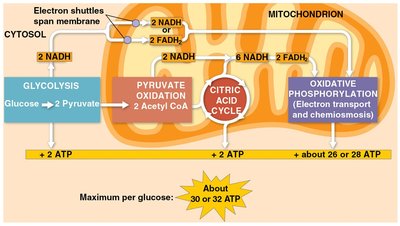
Aerobic respiration yields >30 ATP per glucose, fermentation yields 2 ATP, and anaerobic respiration yields 2–>30 ATP.
Glycolysis and the Citric Acid Cycle: Connections to Other Metabolic Pathways
Versatility of Catabolism
Glycolysis and the citric acid cycle are central intersections for various catabolic and anabolic pathways. Carbohydrates, proteins, and fats can all be funneled into cellular respiration at different stages.
Carbohydrates: Hydrolyzed into glucose, enter glycolysis.
Proteins: Digested to amino acids, deaminated, enter glycolysis or citric acid cycle.
Fats: Glycerol enters glycolysis; fatty acids enter citric acid cycle via beta-oxidation, yielding more ATP per gram than carbohydrates.
Biosynthesis (Anabolic Pathways)
Anabolic pathways build molecules such as proteins, glycogen, and fats, consuming ATP rather than generating it. Food provides both fuel for ATP production and small molecules for biosynthesis.
Summary Table: Cellular Respiration Pathways
Pathway | Final Electron Acceptor | ATP Yield | Key Products |
|---|---|---|---|
Aerobic Respiration | O2 | ~30-38 ATP | CO2, H2O |
Anaerobic Respiration | Other molecules (e.g., S, N compounds) | 2–>30 ATP | CO2, H2O, other |
Fermentation | Organic molecules (e.g., pyruvate) | 2 ATP | Ethanol, lactate, CO2 |
Key Equations
General equation for aerobic cellular respiration:
ATP synthesis:
Summary: Cellular respiration and fermentation are essential metabolic pathways for energy production in cells. They involve a series of redox reactions, electron carriers, and multiple stages, with glycolysis as a central process. The fate of pyruvate depends on the presence of oxygen, leading to either aerobic respiration, anaerobic respiration, or fermentation.
