 Back
BackCellular Respiration: Glycolysis, Pyruvate Oxidation, and the Citric Acid Cycle
Study Guide - Smart Notes
 Tailored notes based on your materials, expanded with key definitions, examples, and context.
Cellular Respiration Overview
Introduction to Cellular Respiration
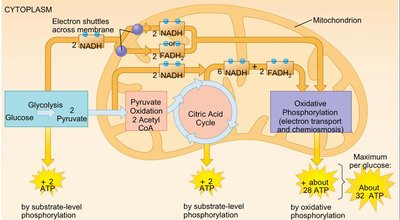
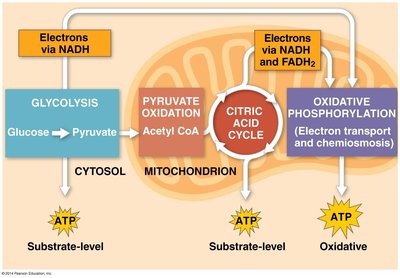
Cellular respiration is a series of metabolic processes by which cells harvest energy from organic molecules, primarily glucose, to produce adenosine triphosphate (ATP). This process occurs in several stages: glycolysis, pyruvate oxidation, the citric acid cycle, and oxidative phosphorylation. The overall reaction for aerobic respiration is:
Equation:

Key Points:
Reactants: Glucose and oxygen
Products: Carbon dioxide, water, and ATP
ATP Yield: Approximately 30-32 ATP molecules per glucose
ATP and Electron Carriers
ATP: The Energy Currency of the Cell
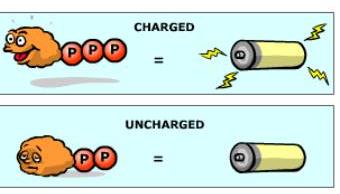
ATP (adenosine triphosphate) stores and transfers energy within cells. It is often compared to a rechargeable battery, as it cycles between ATP (charged) and ADP (uncharged) forms.
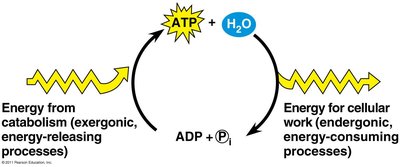
ATP is regenerated from ADP and inorganic phosphate () using energy derived from food metabolism:
NAD+/NADH: Electron Carriers
NAD+ (nicotinamide adenine dinucleotide) is a crucial electron carrier in cellular respiration. It cycles between oxidized (NAD+) and reduced (NADH) forms:
NAD+ (oxidized): Accepts electrons and is reduced to NADH.
NADH (reduced): Donates electrons to the electron transport chain, becoming oxidized back to NAD+.
Role: NAD+ shuttles electrons from catabolic reactions to the electron transport chain, facilitating ATP production.
Stages of Cellular Respiration
Overview of the Four Stages
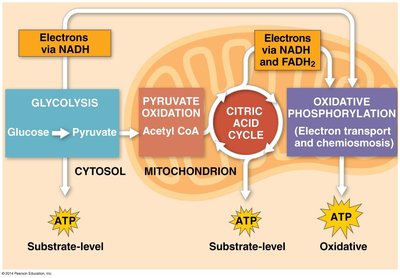
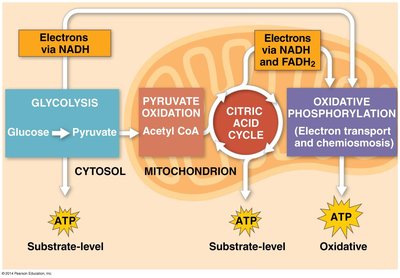
Cellular respiration consists of four main stages, each occurring in specific cellular locations:
Stage | Main Location | Main Products |
|---|---|---|
Glycolysis | Cytoplasm | 2 Pyruvate, 2 ATP, 2 NADH |
Pyruvate Oxidation | Mitochondrial Matrix | 2 Acetyl CoA, 2 NADH, 2 CO2 |
Citric Acid Cycle | Mitochondrial Matrix | 6 NADH, 2 FADH2, 2 ATP, 4 CO2 |
Oxidative Phosphorylation | Inner Mitochondrial Membrane | About 28 ATP |
Glycolysis
Overview and Location
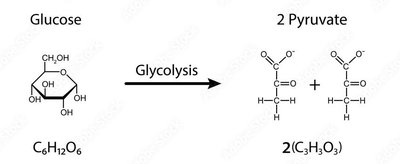
Glycolysis is the first stage of cellular respiration, occurring in the cytoplasm. It involves the breakdown of one glucose molecule (6 carbons) into two molecules of pyruvate (3 carbons each) through a series of ten enzyme-catalyzed steps.
Key Features:
Starting molecule: Glucose
End products: 2 Pyruvate, 2 ATP (net), 2 NADH
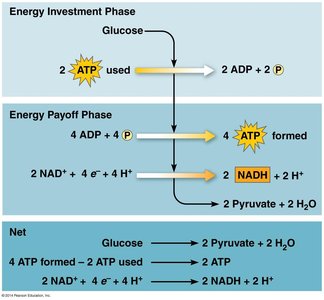
Phases: Energy investment (steps 1-5) and energy payoff (steps 6-10)
Oxygen requirement: Anaerobic (does not require oxygen)
Regulation: Controlled by phosphofructokinase (allosteric enzyme)
Energy Investment Phase (Steps 1-5)
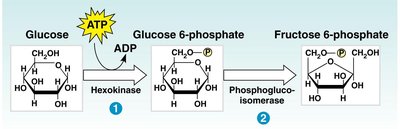
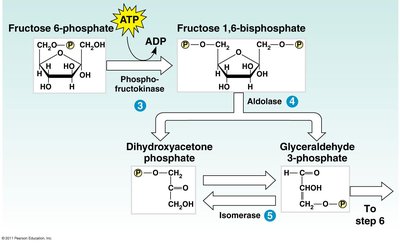
During this phase, the cell uses 2 ATP molecules to phosphorylate glucose and its intermediates, preparing them for subsequent breakdown.
Key enzyme: Phosphofructokinase (regulatory step)
Splitting: Aldolase splits fructose-1,6-bisphosphate into two 3-carbon molecules
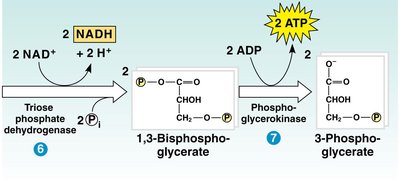
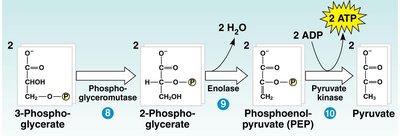
Energy Payoff Phase (Steps 6-10)
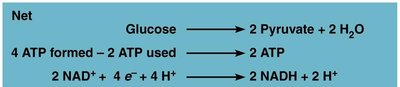
In this phase, energy is harvested as 4 ATP and 2 NADH are produced per glucose molecule. The net gain is 2 ATP (since 2 were used in the investment phase).
Redox reactions: Glyceraldehyde-3-phosphate (G3P) is oxidized, reducing NAD+ to NADH
ATP formation: Substrate-level phosphorylation transfers phosphate groups to ADP
Summary Table: Glycolysis
Phase | ATP Used | ATP Produced | NADH Produced | End Products |
|---|---|---|---|---|
Investment | 2 | 0 | 0 | -- |
Payoff | 0 | 4 | 2 | 2 Pyruvate, 2 H2O |
Net | -- | 2 | 2 | 2 Pyruvate, 2 NADH, 2 ATP |
Pyruvate Oxidation
Overview and Location
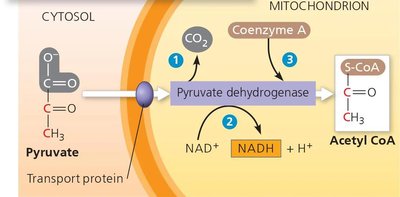
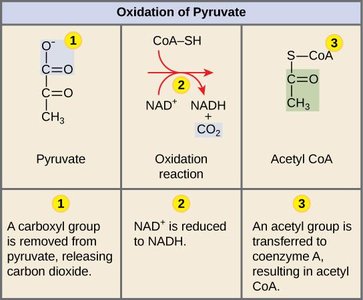
Pyruvate oxidation, also known as the link reaction, connects glycolysis to the citric acid cycle. It occurs in the mitochondrial matrix when oxygen is present. Each pyruvate is converted into acetyl-CoA, producing NADH and CO2.
Reactants: Pyruvate, NAD+, Coenzyme A
Products (per pyruvate): 1 Acetyl-CoA, 1 NADH, 1 CO2
ATP production: None directly
Key Steps of Pyruvate Oxidation
Decarboxylation: Removal of one carbon as CO2
Redox reaction: Remaining 2-carbon fragment is oxidized, reducing NAD+ to NADH
Formation of Acetyl-CoA: The 2-carbon acetyl group is attached to coenzyme A
Citric Acid Cycle (Krebs Cycle)
Overview and Location
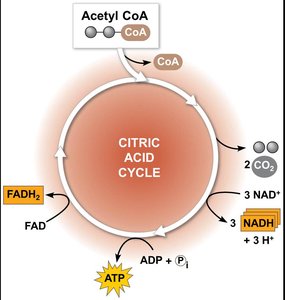
The citric acid cycle, also known as the Krebs cycle or TCA cycle, completes the oxidation of organic molecules. It occurs in the mitochondrial matrix and processes each acetyl-CoA to produce NADH, FADH2, ATP, and CO2.
Reactants: Acetyl-CoA, oxaloacetate
Products (per acetyl-CoA): 3 NADH, 1 FADH2, 1 ATP, 2 CO2
ATP production: 1 ATP per cycle (by substrate-level phosphorylation)
Cycle: Oxaloacetate is regenerated at the end of each cycle
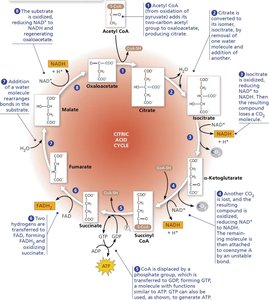
Key Steps of the Citric Acid Cycle
Carbon dioxide release: Steps 3 and 4 (decarboxylation)
Redox reactions: NAD+ reduced to NADH (steps 3, 4, 8); FAD reduced to FADH2 (step 6)
ATP formation: Step 5 (substrate-level phosphorylation)
Regeneration of oxaloacetate: Step 8
Key Terminology
Cellular respiration: The process of extracting energy from organic molecules to produce ATP
Glycolysis: The breakdown of glucose to pyruvate
Pyruvate oxidation: Conversion of pyruvate to acetyl-CoA
Citric acid cycle: Series of reactions that completes the oxidation of acetyl-CoA
ATP: Main energy currency of the cell
Phosphorylation: Addition of a phosphate group to a molecule
Redox reactions: Chemical reactions involving the transfer of electrons
Electron carriers: Molecules like NADH and FADH2 that transport electrons
Allosteric regulation: Regulation of enzyme activity by binding of molecules at sites other than the active site
