 Back
BackCellular Respiration: Mechanisms and Pathways
Study Guide - Smart Notes
 Tailored notes based on your materials, expanded with key definitions, examples, and context.
Chapter 9: Cellular Respiration
Introduction to Cellular Respiration
Cellular respiration is a series of metabolic processes by which cells harvest energy from organic molecules, primarily glucose. This energy is stored in the form of adenosine triphosphate (ATP), which powers cellular activities. The process involves oxidation-reduction (redox) reactions, electron carriers, and multiple metabolic pathways.
Redox Reactions in Cellular Respiration
Oxidation and Reduction
Oxidation is the loss of electrons from a substance, while reduction is the gain of electrons.
The electron donor is called the reducing agent, and the electron acceptor is the oxidizing agent.
Redox reactions are fundamental to the transfer of energy in cellular respiration.l

Redox in Glucose Oxidation
During cellular respiration, glucose is oxidized and oxygen is reduced.
Organic molecules rich in hydrogen are excellent sources of high-energy electrons.
Energy is released as electrons are transferred to oxygen, a lower energy state.

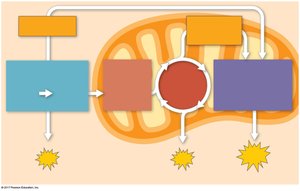
Overview of Cellular Respiration Pathways
Major Stages
Glycolysis: Breaks down glucose into two molecules of pyruvate in the cytosol.
Citric Acid Cycle (Krebs Cycle): Completes the breakdown of glucose in the mitochondrial matrix.
Oxidative Phosphorylation: Accounts for most ATP synthesis via the electron transport chain and chemiosmosis.
Glycolysis
Phases of Glycolysis
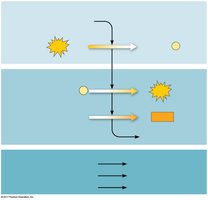
Energy Investment Phase: 2 ATP are used to phosphorylate glucose and its intermediates.
Energy Payoff Phase: 4 ATP and 2 NADH are produced, along with 2 pyruvate molecules.
Net gain: 2 ATP and 2 NADH per glucose molecule.
Occurs in the cytoplasm and does not require oxygen.
Pyruvate Oxidation
Conversion to Acetyl CoA
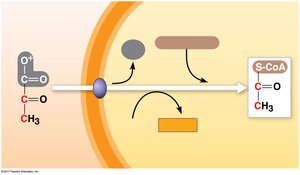
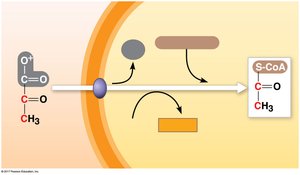
In the presence of oxygen, pyruvate is transported into the mitochondrion and converted to acetyl CoA in three steps:
Oxidation of pyruvate and release of CO2
Reduction of NAD+ to NADH
Addition of coenzyme A to the 2-carbon fragment, forming acetyl CoA
The Citric Acid Cycle (Krebs Cycle)
Cycle Overview
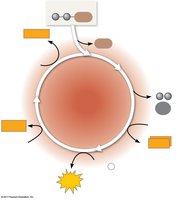
Acetyl CoA enters the cycle, which completes the oxidation of glucose derivatives to CO2.
Each turn of the cycle produces 1 ATP, 3 NADH, and 1 FADH2.
NADH and FADH2 carry electrons to the electron transport chain.
Oxidative Phosphorylation and the Electron Transport Chain
Electron Transport Chain (ETC)
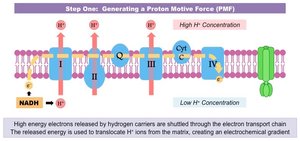
Located in the inner mitochondrial membrane (cristae).
Composed of protein complexes (cytochromes) that transfer electrons from NADH and FADH2 to oxygen.
Energy released is used to pump protons (H+) into the intermembrane space, creating a proton gradient.
Chemiosmosis and ATP Synthase
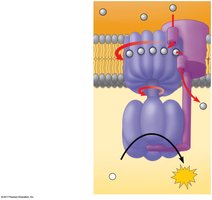
Protons flow back into the mitochondrial matrix through ATP synthase, driving the phosphorylation of ADP to ATP.
This process is called chemiosmosis.
ATP Yield
Most energy flows from glucose → NADH → ETC → ATP synthase → ATP.
About 30–32 ATP are produced per glucose molecule.
Fermentation and Anaerobic Respiration
Fermentation
Occurs when oxygen is not present.
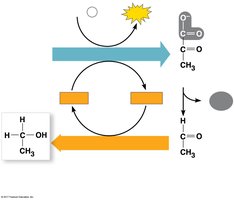
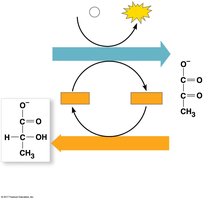
Glycolysis continues, but pyruvate is converted to other products to regenerate NAD+.
Two main types: Alcohol fermentation (produces ethanol and CO2) and Lactic acid fermentation (produces lactate).
Anaerobic Respiration
Uses an electron transport chain with a final electron acceptor other than oxygen (e.g., sulfate).
Facultative and Obligate Anaerobes
Obligate anaerobes can only survive without oxygen.
Facultative anaerobes (e.g., yeast, muscle cells) can switch between fermentation and aerobic respiration.
Metabolic Integration and Alternative Fuels
Other Fuels in Cellular Respiration
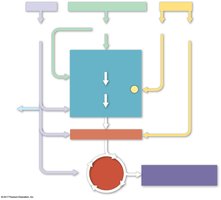
Carbohydrates, fats, and proteins can all be used as fuel.
Fats yield more than twice as much ATP per gram as carbohydrates.
Proteins must be deaminated before entering glycolysis or the citric acid cycle.
ATP: Structure, Hydrolysis, and Function
Structure of ATP
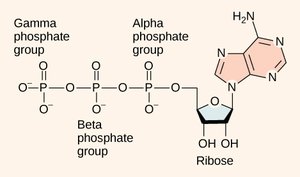
ATP consists of adenine, ribose, and three phosphate groups.
The bonds between phosphate groups are high-energy bonds.
ATP Hydrolysis
Hydrolysis of ATP releases energy by breaking the terminal phosphate bond.
ATP hydrolysis drives endergonic reactions by phosphorylation of other molecules.
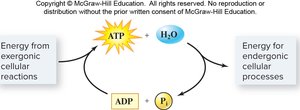
ATP Cycle
ATP is regenerated from ADP and inorganic phosphate using energy from catabolic reactions (cellular respiration).
This cycle is essential for maintaining cellular energy balance.
Enzymes and Cellular Work
Role of Enzymes
Enzymes are biological catalysts that speed up reactions by lowering activation energy.
ATP powers chemical, transport, and mechanical work in the cell.
Summary Table: Stages of Cellular Respiration
Stage | Main Location | Inputs | Outputs | ATP Produced |
|---|---|---|---|---|
Glycolysis | Cytosol | Glucose, 2 ATP, 2 NAD+ | 2 Pyruvate, 2 NADH, 4 ATP (2 net) | 2 (net) |
Pyruvate Oxidation | Mitochondrial Matrix | 2 Pyruvate, 2 NAD+, 2 CoA | 2 Acetyl CoA, 2 NADH, 2 CO2 | 0 |
Citric Acid Cycle | Mitochondrial Matrix | 2 Acetyl CoA, 6 NAD+, 2 FAD, 2 ADP | 4 CO2, 6 NADH, 2 FADH2, 2 ATP | 2 |
Oxidative Phosphorylation | Inner Mitochondrial Membrane | 10 NADH, 2 FADH2, O2 | H2O, ~26-28 ATP | 26-28 |
