 Back
BackChapter 2: The Chemical Basis of Life – Elements, Atoms, and Compounds
Study Guide - Smart Notes
 Tailored notes based on your materials, expanded with key definitions, examples, and context.
Chapter 2: The Chemical Basis of Life
Elements, Atoms, and Compounds
Understanding the chemical basis of life is fundamental to biology. All living and nonliving matter is composed of elements, which are organized into atoms and can combine to form compounds with unique properties.
Matter is anything that takes up space and has mass. All organisms and objects are composed of matter.
Atoms are the smallest units of matter that retain the properties of an element. They are composed of subatomic particles: protons (positive charge), neutrons (no charge), and electrons (negative charge).
Atoms are electrically neutral because they contain equal numbers of protons and electrons.
Protons and neutrons are located in the atomic nucleus, while electrons orbit in a cloud around the nucleus.
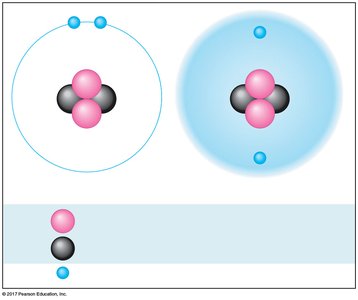
Most of the atom's volume is empty space. If an atom were the size of a stadium, the nucleus would be the size of a pea at the center, and electrons would be like tiny gnats buzzing around.
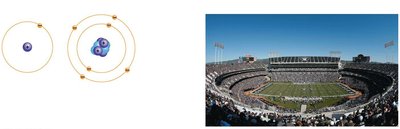
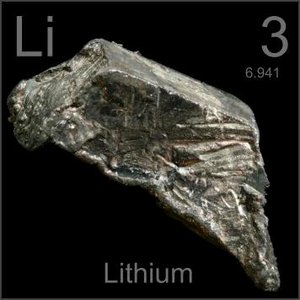
The atomic number is the number of protons in an atom and defines the element. For example, any atom with 1 proton is hydrogen, and any atom with 3 protons is lithium.
An element is a pure substance made of atoms with the same number of protons. Elements cannot be broken down into simpler substances by chemical means.
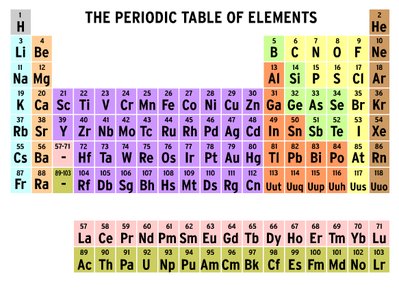
The Periodic Table of Elements organizes all known elements by their atomic number and properties. There are 118 known elements, 94 of which occur naturally.
All elements on Earth were originally formed in stars and distributed through stellar explosions, eventually becoming part of planets and living organisms.
The Elements of Life
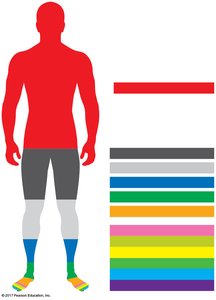
Only a small subset of elements are essential for life. In humans, six elements make up 99% of body weight: oxygen, carbon, hydrogen, nitrogen, calcium, and phosphorus. Trace elements are required in minute amounts but are vital for health.
Element | Symbol | Percentage of Body Mass |
|---|---|---|
Oxygen | O | 65.0% |
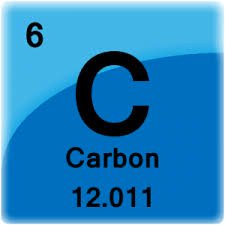
Carbon | C | 18.5% |
Hydrogen | H | 9.5% |
Nitrogen | N | 3.3% |
Calcium | Ca | 1.5% |
Phosphorus | P | 1.0% |
Potassium | K | 0.4% |
Sulfur | S | 0.3% |
Sodium | Na | 0.2% |
Chlorine | Cl | 0.2% |
Magnesium | Mg | 0.1% |
Trace elements (less than 0.01% of body mass) include boron, chromium, cobalt, copper, fluorine, iodine, iron, manganese, molybdenum, selenium, silicon, tin, vanadium, and zinc.
Trace elements are often added to food and water to prevent diseases (e.g., iodine prevents goiter, fluoride reduces tooth decay).

Atomic Mass and Isotopes
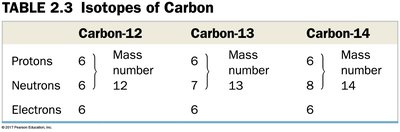
The mass of an atom is approximately the sum of its protons and neutrons, as electrons contribute very little to mass. Atoms of the same element can have different numbers of neutrons, forming isotopes.
Isotopes are atoms of the same element with the same number of protons but different numbers of neutrons, resulting in different atomic masses.
For example, all carbon atoms have 6 protons, but may have 6, 7, or 8 neutrons (carbon-12, carbon-13, carbon-14).
Carbon-12 | Carbon-13 | Carbon-14 | |
|---|---|---|---|
Protons | 6 | 6 | 6 |
Neutrons | 6 | 7 | 8 |
Electrons | 6 | 6 | 6 |
Mass Number | 12 | 13 | 14 |
Radioactive isotopes are unstable and decay spontaneously, emitting particles and energy. For example, carbon-14 is radioactive, while carbon-12 and carbon-13 are stable.
Applications of Radioactive Isotopes
Radioactive isotopes have important applications in science and medicine, but also pose health risks.
Radiocarbon dating uses the decay of carbon-14 to estimate the age of organic materials.
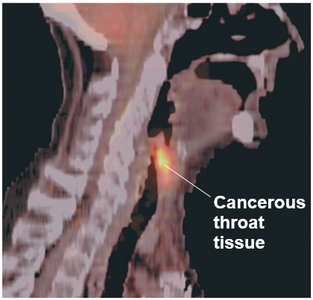
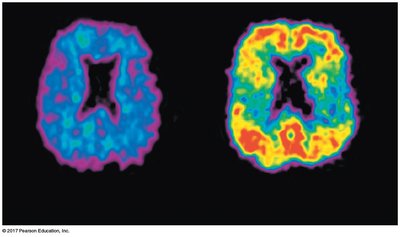
Radioactive tracers are used in medical diagnostics to track atoms through metabolism and to image tissues (e.g., PET scans).
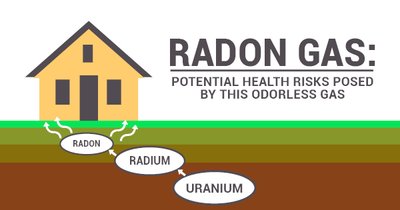
Exposure to radioactive substances can be dangerous. For example, radon gas, produced by the decay of uranium in soil, can accumulate in homes and increase the risk of lung cancer.
Compounds and Emergent Properties
Elements can combine in fixed ratios to form compounds, which have properties different from their constituent elements. For example, sodium (a reactive metal) and chlorine (a poisonous gas) combine to form sodium chloride (table salt), which is safe to eat.
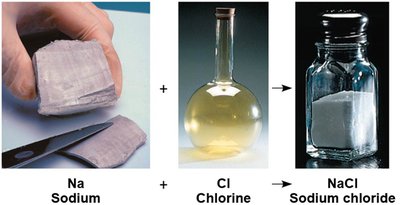
Emergent properties are new characteristics that arise when elements combine to form compounds, illustrating the complexity and diversity of chemical interactions in biology.
Additional info: Understanding the chemical basis of life is essential for exploring how biological molecules interact, how cells function, and how life is sustained at the molecular level.
