 Back
BackChapter 2: The Chemical Context of Life – Study Notes
Study Guide - Smart Notes
 Tailored notes based on your materials, expanded with key definitions, examples, and context.
Chapter 2: The Chemical Context of Life
Key Concepts Overview
Matter consists of chemical elements in pure form and in combinations called compounds.
An element’s properties depend on the structure of its atoms.
The formation and function of molecules depend on chemical bonding between atoms.
Chemical reactions make and break chemical bonds.
Hydrogen bonding gives water properties that help make life possible on Earth.
Section 2.1: Matter, Elements, and Compounds
Definitions and Properties
Matter: Anything that has mass and takes up space (has volume).
Element: A substance that cannot be broken down to other substances by chemical reactions.
Compound: A substance consisting of two or more elements in a fixed ratio. Compounds have emergent properties, which are characteristics different from those of their component elements.
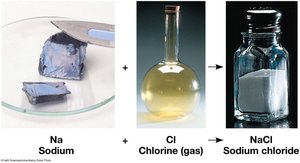
Common Elements of Life
Of the 90+ natural elements, about 20–25% are essential elements, needed by an organism to live a healthy life and reproduce.
Trace elements: Elements required by an organism in only minute quantities (e.g., iodine for thyroid function in vertebrates).
Iodine deficiency in humans can cause goiter (swelling of the thyroid gland).

Toxic Elements and Tolerance
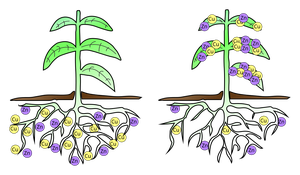
Some naturally occurring elements are toxic to organisms (e.g., arsenic).
Some species, such as sunflower plants, can tolerate and even detoxify environments with high concentrations of toxic elements like lead and zinc.

Section 2.2: Elemental Properties and Atomic Structure
Atoms and Subatomic Particles
Atom: The smallest unit of matter that retains the properties of an element.
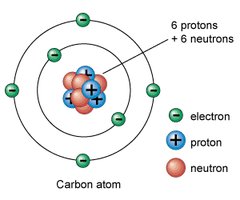
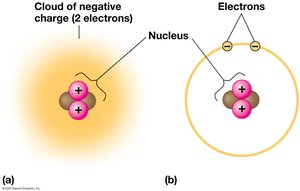
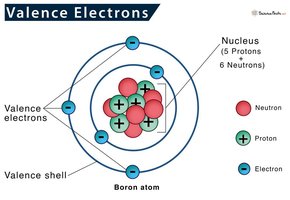
Atoms are composed of subatomic particles: protons (positive charge), neutrons (no charge), and electrons (negative charge).
Protons and neutrons are located in the atomic nucleus; electrons form a "cloud" around the nucleus.
Proton and neutron mass ≈ 1 dalton (1.66 × 10⁻²⁷ kg); electrons are about 1/2000 of a dalton.
Representing Elements
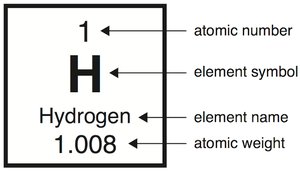
Atomic number: Number of protons in the nucleus.
Mass number: Sum of protons and neutrons.
Atomic mass: Total mass of an atom, approximately equal to the mass number.
Isotopes and Radioactivity
Isotopes: Atoms of the same element with different numbers of neutrons.
Radioactive isotopes: Unstable isotopes that decay spontaneously, emitting particles and energy.
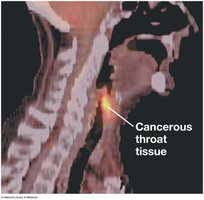
Applications: Radiometric dating, tracing atoms in metabolism, medical diagnostics (e.g., PET scans).
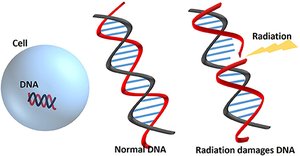
Hazards: Radiation can damage cellular molecules, including DNA.
Potential Energy and Electrons
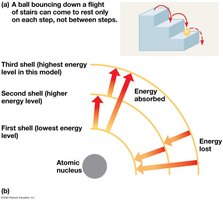
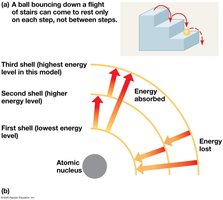
Potential energy: Energy that matter possesses due to its location or structure.
Electrons have potential energy based on their distance from the nucleus; energy changes occur in fixed steps (quantized).
Electron Distribution and Chemical Properties
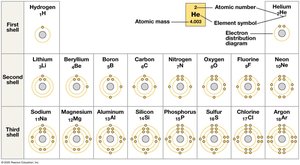
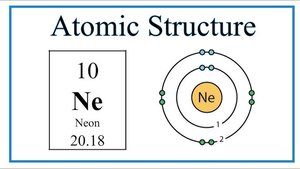
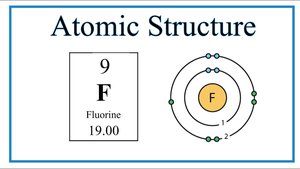
The chemical behavior of an atom is determined by the distribution of electrons in electron shells.
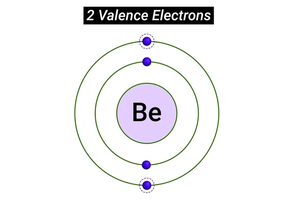
Electrons in the outermost shell (valence shell) are called valence electrons and determine reactivity.
Atoms with full valence shells are inert; those with incomplete shells are reactive.
Section 2.3: Formation and Function of Molecules
Covalent Bonds
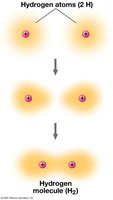
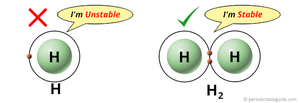
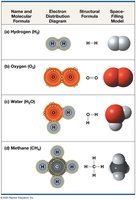
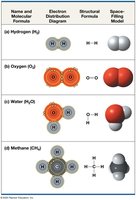
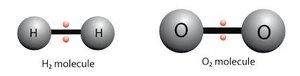
Covalent bond: Sharing of a pair of valence electrons by two atoms.
Single bond: Sharing of one pair of electrons; double bond: sharing of two pairs.
Bonding capacity (valence): Number of bonds an atom can form, usually equal to the number of electrons needed to fill the valence shell.
Molecules can be pure elements or compounds.
Electronegativity and Polarity
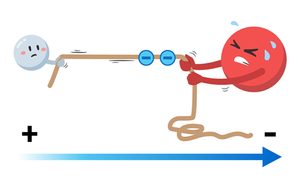
Electronegativity: An atom’s attraction for electrons in a covalent bond.
Nonpolar covalent bond: Electrons are shared equally.
Polar covalent bond: Electrons are shared unequally, resulting in partial charges (δ+ and δ-).
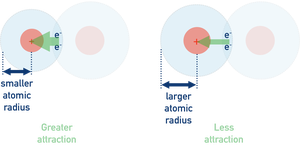
Visualizing Partial Charge and Molecular Shape
Partial charges are indicated by δ+ or δ- or by arrows.
Molecular shape is influenced by charge distribution and affects biological function (e.g., CO2 is nonpolar, H2O is polar and bent).
Ionic Bonds
Formed when one atom strips electrons from another, creating ions.
Cation: Positively charged ion; Anion: Negatively charged ion.
Ionic bond: Attraction between cation and anion.
Ionic compounds (salts) often form crystals (e.g., NaCl).
Hydrogen Bonds and Van der Waals Interactions
Hydrogen bond: Attraction between a hydrogen atom covalently bonded to one electronegative atom and another electronegative atom (often O or N).
Van der Waals interactions: Weak attractions due to transient local partial charges; significant when many occur together.
Importance of Molecular Shape
Molecular shape determines how biological molecules recognize and respond to each other (e.g., endorphins and morphine binding to the same receptor).
Section 2.4: Chemical Reactions Make and Break Chemical Bonds
Chemical Reactions
Chemical reactions involve the making and breaking of chemical bonds.
Reactants: Starting molecules; Products: Final molecules.
All chemical reactions are theoretically reversible; equilibrium is reached when forward and reverse reaction rates are equal.
Section 2.5: Hydrogen Bonding Gives Water Properties That Help Make Life Possible on Earth
Properties of Water
Water molecules are held together by hydrogen bonds, giving rise to unique properties essential for life.
Four emergent properties of water:
Cohesive behavior: Water molecules stick together (cohesion) and to other substances (adhesion).
Ability to moderate temperature: High specific heat and evaporative cooling.
Expansion upon freezing: Ice is less dense than liquid water, so it floats.
Versatility as a solvent: Water dissolves many substances due to its polarity.
Cohesion, Adhesion, and Surface Tension
Cohesion: Hydrogen bonds hold water molecules together, aiding transport in plants.
Adhesion: Water molecules cling to other substances, helping counter gravity in plants.
Surface tension: Difficulty of breaking the surface of a liquid due to cohesion.
Moderation of Temperature by Water
Water absorbs/releases large amounts of heat with little temperature change due to high specific heat (1 cal/g·°C).
Evaporative cooling: As water evaporates, the surface cools, stabilizing temperatures in organisms and environments.
Heat of vaporization: Heat required to convert 1 g of liquid to gas.
Expansion Upon Freezing
Water is most dense at 4°C; as it freezes, it expands due to hydrogen bond formation, making ice less dense than liquid water.
Floating ice insulates water below, allowing aquatic life to survive in winter.

Water: The Solvent of Life
Solution: Homogeneous mixture of substances.
Solvent: Dissolving agent; Solute: Substance dissolved.
Aqueous solution: Water is the solvent.
Water dissolves ionic and polar substances by forming hydration shells.
Hydrophilic: Affinity for water; Hydrophobic: Repels water (e.g., oils).
Solute Concentration in Aqueous Solutions
Chemical reactions depend on solute concentration.
Molecular mass: Sum of all atomic masses in a molecule.
Mole (mol): 6.02 × 10²³ molecules (Avogadro’s number).
Molarity (M): Moles of solute per liter of solution.
Acids, Bases, and pH
Water can dissociate into hydronium (H3O+) and hydroxide (OH-) ions.
Acid: Increases H+ concentration; Base: Reduces H+ concentration.
pH scale: Measures H+ concentration; pH = -log[H+].
Acidic solutions: pH < 7; Basic solutions: pH > 7; Neutral: pH = 7.
Buffers
Buffers minimize changes in pH by accepting or donating H+ as needed.
Most buffers consist of a weak acid and its corresponding base.
Large Scale Systems: Ocean Acidification
CO2 dissolves in oceans, forming carbonic acid and reducing carbonate ions, which affects organisms that rely on calcification (e.g., shell-forming marine life).
Water’s high specific heat means even small temperature changes involve vast energy shifts in the oceans.
Key Terms to Know
Protons, neutrons, electrons, atomic number, mass number, atomic mass, ions, isotopes, molecular mass, reactants, products, chemical equilibrium, polar molecule, electronegativity, cohesion, adhesion, surface tension, solubility, aqueous solution, hydrophilic, hydrophobic, acids, bases, buffers, pH scale, hydrogen ions, hydroxide ions.
