 Back
BackBio chapter 2
Study Guide - Smart Notes
 Tailored notes based on your materials, expanded with key definitions, examples, and context.
Elements and Compounds
Introduction to Matter, Elements, and Compounds
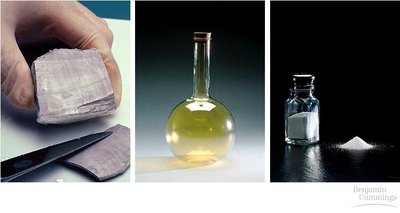
Matter is anything that takes up space and has mass. All matter is composed of elements, which are substances that cannot be broken down into other substances by chemical reactions. Compounds are substances consisting of two or more different elements combined in a fixed ratio, often exhibiting emergent properties distinct from their constituent elements.
Matter: Includes solids, liquids, gases (e.g., rocks, water, air, living organisms).
Element: Pure substance; cannot be chemically broken down further (e.g., Oxygen, Carbon).
Compound: Substance formed from two or more elements in a fixed ratio (e.g., NaCl – table salt).
Emergent Properties: Compounds can have properties very different from their component elements (e.g., sodium is a reactive metal, chlorine is a poisonous gas, but together they form edible table salt).
Elements Essential for Life
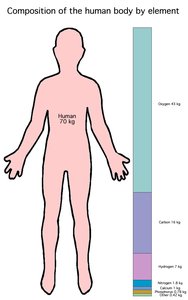
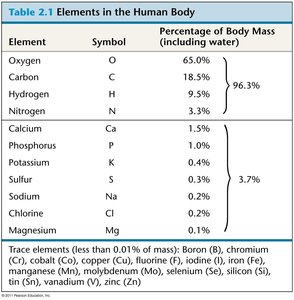
About 25 elements are essential for life, with four elements—oxygen, carbon, hydrogen, and nitrogen—making up about 96% of living matter. The remaining 4% consists of elements such as calcium, phosphorus, potassium, sulfur, sodium, chlorine, and magnesium. Trace elements are required in minute quantities but are vital for proper physiological function.
Major Elements: O, C, H, N
Minor Elements: Ca, P, K, S, Na, Cl, Mg
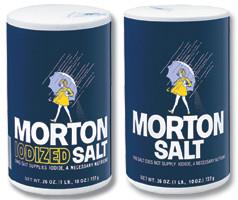
Trace Elements: Fe, I, Zn, etc. (e.g., iodine is necessary for thyroid hormone production; deficiency can cause goiter)
Atoms and Subatomic Particles
Structure of Atoms
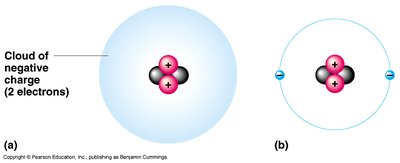
An atom is the smallest unit of an element that retains the properties of that element. Atoms are composed of subatomic particles: protons (positive charge), neutrons (no charge), and electrons (negative charge). Protons and neutrons are found in the atomic nucleus, while electrons orbit in shells around the nucleus.
Proton: Positive charge, mass ≈ 1 Dalton
Neutron: No charge, mass ≈ 1 Dalton
Electron: Negative charge, negligible mass (~1/2000 Dalton)
Atomic Number and Mass Number
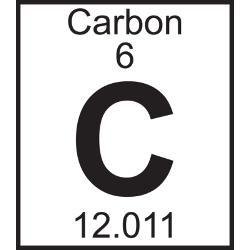
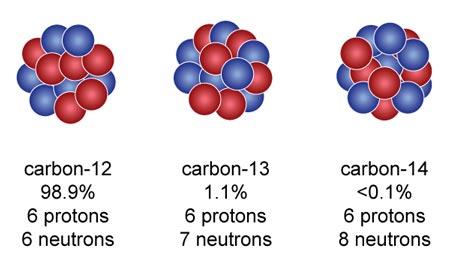
The atomic number of an element is the number of protons in its nucleus. The mass number is the sum of protons and neutrons. All atoms of a given element have the same number of protons, but may differ in the number of neutrons (isotopes).
Atomic Number (Z): Number of protons
Mass Number (A): Number of protons + neutrons
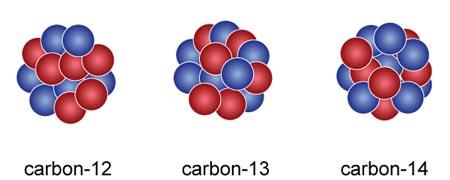
Isotopes: Atoms of the same element with different numbers of neutrons
Isotopes and Their Applications
Isotopes behave identically in chemical reactions but may differ in stability. Some isotopes are radioactive and decay over time, releasing energy. Radioactive isotopes are used in radiometric dating (e.g., carbon-14 dating), medical diagnostics, and as tracers in biological research.
Example: Carbon-14 is used to date formerly living materials.
Atoms, Ions, and Electron Configuration
Electron Shells and Chemical Behavior
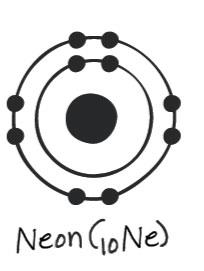
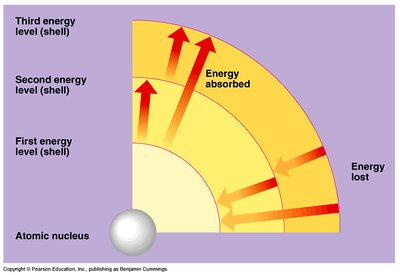
Electrons are arranged in shells around the nucleus. The chemical behavior of an atom is largely determined by the number of electrons in its outermost shell (valence shell). Atoms with incomplete valence shells are chemically reactive, seeking to fill or empty their outer shell by gaining, losing, or sharing electrons.
Valence Electrons: Electrons in the outermost shell
Electron Shells: Energy levels where electrons reside
Noble Gases: Have full valence shells and are chemically inert (e.g., Neon, Argon)
Ions
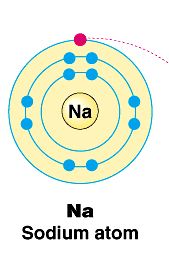
An ion is an atom or molecule with a net electric charge due to the loss or gain of electrons. Cations are positively charged (loss of electrons), and anions are negatively charged (gain of electrons).
Cation: Positively charged ion (e.g., Na+)
Anion: Negatively charged ion (e.g., Cl-)
Chemical Bonds and Molecules
Covalent Bonds
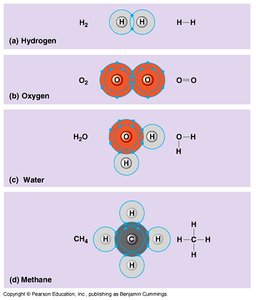
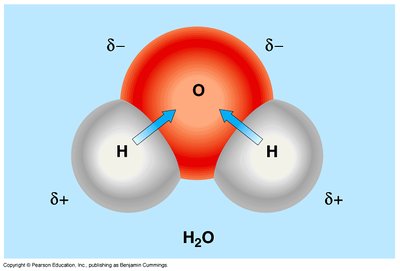
Covalent bonds form when two atoms share one or more pairs of valence electrons. These bonds can be non-polar (equal sharing) or polar (unequal sharing due to differences in electronegativity).
Non-polar Covalent Bond: Electrons shared equally (e.g., H2, O2)
Polar Covalent Bond: Electrons shared unequally (e.g., H2O)
Electronegativity: Atom’s attraction for shared electrons
Ionic Bonds
Ionic bonds form when one atom transfers electrons to another, resulting in oppositely charged ions that attract each other. Ionic compounds (salts) often dissociate into ions in water and form crystalline solids when dry.
Example: Sodium chloride (NaCl) forms from Na+ and Cl-
Weak Chemical Bonds
Weak chemical bonds, such as hydrogen bonds and van der Waals interactions, are crucial in biology. They help stabilize the three-dimensional structures of large molecules (e.g., proteins, DNA) and facilitate transient interactions between molecules.
Hydrogen Bond: Attraction between a hydrogen atom covalently bonded to an electronegative atom and another electronegative atom (e.g., between water molecules)
Van der Waals Interactions: Weak attractions due to transient local partial charges
Molecular Shape and Function
Importance of Molecular Shape
The shape of a molecule determines its function in biological systems. Molecules with similar shapes can have similar biological effects, and molecular recognition is often based on complementary shapes (e.g., hormone-receptor interactions, drug action).
Form Fits Function: Shape determines how molecules interact with each other
Example: Morphine mimics the shape of endorphins and binds to the same brain receptors
Chemical Reactions
Making and Breaking Bonds
Chemical reactions involve the making and breaking of chemical bonds, transforming reactants into products. Chemical equations must be balanced to reflect the conservation of mass.
Reactants: Starting materials in a reaction
Products: Substances formed by the reaction
Example Equation:
Summary Table: Elements in the Human Body
Element | Symbol | Percentage of Body Mass (including water) |
|---|---|---|
Oxygen | O | 65.0% |
Carbon | C | 18.5% |
Hydrogen | H | 9.5% |
Nitrogen | N | 3.3% |
Calcium | Ca | 1.5% |
Phosphorus | P | 1.0% |
Potassium | K | 0.4% |
Sulfur | S | 0.3% |
Sodium | Na | 0.2% |
Chlorine | Cl | 0.2% |
Magnesium | Mg | 0.1% |
Trace elements (less than 0.01% of mass): Boron (B), chromium (Cr), cobalt (Co), copper (Cu), fluorine (F), iodine (I), iron (Fe), manganese (Mn), molybdenum (Mo), selenium (Se), silicon (Si), tin (Sn), vanadium (V), zinc (Zn).
Review Questions
Which is a compound? (O2, N2, H2O, CH4)
Which is the strongest bond: covalent, ionic, hydrogen, or van der Waals?
How many electrons does sulfur (S) need to complete its valence shell?
How many electrons does barium (Ba) have?
How many valence electrons does calcium (Ca) have?
Which element is more electronegative: chloride or aluminum (Al)?
