 Back
BackChapter 6b: Lipids, Membranes, and Membrane Transport
Study Guide - Smart Notes
 Tailored notes based on your materials, expanded with key definitions, examples, and context.
Lipids, Membranes, and Membrane Transport
Diffusion and Concentration Gradients
Diffusion is the net movement of molecules from regions of high concentration to regions of low concentration, driven by the random motion of particles. This process is spontaneous (exergonic) and continues until equilibrium is reached, where there is no net movement of solutes.
Concentration Gradient: The difference in solute concentration across a space or membrane.
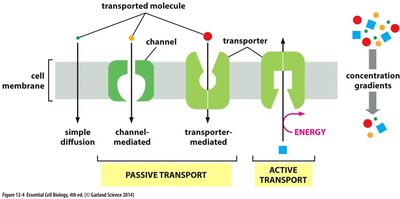
Passive Transport: Diffusion across membranes does not require energy input.
Equilibrium: Achieved when concentrations are equal on both sides of the membrane.
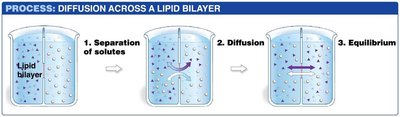
Osmosis: Diffusion of Water
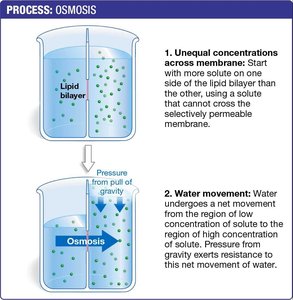
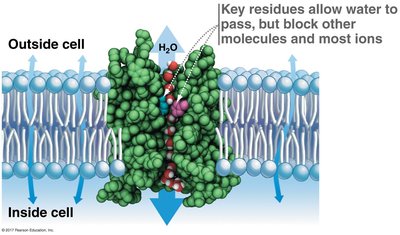
Osmosis is the diffusion of water across a selectively permeable membrane. Water moves from areas of low solute concentration (high water concentration) to areas of high solute concentration (low water concentration).
Selective Permeability: Only certain molecules can cross the membrane freely; water can move, but many solutes cannot.
Osmotic Pressure: The pressure required to stop the net flow of water due to osmosis.
Tonicity and Its Effects on Cells
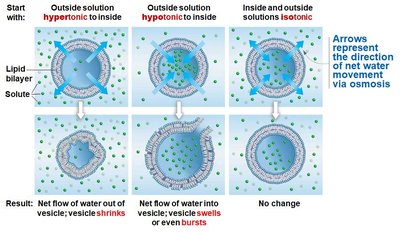
Tonicity describes the ability of a surrounding solution to cause a cell to gain or lose water. It depends on the relative concentrations of solutes inside and outside the cell.
Hypertonic Solution: Higher solute concentration outside the cell; water leaves the cell, causing it to shrink.
Hypotonic Solution: Lower solute concentration outside the cell; water enters the cell, causing it to swell or burst.
Isotonic Solution: Equal solute concentrations; no net water movement.
Lipid Bilayers and Selective Permeability
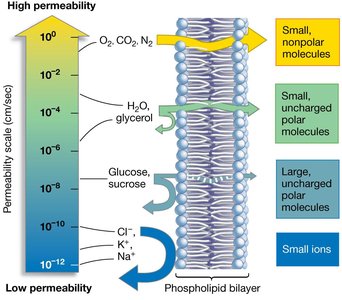
Lipid bilayers form the basic structure of cell membranes and are selectively permeable. The permeability depends on the size, charge, and polarity of molecules.
Small, nonpolar molecules (e.g., O2, CO2) cross easily.
Small, uncharged polar molecules (e.g., H2O, glycerol) cross less easily.
Large, uncharged polar molecules (e.g., glucose) and ions (e.g., Na+, Cl-) cross with great difficulty.
Membrane Proteins and the Fluid Mosaic Model
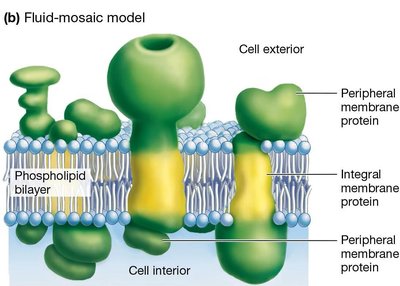
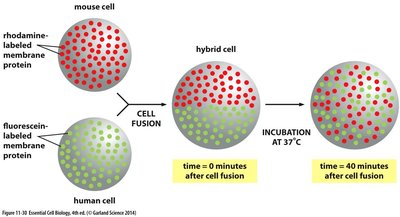
The fluid mosaic model describes the structure of cell membranes as a mosaic of proteins floating in or on the fluid lipid bilayer. Membrane proteins can move laterally within the bilayer, contributing to membrane fluidity and function.
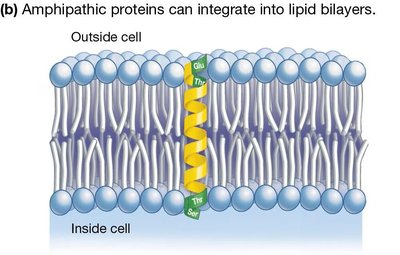
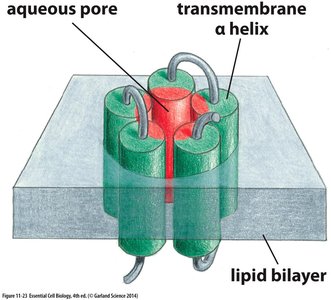
Integral (Transmembrane) Proteins: Span the membrane and are amphipathic (contain both hydrophobic and hydrophilic regions).
Peripheral Proteins: Attach to the membrane surface.
Amphipathic Nature of Membrane Proteins
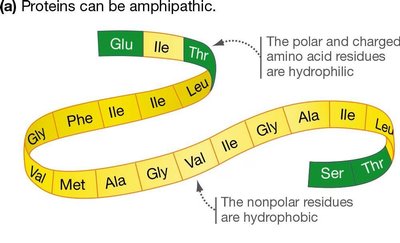
Integral membrane proteins are amphipathic, allowing them to integrate into the lipid bilayer. Their hydrophobic regions interact with the membrane core, while hydrophilic regions are exposed to the aqueous environment.
Amphipathic: Having both hydrophobic and hydrophilic parts.
Membrane Channels and Selectivity
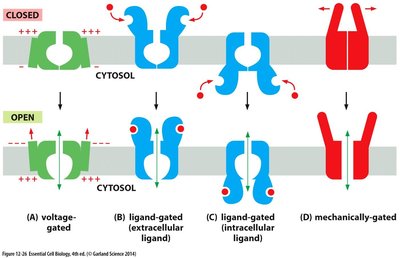
Proteins can form channels or pores in the membrane, allowing selective passage of specific molecules or ions. These channels are highly selective and can be regulated (gated) in response to signals.
Aquaporins: Water channel proteins that facilitate rapid water movement.
Gated Ion Channels: Open or close in response to voltage changes, ligand binding, or mechanical forces.
Electrochemical Gradients and Membrane Potential
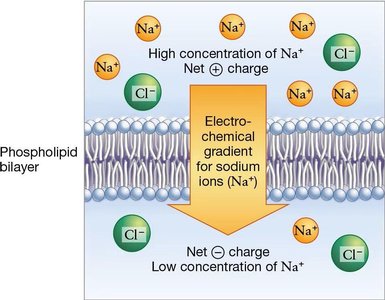
An electrochemical gradient is created by differences in ion concentration and electrical charge across a membrane. This gradient drives the movement of ions and is essential for many cellular processes.
Membrane Potential: The voltage difference across a membrane, typically negative inside cells.
Passive and Facilitated Diffusion
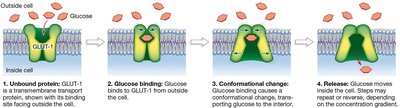
Passive transport includes simple diffusion and facilitated diffusion. Facilitated diffusion uses carrier proteins or channels to move substances down their concentration gradients without energy input.
Carrier Proteins: Undergo conformational changes to transport molecules across the membrane.
Facilitated Diffusion: Movement of molecules via specific transport proteins.
Active Transport: Primary and Secondary
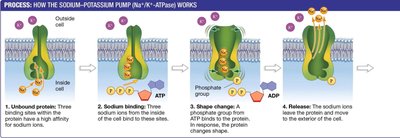
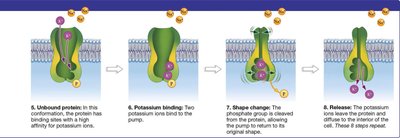
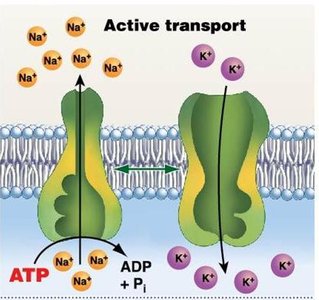
Active transport moves molecules against their concentration gradients, requiring energy. There are two main types:
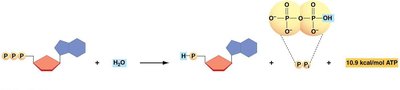
Primary Active Transport: Directly uses ATP to transport molecules (e.g., sodium-potassium pump).
Secondary Active Transport (Coupled Transport): Uses the energy stored in electrochemical gradients created by primary active transport to move other substances.
Summary Table: Types of Membrane Transport
Transport Type | Energy Required? | Direction | Example |
|---|---|---|---|
Simple Diffusion | No | Down gradient | O2, CO2 |
Facilitated Diffusion | No | Down gradient | Glucose via GLUT1 |
Primary Active Transport | Yes (ATP) | Against gradient | Na+/K+ pump |
Secondary Active Transport | Indirect (gradient) | Against gradient | Na+/Glucose symporter |
Key Equations
ATP Hydrolysis (energy release):
Electrochemical Gradient:
Additional info: R = gas constant, T = temperature, z = charge, F = Faraday's constant, ΔΨ = membrane potential.
Conclusion
Cell membranes are dynamic structures composed of lipids and proteins, providing selective barriers that regulate the movement of substances. Understanding diffusion, osmosis, and the various transport mechanisms is essential for comprehending cellular function and homeostasis.
