 Back
BackChapter 8: An Introduction to Metabolism – Study Notes
Study Guide - Smart Notes
 Tailored notes based on your materials, expanded with key definitions, examples, and context.
An Introduction to Metabolism
The Energy of Life
Cells are dynamic chemical factories where thousands of reactions occur, extracting energy from sugars and other fuels to perform work. Metabolism encompasses all chemical reactions within an organism and is an emergent property arising from the orderly interactions between molecules.
Metabolism: The sum of all chemical reactions in an organism.
Cells convert energy from one form to another, such as light to chemical energy.
Some organisms, like bioluminescent beetles, convert energy to light.
Forms of Energy
Energy exists in various forms, each capable of performing work in biological systems.
Kinetic energy: Energy associated with motion.
Heat (thermal energy): A type of kinetic energy from random movement of atoms or molecules.
Potential energy: Energy possessed due to location or structure.
Chemical energy: Potential energy available for release in a chemical reaction.
Energy can be converted from one form to another.

The Laws of Energy Transformation
Thermodynamics is the study of energy transformations. Biological systems are open, exchanging energy and matter with their surroundings.
Isolated system: No exchange of energy or matter.
Open system: Energy and matter can be transferred.
Organisms are open systems.
The Laws of Thermodynamics
The two fundamental laws of thermodynamics govern biological energy transformations:
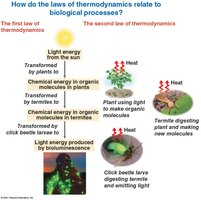
First Law: Energy cannot be created or destroyed, only transferred or transformed.
Second Law: Every energy transfer increases the entropy (disorder) of the universe.

Entropy and Spontaneity
Entropy is a measure of disorder. Spontaneous processes increase entropy and can proceed without energy input. Spontaneous does not always mean fast; for example, rusting is spontaneous but slow.

Free Energy, Stability, and Equilibrium
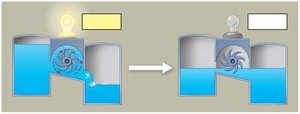
Free energy (G) is a measure of a system’s instability and its tendency to change to a more stable state. During spontaneous changes, free energy decreases and stability increases. Equilibrium is a state of maximum stability, and only processes moving toward equilibrium can perform work.
Free energy change (ΔG) determines whether a reaction is spontaneous.
Spontaneous reactions: ΔG < 0
Equilibrium: ΔG = 0
Exergonic and Endergonic Reactions in Metabolism
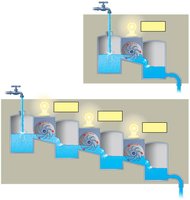
Metabolic reactions are classified based on their free energy changes:
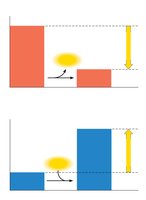
Exergonic reactions: Net release of free energy; spontaneous (ΔG < 0).
Endergonic reactions: Absorb free energy; nonspontaneous (ΔG > 0).
Catabolic and Anabolic Pathways
Metabolic pathways are divided into two types:
Catabolic pathways: Release energy by breaking down complex molecules (exergonic).
Anabolic pathways: Consume energy to build complex molecules (endergonic).
Bioenergetics: Study of energy flow in living organisms.
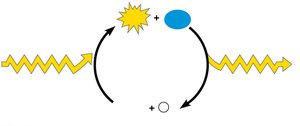
ATP and Energy Coupling
ATP powers cellular work by coupling exergonic reactions to endergonic reactions. Cells perform chemical, transport, and mechanical work, managing energy resources through energy coupling, primarily mediated by ATP.
ATP hydrolysis releases energy used to drive endergonic reactions.
Energy coupling is essential for cellular function.
Enzymes and Metabolic Reactions
Enzymes are catalytic proteins that speed up metabolic reactions by lowering energy barriers. They are highly specific for their substrates and are not consumed in the reaction.
Catalyst: Speeds up a reaction without being consumed.
Enzyme: Biological catalyst, usually a protein.
Example: Hydrolysis of sucrose by sucrase.
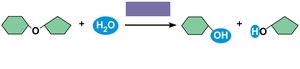
Mechanism of Enzyme Action
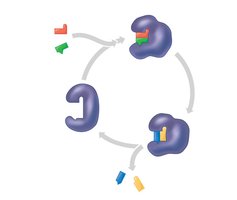
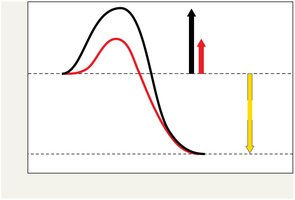
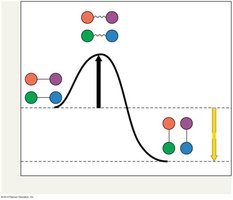
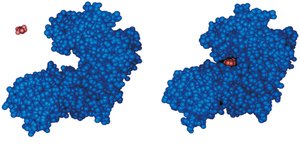
Enzymes bind to substrates at their active site, forming an enzyme-substrate complex. The active site lowers the activation energy (EA) by orienting substrates, straining bonds, providing a favorable microenvironment, or covalently bonding to the substrate.
Activation energy (EA): Energy required to start a reaction.
Enzymes lower EA but do not affect ΔG.
Substrate Specificity of Enzymes
Each enzyme is specific to its substrate, forming an enzyme-substrate complex. The specificity arises from the unique shape of the enzyme’s active site.
Effects of Local Conditions on Enzyme Activity
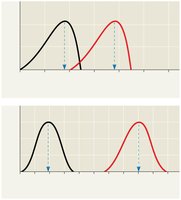
Enzyme activity is influenced by environmental factors such as temperature and pH. Each enzyme has optimal conditions that favor its most active shape.
Optimal temperature and pH vary for different enzymes.
Extreme conditions can denature enzymes, reducing activity.
Cofactors and Coenzymes
Cofactors are nonprotein helpers required for enzyme activity. They may be inorganic (e.g., metal ions) or organic (coenzymes, such as vitamins).
Cofactor: Nonprotein enzyme helper.
Coenzyme: Organic cofactor, often a vitamin.
Enzyme Inhibitors
Enzyme inhibitors reduce enzyme activity. Competitive inhibitors bind to the active site, while noncompetitive inhibitors bind elsewhere, altering the enzyme’s shape.
Competitive inhibitor: Competes with substrate for active site.
Noncompetitive inhibitor: Binds to another site, changing enzyme shape.
Examples: Toxins, poisons, pesticides, antibiotics.
Allosteric Regulation of Enzymes
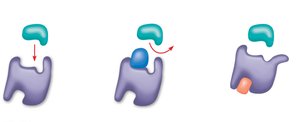
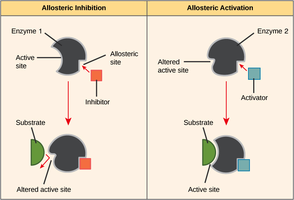
Allosteric regulation involves regulatory molecules binding to a protein at one site and affecting its function at another. This can inhibit or stimulate enzyme activity.
Allosteric inhibitors and activators modulate enzyme activity.
Feedback Inhibition
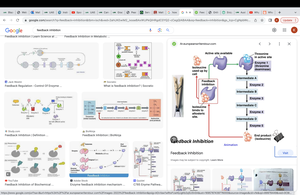
Feedback inhibition is a regulatory mechanism where the end product of a metabolic pathway inhibits an enzyme involved earlier in the pathway, preventing overproduction.
Helps maintain metabolic balance.
Localization of Enzymes Within the Cell
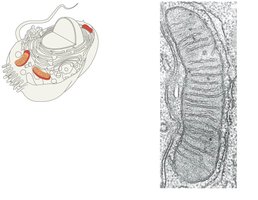
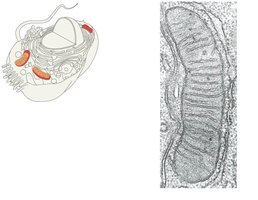
Cellular structures help organize metabolic pathways. Some enzymes are structural components of membranes, while others are localized in specific organelles, such as mitochondria for cellular respiration.
Enzyme localization enhances metabolic efficiency.
Summary Table: Exergonic vs. Endergonic Reactions
Reaction Type | ΔG | Energy Flow | Spontaneity |
|---|---|---|---|
Exergonic | < 0 | Energy released | Spontaneous |
Endergonic | > 0 | Energy absorbed | Nonspontaneous |
Key Equations
Free energy change:
ATP hydrolysis:
Additional info:
Metabolic regulation is achieved by gene expression and enzyme activity modulation.
Enzyme activity can be modulated by environmental conditions, cofactors, inhibitors, and allosteric regulators.
