 Back
BackChemical Foundations of Life: Solutions and Chemical Reactions
Study Guide - Smart Notes
 Tailored notes based on your materials, expanded with key definitions, examples, and context.
Solutions and Chemical Reactions
Solutions: Definitions and Components
Solutions are homogeneous mixtures composed of solutes dissolved in a solvent. Understanding the nature of solutions is fundamental to biology, as many cellular processes occur in aqueous solutions.
Solute: The substance that is dissolved, usually present in a smaller amount (e.g., sugar).
Solvent: The substance that dissolves the solute, typically present in a larger amount (e.g., coffee as the solvent for sugar).
Example: Adding sugar to coffee forms a solution where sugar is the solute and coffee is the solvent.

Aqueous and Non-Aqueous Solutions
Solutions are classified based on the nature of the solvent. This distinction is important in biological systems, where water is the primary solvent.
Aqueous Solution: The solvent is water. Most biological reactions occur in aqueous solutions.
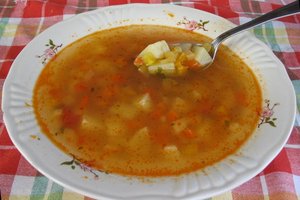
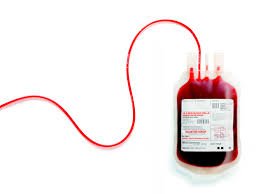
Examples of Aqueous Solutions: Soda, soup, tears, sweat, blood.
Non-Aqueous Solution: The solvent is a liquid other than water (e.g., gasoline, dry cleaning fluid).
Example: Gasoline is a non-aqueous solution.
Concentration of Solutions
The concentration of a solution describes the amount of solute dissolved in a given quantity of solvent. This is crucial for preparing solutions in laboratory and clinical settings.
Definition: Concentration is typically expressed as percent solution, grams per 100 mL, or grams per 1 dL of solvent.
Formula:
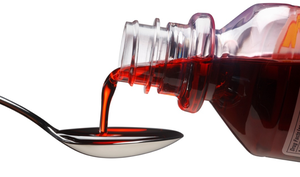
Example: Many drugs are dispensed as percent solutions.
Solving Percent Solution Problems
Calculating percent solutions involves identifying the solute and solvent, setting up the correct ratio, and performing the necessary arithmetic.
Step 1: Identify the solute (in grams) and the solvent (in mL or dL).
Step 2: Set up the ratio: grams of solute per 100 mL (or 1 dL) of solvent.
Step 3: Calculate the percent solution.
Example 1: 4 g sucrose in 100 mL water is a 4% sucrose solution.
Example 2: 12 g sucrose in 300 mL water is a 4% solution (after calculation: ).
Chemical Reactions
Chemical reactions are processes in which chemical bonds are broken and formed, resulting in the transformation of substances. These reactions are fundamental to all biological processes.
Reactants: Substances that start a chemical reaction.
Products: Substances formed as a result of a chemical reaction.
Energy: Chemical reactions may absorb or release energy.
Example: Cellular respiration and photosynthesis are essential biological reactions.
Types of Chemical Reactions
There are three main types of chemical reactions relevant to biology:
Combination Reaction: Two or more substances combine to form one product (e.g., ).
Decomposition Reaction: A compound breaks down into simpler substances (e.g., ).
Recombination (Replacement) Reaction: Elements in compounds exchange places (e.g., ).
Reading and Interpreting Chemical Reactions
Chemical equations represent the reactants and products in a reaction. Understanding coefficients and subscripts is essential for interpreting these equations.
Example: (carbon dioxide and water form carbonic acid).
Coefficients: Indicate the number of molecules (e.g., 2H2O means two molecules of water).
Subscripts: Indicate the number of atoms in a molecule (e.g., H2O has two hydrogen atoms).
Reversible Reactions
Some chemical reactions can proceed in both directions, indicated by a double-headed arrow (). These are important in biological systems for maintaining equilibrium.
Example: is reversible in blood, helping regulate pH.
Balanced Chemical Equations
All chemical equations must be balanced to obey the law of conservation of mass. This means the number of atoms of each element must be the same on both sides of the equation.
Steps to Balance Equations:
Write the number of atoms of each element for reactants and products.
Adjust coefficients to balance one element at a time.
Repeat for all elements until balanced.
Example: becomes when balanced.
Practice: Balancing Equations
Balancing equations is a key skill in chemistry and biology. Here are some examples:
Example 1:
Example 2:
Example 3:
Summary Table: Types of Chemical Reactions
Type of Reaction | General Form | Example |
|---|---|---|
Combination | A + B → AB | Mg + O2 → MgO2 |
Decomposition | AB → A + B | 2H2O → 2H2 + O2 |
Recombination | AB + CD → AD + CB | NaCl + AgNO3 → NaNO3 + AgCl |
Additional info: Understanding solutions and chemical reactions is foundational for topics such as metabolism, cellular respiration, and enzyme function in biology.
