 Back
BackCommunity Ecology: Species Interactions and Succession
Study Guide - Smart Notes
 Tailored notes based on your materials, expanded with key definitions, examples, and context.
Biodiversity in Communities
Species Diversity and Its Measurement
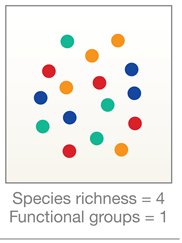
Biodiversity refers to the variety of life forms within a given ecosystem, community, or the entire planet. It is a central concept in community ecology and is typically quantified in three main ways:
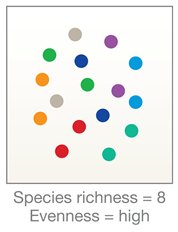
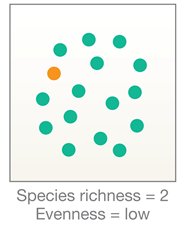
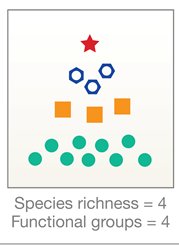
Species richness: The simple count of species present in a defined region.
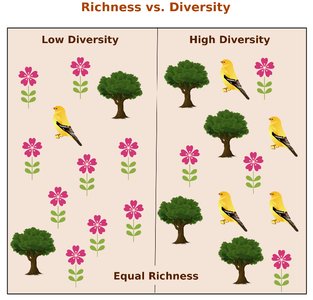
Species diversity: A weighted measure that incorporates both species richness and evenness (the relative abundance of each species present).
Phylogenetic diversity: The evolutionary distinctiveness of species, measured using branch lengths among species in a phylogeny.
Functional diversity: The ecological distinctiveness of species, measured by categorizing and counting the functional traits of species.
Relative abundance data are often unavailable, so species richness and diversity are sometimes used interchangeably, though they are distinct concepts.
Biodiversity Changes Through Time
Biodiversity is dynamic, changing through processes such as speciation (which increases diversity) and extinction (which decreases it). New ecosystems may form due to changes in abiotic conditions, such as volcanic activity, while disturbances can destroy existing ecosystems.

Estimating Global Species Richness
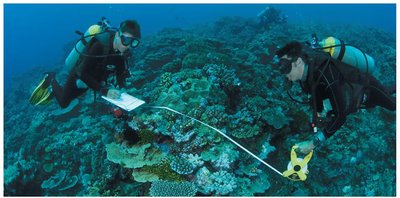
Biologists estimate that there are between 5 and 100 million species on Earth. Efforts such as the Census of Marine Life have cataloged thousands of new species, highlighting the vast unknown diversity, especially in marine environments.
Mapping and Hotspots of Biodiversity
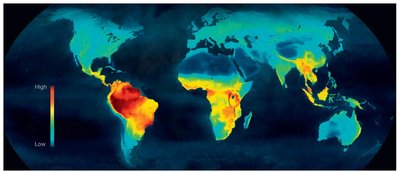
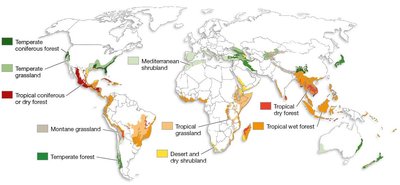
Biodiversity is not evenly distributed. Areas of highest biodiversity, or biodiversity hotspots, are regions with high numbers of endemic species and significant habitat loss. These hotspots are a high priority for conservation efforts.
Endemic species: Species found only in a specific geographic area.
Community Structure and Species Interactions
Defining Communities
A community consists of all the populations of interacting species living within a defined area. Community structure is shaped by:
Total number of species
Sum of interactions among all species
Relative abundance of those species
Physical attributes (abiotic and biotic factors)
Types of Species Interactions
Species interactions are classified based on their effects on the fitness of the interacting species:
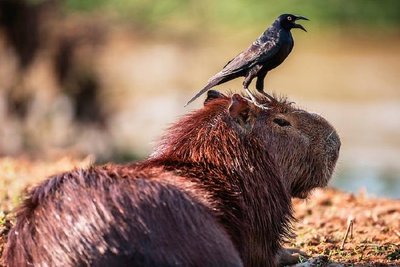
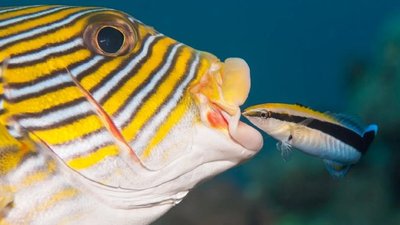
Commensalism (+/0): One species benefits, the other is unaffected.
Competition (-/-): Both species are harmed by the interaction.
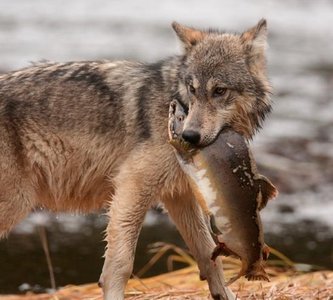
Consumption (+/-): One species benefits (consumer), the other is harmed (prey/host).
Mutualism (+/+): Both species benefit.
Commensalism
Commensalism is difficult to study because it is challenging to demonstrate the absence of an effect on the host species. Examples include birds nesting in trees or barnacles on whales.
Competition
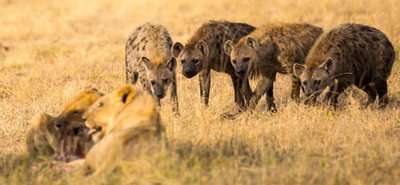
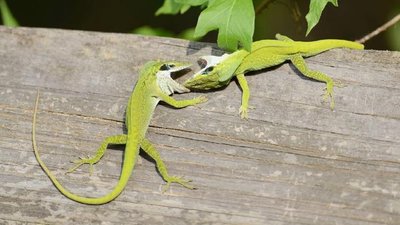
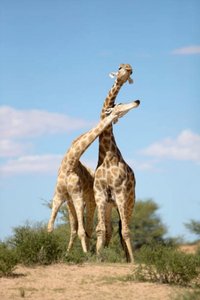
Competition occurs when individuals use the same resources, resulting in lower fitness for both. It can be intraspecific (within a species) or interspecific (between species). Competition is a major cause of density-dependent population growth and is closely linked to the concept of the niche—the range of resources a species can use or conditions it can tolerate.
Niche Differentiation and Character Displacement
When niches overlap, competition can lead to niche differentiation (resource partitioning) and character displacement (evolutionary changes in traits that reduce niche overlap). Classic studies with Paramecium and Galápagos finches illustrate these principles.

Consumption Interactions
Consumption includes predation, herbivory, and parasitism. These interactions can drive coevolutionary arms races, where consumers and their prey/hosts evolve adaptations and counter-adaptations.
Defensive Adaptations
Prey and hosts have evolved a variety of defenses:
Constitutive defenses: Always present (e.g., cryptic coloration, toxins, armor).
Inducible defenses: Produced in response to consumer attack (e.g., chemical toxins in plants).
Mutualism
Mutualism is a +/+ interaction where both species benefit. Examples include mycorrhizal fungi and plant roots, nitrogen-fixing bacteria and legumes, and pollinators and flowering plants. However, mutualisms can be exploited by "cheaters," turning the interaction into a +/– relationship.
Community Structure and Dynamics
Food Chains and Food Webs
Species interactions form complex networks. A food chain links species through consumption, while a food web summarizes all consumption interactions in a community.
Keystone Species and Community Control
Some species, known as keystone species, have a disproportionate influence on community structure. Their removal can cause dramatic changes, such as trophic cascades. For example, sea otters and sea stars are keystone predators in their respective ecosystems.
Bottom-Up and Top-Down Control
Bottom-up control: Abiotic factors (nutrients, sunlight, water) or ecosystem engineers (e.g., corals) determine community structure.
Top-down control: Consumers (predators) regulate the abundance and diversity of species below them in the food web.
Disturbance and Succession
Disturbance is any strong, short-lived disruption that changes the distribution of resources. The disturbance regime is characterized by the type, frequency, and severity of disturbances. Recovery after disturbance is called succession:
Primary succession: Occurs when a disturbance removes both organisms and soil (e.g., after lava flows or glacial retreat).
Secondary succession: Occurs when a disturbance removes some or all organisms but leaves the soil intact (e.g., after wildfire or logging).
Successional Pathways
Early successional communities are dominated by pioneer species (short-lived, good dispersers), while late successional communities are dominated by long-lived, competitive species. The sequence of species appearance is called the successional pathway.
Species Interactions During Succession
Facilitation: Early species make conditions more favorable for later species.
Tolerance: Existing species do not affect the probability of subsequent species establishment.
Inhibition: Presence of one species inhibits the establishment or regrowth of another.
Summary Table: Types of Species Interactions
Type of Interaction | Fitness Effects | Short-Term Impact | Long-Term Impact |
|---|---|---|---|
Commensalism | +/0 | Population size and range of commensal may depend on host | Strong selection on commensal; no selection on host |
Competition | -/- | Reduces population size of both; weaker competitor may be excluded | Niche differentiation via selection to reduce competition |
Consumption (Herbivory, Predation, Parasitism) | +/- | Impact depends on densities and effectiveness of defenses | Strong selection on prey for defense; coevolutionary arms races |
Mutualism | +/+ | Population size and range of each species depend on the other | Strong selection to maximize benefits and minimize costs |
