 Back
BackEcological Communities: Structure, Interactions, and Diversity
Study Guide - Smart Notes
 Tailored notes based on your materials, expanded with key definitions, examples, and context.
Ecological Communities
Introduction to Community Ecology
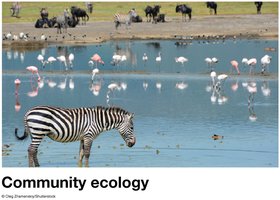
Community ecology is the study of interactions between species and the factors that affect the number, type, and relative abundance of species in a community. These interactions can be mutually beneficial, harmful, or neutral, and they collectively shape the structure and function of ecological communities.
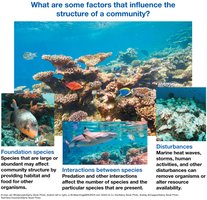
Community structure is influenced by competition, exploitation, positive interactions, foundation species, and disturbances.
Foundation species provide habitat and food for other organisms, significantly affecting community structure.
Disturbances such as climate events and human activities can remove organisms or alter resource availability.
Species Interactions in Communities
Types of Interspecific Interactions
Ecologists classify relationships between species in a community as interspecific interactions, which are grouped based on their effects on the survival and reproduction of the interacting individuals:
Competition (−/−): Both species are harmed.
Predation (+/−): One species benefits, the other is harmed.
Herbivory (+/−): An herbivore eats parts of a plant or alga.
Parasitism (+/−): A parasite derives nourishment from a host, harming it.
Mutualism (+/+): Both species benefit.
Commensalism (+/0): One species benefits, the other is unaffected.
Competition
Competition occurs when individuals of different species compete for a resource that limits their survival and reproduction. Species do not compete for resources that are abundant.
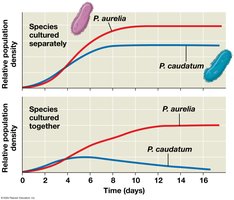
Interspecific competition can lead to the competitive exclusion principle: two species competing for the same limiting resources cannot permanently coexist in one place.
The inferior competitor will be locally eliminated if one species uses resources more efficiently and reproduces faster.
Example: Paramecium aurelia outcompetes P. caudatum when grown together.
Ecological Niches and Resource Partitioning
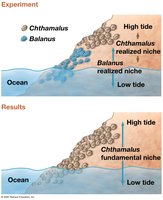
An ecological niche is the specific set of biotic and abiotic resources used by an organism. Ecologically similar species can coexist if their niches differentiate over time, a process called resource partitioning.
Fundamental niche: The potential niche a species could occupy.
Realized niche: The actual niche occupied when competitors are present.
Character Displacement
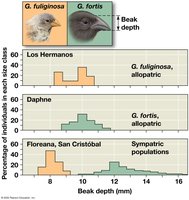
Character displacement is the tendency for characteristics to diverge more in sympatric than in allopatric populations of two species. This is often observed when species with overlapping ranges evolve differences to minimize competition.
Sympatric populations show greater differences in traits related to resource use than allopatric populations.
Exploitation
Exploitation refers to any (+/−) interaction in which one species benefits by feeding on another species, which is harmed. This includes predation, herbivory, and parasitism.
Predation
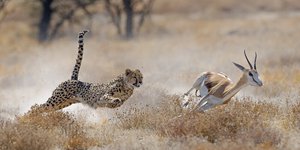
In predation (+/−), a predator kills and eats its prey. Predators have adaptations for capturing prey, while prey have evolved various defenses.
Predator adaptations: Acute senses, claws, fangs, poison.
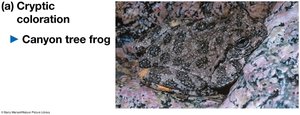
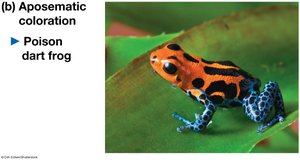
Prey defenses: Behavioral (hiding, fleeing), morphological (spines), physiological (toxins), and coloration (cryptic or aposematic).
Mimicry
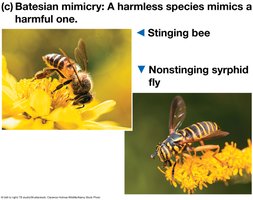
Some prey species gain protection by resembling other species. In Batesian mimicry, a harmless species mimics a harmful one.
Herbivory
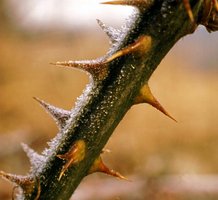
Herbivory (+/−) involves an herbivore eating parts of a plant or alga. Herbivores have adaptations for feeding on plants, while plants have evolved defenses such as toxins and physical structures (spines, thorns).
Parasitism
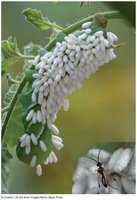
In parasitism (+/−), the parasite derives nourishment from its host, harming it. Parasites may be internal (endoparasites) or external (ectoparasites) and often have complex life cycles involving multiple hosts.
Positive Interactions
Positive interactions include mutualism (+/+) and commensalism (+/0), where at least one species benefits and neither is harmed.
Mutualism
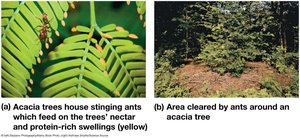
Mutualism is an interaction that benefits both species. Some mutualisms are obligate, while others are facultative.
Example: Acacia trees and ants depend on each other for survival and reproduction.
Commensalism
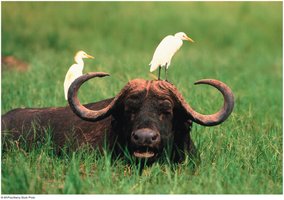
Commensalism benefits one species without affecting the other. For example, cattle egrets feed on insects flushed out by grazing herbivores.
Community Structure: Diversity and Trophic Structure
Species Diversity
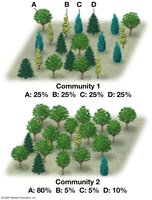
Species diversity is a key feature of community structure, consisting of:
Species richness: The number of different species in a community.
Relative abundance: The proportion each species represents of all individuals in the community.
Diversity can be quantified using the Shannon diversity index (H):
where is the relative abundance of species .
Diversity and Community Stability
Communities with higher diversity are generally more productive, stable, and resistant to invasive species. Experimental studies, such as those at Cedar Creek Ecosystem Science Reserve, support these findings.
Trophic Structure
Trophic structure describes the feeding relationships between organisms in a community. Food chains link trophic levels from producers to top carnivores, and food webs illustrate complex trophic interactions.
Species with a Large Impact
Foundation and Keystone Species
Foundation species: Highly abundant or large species that provide habitat or food for the community.
Keystone species: Not necessarily abundant, but have a pivotal ecological role in maintaining community structure.
Ecosystem Engineers
Ecosystem engineers cause physical changes in the environment that affect community structure (e.g., beavers building dams).
Community Organization: Bottom-Up and Top-Down Controls
Bottom-Up Control
Community structure is determined by nutrient availability, which controls producer abundance and thus higher trophic levels.
Top-Down Control
Predators control the abundance of herbivores, which in turn control producers. Effects cascade down the food chain as alternating positive and negative effects.
Disturbance and Community Dynamics
Disturbance and Nonequilibrium Model
Disturbances such as storms, fires, or human activities can change community composition by removing organisms or altering resource availability. The nonequilibrium model describes communities as constantly changing after disturbances.
Intermediate Disturbance Hypothesis
This hypothesis states that moderate levels of disturbance promote greater diversity than high or low levels. High disturbance excludes slow-growing species, while low disturbance allows dominant species to exclude others.
Ecological Succession
Ecological succession is the sequential change in community composition following a disturbance.
Primary succession: Occurs in lifeless areas (e.g., new volcanic islands).
Secondary succession: Occurs where a disturbance removes most but not all organisms.
Biogeographic Factors Affecting Community Diversity
Latitudinal Gradients
Species richness is greatest in the tropics and declines toward the poles, influenced by evolutionary history and climate (sunlight and precipitation).
Area Effects and Island Biogeography
The species-area curve shows that larger areas support more species. The island equilibrium model predicts species richness based on island size and distance from the mainland, balancing immigration and extinction rates.
Pathogens and Community Structure
Effects of Pathogens
Pathogens can dramatically alter community structure, especially when introduced to new habitats. Examples include diseases affecting coral reefs and forests.
Zoonotic Diseases
Many emerging human diseases are zoonotic, transferred from animals to humans, often via vectors. Understanding host and vector communities helps prevent disease spread.
