 Back
BackEcology, Climate, and Biomes: Organisms and the Environment
Study Guide - Smart Notes
 Tailored notes based on your materials, expanded with key definitions, examples, and context.
Ecology and Levels of Ecological Study
Definition and Scope of Ecology
Ecology is the scientific study of interactions between organisms and their environment, encompassing both biotic (living) and abiotic (non-living) components. Ecological research is organized into several hierarchical levels:
Organismal Ecology: Focuses on individual organisms and their physiological, morphological, and behavioral adaptations to the environment.
Population Ecology: Examines groups of individuals of the same species and factors affecting their size and distribution.
Community Ecology: Studies interactions among different species living in the same area.
Ecosystem Ecology: Investigates energy flow and nutrient cycling among organisms and their physical environment.
Biosphere Ecology: Encompasses global processes and patterns.
Abiotic Drivers of Climate
Major Abiotic Factors Influencing Climate
Climate is determined by several key abiotic factors:
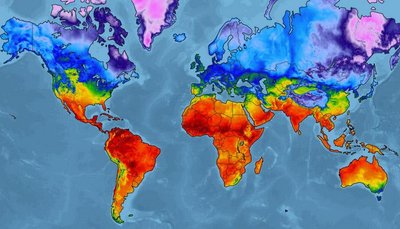
Solar Radiation: The tropics are warmer than temperate regions because sunlight strikes the equator more directly, delivering more energy per unit area.
Global Air Circulation: Warm air rises at the equator, cools, and releases moisture, creating wet tropical climates. Descending dry air at around 30° N and S creates deserts. These circulation cells (Hadley, Ferrel, Polar) drive global precipitation patterns.
Earth’s Orbit and Tilt: The tilt of Earth's axis (currently 23.5°) causes seasonal variation in temperature and day length. A greater tilt would result in more extreme seasons.
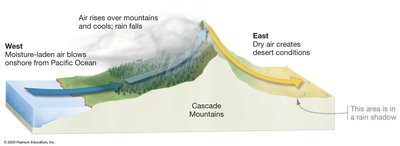
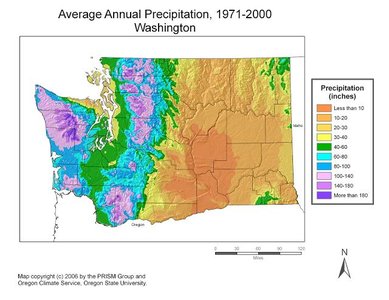
Mountains: Mountains affect climate by creating rain shadows—moist air rises and cools on the windward side, dropping precipitation, while the leeward side remains dry.
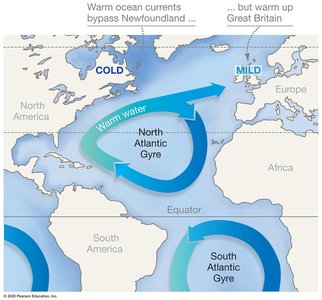
Oceans: Oceans moderate climate due to water’s high specific heat, leading to milder temperatures in coastal areas. Ocean currents (gyres) redistribute heat globally.
Biomes: Classification and Distribution
Definition and Determinants of Biomes
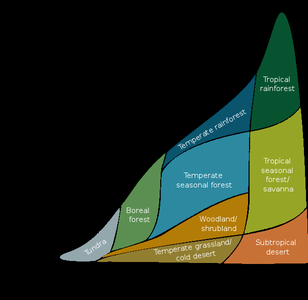
A biome is a large ecological region defined by its dominant vegetation type and distinctive abiotic conditions. The primary factors determining biome distribution are:
Temperature
Precipitation
Sunlight
Wind
Both the average and the variability of temperature and precipitation are important in shaping biomes.
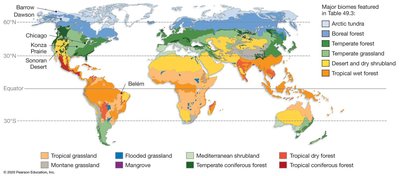
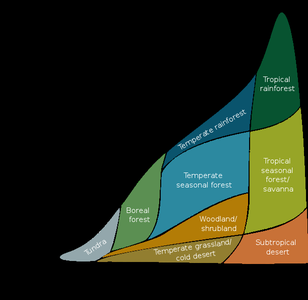
Major Terrestrial Biomes
Biome | Location | Climate | Dominant Vegetation | Productivity | Diversity |
|---|---|---|---|---|---|
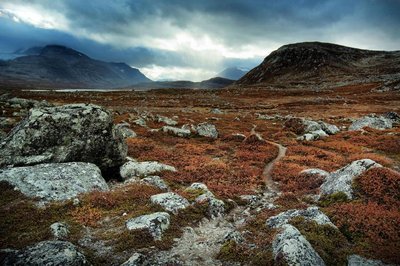
Arctic Tundra | High latitudes, north | Low temp, low precip, high seasonality | Mosses, lichens, low shrubs | Very low | Very low |
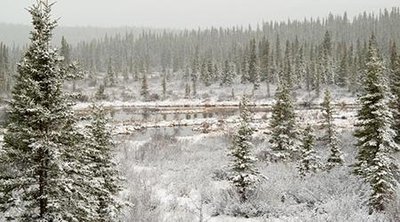
Boreal Forest (Taiga) | Below tundra, northern latitudes | Low temp, low precip, high seasonality | Evergreen conifers | Low | Low |
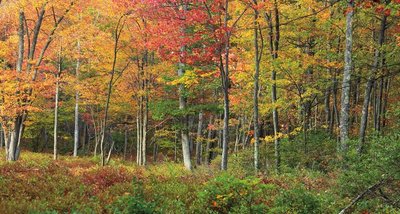
Temperate Forest | Mid-latitudes | Moderate temp & precip, moderate seasonality | Deciduous trees | Moderate | Moderate |
Temperate Grassland | Mid-latitudes | Moderate temp & precip, moderate seasonality | Grasses, shrubs | Moderate | Low |
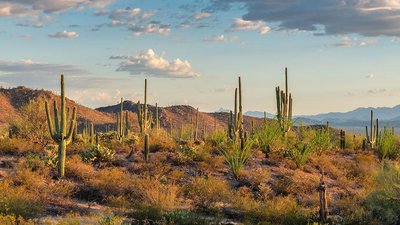
Desert | ~30° N & S | Low precip, high temp variation | Cacti, succulents | Very low | Low |
Tropical Grassland/Savanna | 15–20° N & S | Warm, moderate precip, low seasonality | Grasses, scattered trees | Moderate | Moderate |
Tropical Rainforest | Near equator | Warm, high precip, low seasonality | Broadleaf evergreens | Very high | Very high |
Net Primary Productivity (NPP) and Biomes
Net Primary Productivity (NPP) is the total amount of biomass produced by plants in a biome. Warmer and wetter biomes, such as tropical rainforests, have the highest NPP, while cold or dry biomes, like tundra and deserts, have the lowest.
Aquatic Biomes
Although terrestrial biomes are often emphasized, aquatic biomes are also crucial. Most of Earth's water is saltwater, with only a small fraction available as freshwater in lakes, rivers, and groundwater.
Distribution of Organisms: Abiotic and Biotic Factors
Determinants of Species Distribution
The distribution of organisms (where they are found) is shaped by both abiotic and biotic factors, past and present:
Abiotic factors: Temperature, precipitation, sunlight, soil, etc. Species are adapted to a limited range of abiotic conditions.
Biotic factors: Interactions with other organisms (competition, predation, disease) and dispersal ability.
Historical factors: Past climate changes and evolutionary history can restrict current distributions.
Performance Curves and Tolerance
Organismal tolerance to abiotic factors can be visualized with performance curves, which show how physiological performance varies with environmental conditions (e.g., temperature). The range between minimum and maximum tolerable values is the tolerance breadth. Acclimation and adaptation can shift or widen these curves.
The Ecological Niche
Concept of the Niche
An organism’s niche is its “place” in the environment, defined by the range of abiotic and biotic conditions it can tolerate and the resources it uses. G.E. Hutchinson formalized the niche as an n-dimensional hypervolume—each dimension representing a different environmental variable (e.g., temperature, humidity, nutrient concentration).
Fundamental niche: The full range of abiotic conditions under which a species can survive, grow, and reproduce.
Realized niche: The actual conditions and resources used, limited by biotic interactions (e.g., competition, predation).
Species distributions are often smaller than their fundamental niche due to these biotic constraints.
Examples
Barnacles: Their fundamental niche is set by abiotic factors (salinity, temperature, desiccation), but their realized niche is further limited by competition.
Hawaiian honeycreepers: Their fundamental niche includes forests from 1,000–3,500 m elevation, but avian malaria (a biotic factor) restricts their realized niche to 2,000–3,500 m.
Summary Table: Fundamental vs. Realized Niche
Type of Niche | Determined by | Definition | Example |
|---|---|---|---|
Fundamental | Abiotic factors | All possible environments where a species can survive and reproduce | Honeycreepers: 1,000–3,500 m elevation |
Realized | Biotic factors | Where a species is actually found, after accounting for competition, predation, etc. | Honeycreepers: 2,000–3,500 m elevation (due to malaria) |
