Back
BackEnergy, Enzymes, and Metabolism: Study Notes
Study Guide - Smart Notes
 Tailored notes based on your materials, expanded with key definitions, examples, and context.
Energy, Enzymes, and Metabolism
Introduction to Cellular Energy and Metabolism
Cells require energy to perform essential functions such as movement, growth, ion transport, and biochemical reactions. This energy is managed through a series of chemical reactions collectively known as metabolism. Metabolism is fundamental to life, enabling cells to extract energy from nutrients and assemble macromolecules.
Forms of Energy in Biological Systems
Potential and Kinetic Energy
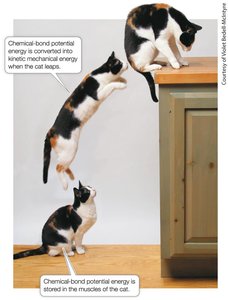
Energy exists in two primary forms: potential energy (stored energy, such as chemical bonds) and kinetic energy (energy of motion). In biological systems, chemical-bond potential energy is stored in molecules and converted to kinetic energy during cellular processes.
Metabolism: An Overview
Definition and Functions
Metabolism is the sum of all chemical reactions in a biological system. It serves to:
Obtain chemical energy from nutrients or sunlight
Convert nutrients into building blocks for macromolecules
Assemble macromolecules (proteins, nucleic acids, lipids, polysaccharides)
Form and degrade specialized biomolecules
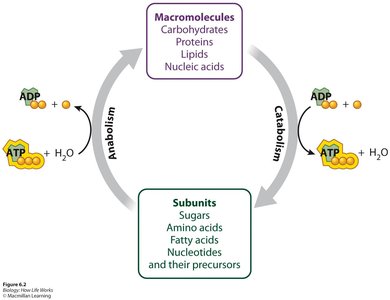
Metabolism is divided into two types:
Anabolism: Synthesis of complex molecules from simpler ones (requires energy)
Catabolism: Breakdown of complex molecules into simpler ones (releases energy)
Laws of Thermodynamics in Biology
First and Second Laws
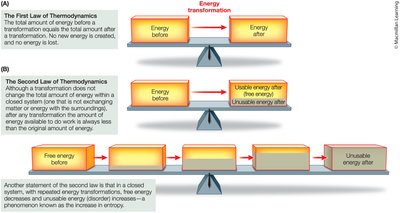
The First Law of Thermodynamics states that energy cannot be created or destroyed, only transformed. The Second Law of Thermodynamics states that energy transformations increase the disorder (entropy) of the universe, and some energy becomes unusable.
Bioenergetics: Gibbs Free Energy
Gibbs Free Energy and Reaction Spontaneity
Gibbs free energy (G) is the energy available to do work in a system. The change in free energy () during a reaction determines whether the reaction is spontaneous:
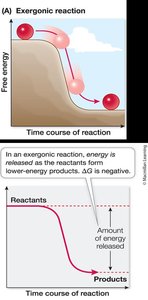
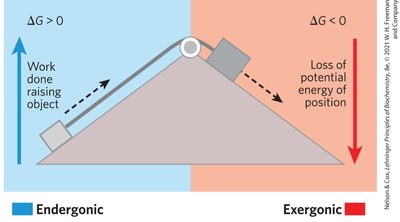
: Exergonic (spontaneous, energy-releasing)
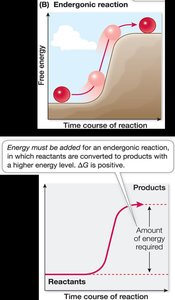
: Endergonic (non-spontaneous, energy-requiring)
: Equilibrium (no net change)
The relationship is given by:
Where is the change in enthalpy, is the absolute temperature, and is the change in entropy.
Exergonic and Endergonic Reactions
Energy Changes in Reactions
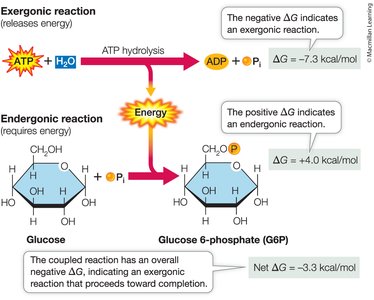
Exergonic reactions release energy and have a negative , while endergonic reactions require energy input and have a positive .
Chemical Equilibrium
Equilibrium Constant and Free Energy
At equilibrium, the rates of the forward and reverse reactions are equal. The equilibrium constant () describes the ratio of product to reactant concentrations at equilibrium:
When , products are favored ( is negative); when , reactants are favored ( is positive); when , the system is at equilibrium ().
ATP: The Energy Currency of the Cell
Structure and Function of ATP
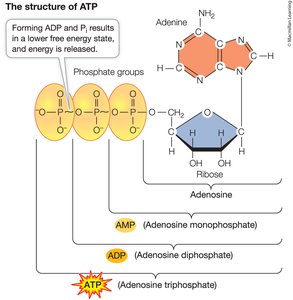
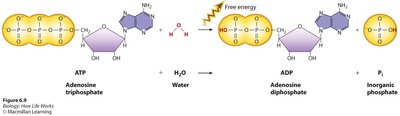
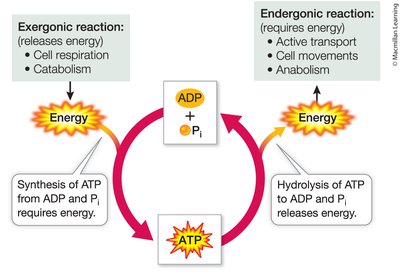
Adenosine triphosphate (ATP) stores energy in its high-energy phosphate bonds. Hydrolysis of ATP to ADP and inorganic phosphate () releases energy for cellular work.
ATP Coupling in Metabolism
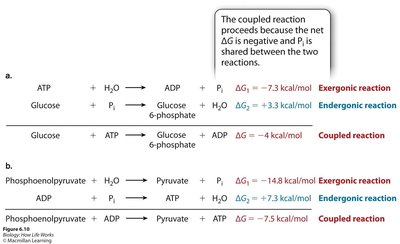
ATP hydrolysis (exergonic) is often coupled to endergonic reactions, allowing them to proceed. This coupling is essential for driving unfavorable reactions in cells.
Enzymes: Biological Catalysts
Activation Energy and Catalysis
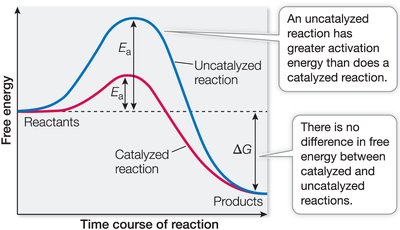
Enzymes lower the activation energy (E_a) required for reactions, increasing reaction rates without altering the overall free energy change ().
Structure and Function of Enzymes
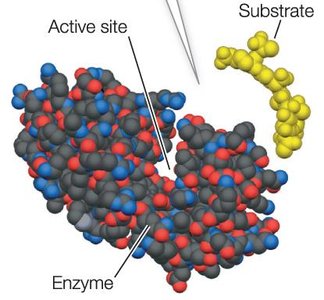
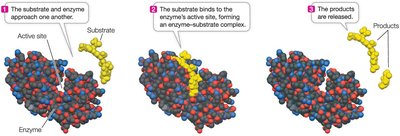
Enzymes are mostly proteins with a specific three-dimensional structure. The active site is a pocket where the substrate binds, forming an enzyme-substrate complex. Enzymes are highly specific and are not consumed in the reaction.
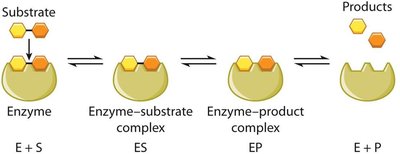
Mechanisms of Enzyme Catalysis
Substrate orientation
Inducing strain in substrate
Adding chemical groups
Factors Affecting Enzyme Activity
Substrate Concentration
Increasing substrate concentration increases reaction rate until all enzyme active sites are saturated, reaching a maximum rate (Vmax).
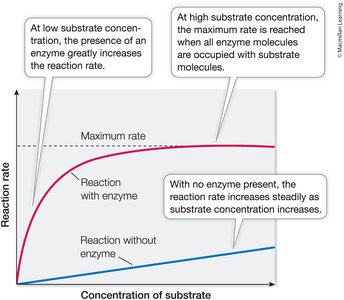
Temperature and pH
Enzymes have optimal temperature and pH ranges. Deviations can reduce activity or denature the enzyme.
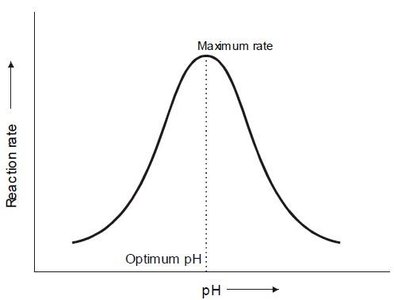
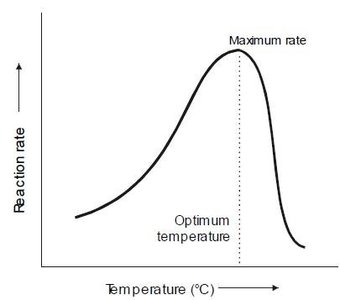
Cofactors
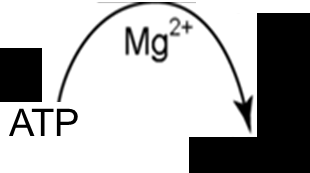
Many enzymes require cofactors (inorganic ions or organic coenzymes) for activity. Examples include metal ions (Mg2+, Zn2+) and vitamins (B vitamins).
Enzyme Inhibition
Types of Inhibition
Competitive inhibition: Inhibitor competes with substrate for the active site; can be overcome by increasing substrate concentration.
Noncompetitive inhibition: Inhibitor binds to a site other than the active site, altering enzyme function; cannot be overcome by increasing substrate concentration.
Uncompetitive inhibition: Inhibitor binds only to the enzyme-substrate complex, preventing product release.
Regulation of Metabolic Pathways
Feedback Inhibition (Negative Feedback)
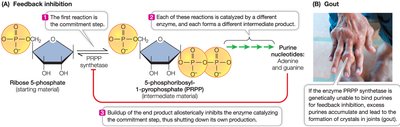
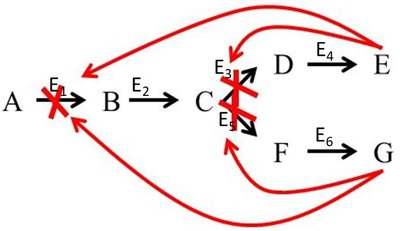
In feedback inhibition, the end product of a metabolic pathway inhibits an early enzyme (often at the allosteric site), preventing overproduction and conserving resources. This is a key regulatory mechanism in cells.