 Back
BackGeneral Biology II (BIO196) – Course Syllabus and Study Guide
Study Guide - Smart Notes
 Tailored notes based on your materials, expanded with key definitions, examples, and context.
Course Overview
General Biology II (BIO196) is a continuation of General Biology I, designed for students pursuing degrees in biological sciences and related fields. The course covers major concepts in evolution, diversity of life, and introductory ecology, preparing students for advanced studies in biology and health sciences.
Course Topics
Descent with Modification: A Darwinian View
The Origin of Species
Tracing Phylogeny: Macroevolution
Early Earth and the Origin of Life
Viruses
Prokaryotes and the Origins of Metabolic Diversity
Origin of Eukaryotic Diversity
Plant Diversity I: The Colonization of Land
Plant Diversity II: The Evolution of Seed Plants
Fungi
Introduction to Animal Evolution
Introduction to Ecology and the Biosphere
Learning Outcomes
Upon successful completion of this course, students will be able to:
Describe Darwin's contribution to the Theory of Evolution
Explain the role of natural selection in evolution
Illustrate how populations evolve
Define a biological species and demonstrate how population genetics accounts for speciation
Describe how macroevolution traces phylogeny and how systematics connects biological diversity to phylogeny
Summarize theories on the origins of life and metabolic diversity
Describe viruses and their relationship to cellular life forms
Summarize the evolutionary history of prokaryotic and eukaryotic diversity
Describe the evolution of plants and the colonization of land
Describe the morphology, diversity, and life cycles of fungi
Outline the evolution of animal diversity
Explain the structure and nature of ecosystems and human impacts on them
Course Structure and Requirements
Hybrid format: Online lectures, assignments, and lab simulations; in-person labs and exams
Textbook: Campbell Biology, 13th Edition (Reece et al.)
Online platforms: Canvas LMS, Mastering Biology, SimBio SimUText
Weekly time commitment: 15–20 hours
Assignments include online labs, in-class labs, field journal, and formal lab reports
Exams are held on campus during scheduled lab sessions
Major Units and Related Chapters
Unit | Related Chapters | Main Topics |
|---|---|---|
Unit 22 | Ch. 22 | Descent with Modification: Darwinian Evolution |
Unit 23 | Ch. 23 | Evolution of Populations |
Unit 24 | Ch. 24 | Origin of Species |
Unit 25 | Ch. 25 | History of Life on Earth |
Unit 26 | Ch. 26 | Phylogeny and the Tree of Life |
Unit 19 | Ch. 19 | Viruses |
Unit 27 | Ch. 27 | Bacteria and Archaea |
Unit 28 | Ch. 28 | Protists |
Unit 29 | Ch. 29 | Plant Diversity I |
Unit 31 | Ch. 31 | Fungi |
Unit 32 | Ch. 32 | Animal Evolution |
Laboratory Activities
Laboratory work is an essential component of the course, reinforcing concepts from lectures and readings. Labs include both online simulations and in-person experiments.
SimBio Labs: Darwinian Snails, Sickle-Cell Alleles, Genetic Drift, Keystone Predators
In-class Labs: Drosophila genetics, Chromosome smears, Human Microbe Symbionts
Online Labs: The Day the Mesozoic Died, Phylogeny & Lizard Evolution, Trophic Cascade
Field Journal: Weekly observations of local organisms or biological activities
Grading Breakdown
Component | Percentage of Final Grade |
|---|---|
SimBio Lab Activities | 10% |
Online and In-class Labs | 10% |
Formal Lab Report | 5% |
Mastering Biology Assignments | 10% |
Field Journal | 5% |
Viewing Online Lectures | 15% |
Viewing Online Supplemental Videos | 5% |
Average of Unit Exams | 40% |
Key Concepts and Definitions
Descent with Modification and Evolution
Evolution is the process by which species change over time through mechanisms such as natural selection, genetic drift, and gene flow. Charles Darwin's theory of natural selection explains how advantageous traits become more common in populations.
Natural Selection: The differential survival and reproduction of individuals due to differences in phenotype.
Speciation: The formation of new and distinct species in the course of evolution.
Phylogeny: The evolutionary history and relationships among individuals or groups of organisms.
Macroevolution and Systematics
Macroevolution refers to large-scale evolutionary changes that occur over long periods, such as the emergence of new species and higher taxonomic groups. Systematics is the scientific study of the diversity and relationships among organisms, often visualized as phylogenetic trees.
Taxonomy: The science of naming, describing, and classifying organisms.
Cladistics: A method of classification based on common ancestry.
Origins of Life and Metabolic Diversity
The origin of life on Earth is hypothesized to have begun with simple molecules forming complex organic compounds, eventually leading to self-replicating systems. Metabolic diversity among prokaryotes includes various modes of energy acquisition, such as photosynthesis, chemosynthesis, and heterotrophy.
Viruses and Prokaryotes
Viruses are non-cellular infectious agents that require host cells to replicate. Prokaryotes, including Bacteria and Archaea, are unicellular organisms without a nucleus, exhibiting remarkable metabolic diversity and ecological roles.
Eukaryotic Diversity and Plant Evolution
Eukaryotes are organisms with membrane-bound nuclei and organelles. The evolution of plants involved the colonization of land, development of vascular tissues, seeds, and flowers, leading to the vast diversity of modern plant life.
Fungi and Animal Evolution
Fungi are a kingdom of heterotrophic organisms with chitinous cell walls, playing key roles as decomposers. Animal evolution traces the emergence of multicellularity, tissues, and complex body plans.
Ecology and the Biosphere
Ecology is the study of interactions between organisms and their environment. The biosphere encompasses all ecosystems on Earth, with humans having significant impacts on natural systems.
Course Policies and Student Responsibilities
Adherence to deadlines for assignments and lab reports
Academic integrity: No plagiarism or cheating
Lab safety: Compliance with all safety regulations and instructor instructions
Accessibility: Students with documented disabilities should contact Disability Support Services for accommodations
Important Resources
Mastering Biology (Pearson): Online assignments and activities
SimBio SimUText: Interactive lab simulations
Canvas LMS: Course materials, grades, and announcements
Sample Laboratory Schedule
Lab Activity | Due Date |
|---|---|
Darwinian Snails (SimBio) | June 10 |
Sickle-Cell Alleles (SimBio) | June 17 |
Drosophila Prediction Sheet (in-class) | June 17 |
The Day the Mesozoic Died (online) | June 24 |
Genetic Drift and Bottleneck Ferrets (SimBio) | June 24 |
Phylogeny & Lizard Evolution (online) | July 1 |
White Eyed Trait in Drosophila (in-class) | July 8 |
Preparing a Chromosome Smear (in-class) | July 8 |
Field Journal | July 22 |
Human Microbe Symbionts (in-class) | July 22 |
Keystone Predators (SimBio) | July 24 |
Trophic Cascade (online) | July 24 |
Exam Schedule
Exam | Chapters Covered | Date |
|---|---|---|
Exam 1 | Units 22, 23, 24 | June 18 |
Exam 2 | Units 25, 26 | June 25 |
Exam 3 | Units 19, 27, 28 | July 9 |
Exam 4 | Units 29, 31, 32 | July 16 |
Optional Final Exam | Comprehensive | July 23 |
Lab Safety Agreement
Students must read, understand, and agree to all laboratory safety regulations as outlined in the syllabus, lab manual, and supplemental handouts. Violations may result in removal from the lab and a zero for the exercise, with repeated offenses leading to dismissal from the course.
Images
Note: Images are included only when directly relevant to the course content.
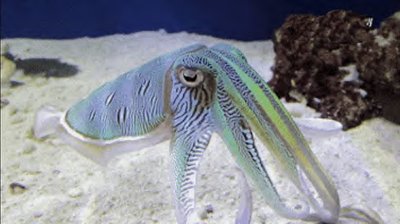
Example: The cuttlefish (Family: Sepiidae) is an example of animal diversity and adaptation, relevant to the study of evolution and animal morphology.
