 Back
BackHow Genes Are Controlled: Regulation of Gene Expression, Cloning, and the Genetic Basis of Cancer
Study Guide - Smart Notes
 Tailored notes based on your materials, expanded with key definitions, examples, and context.
Control of Gene Expression
Gene Expression and Regulation
Gene expression is the process by which genetic information flows from DNA to proteins, ultimately determining phenotype. Regulation of gene expression allows cells to respond to environmental changes and maintain homeostasis.
Gene regulation refers to the turning on and off of genes.
In prokaryotes, genes for related enzymes are often organized into operons, which are controlled together.
Regulatory proteins bind to specific DNA sequences to control gene activity.
The Lac Operon
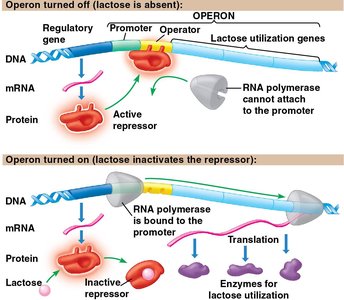
The lac operon is a classic example of gene regulation in prokaryotes, specifically in Escherichia coli (E. coli). It controls the expression of genes required for lactose metabolism.
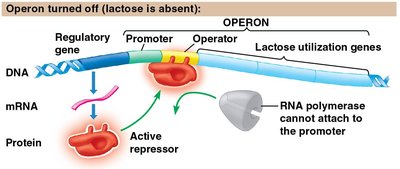
When lactose is absent, a repressor protein binds to the operator, blocking RNA polymerase and preventing transcription.
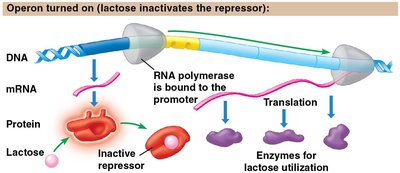
When lactose is present, it inactivates the repressor, allowing RNA polymerase to transcribe the genes needed for lactose utilization.
Types of Operons: Inducible vs. Repressible
Operons can be regulated by different mechanisms:
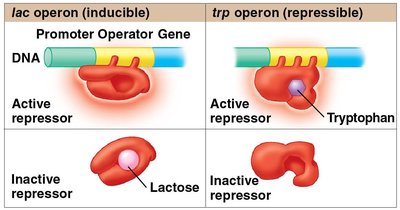
Inducible operons (e.g., lac operon): Usually off but can be turned on by an inducer (e.g., lactose).
Repressible operons (e.g., trp operon): Usually on but can be turned off when a corepressor (e.g., tryptophan) is present.
Gene Expression in Eukaryotes
Chromosome Structure and Epigenetic Regulation
In eukaryotes, gene expression is regulated at multiple levels, including chromatin structure and chemical modifications.
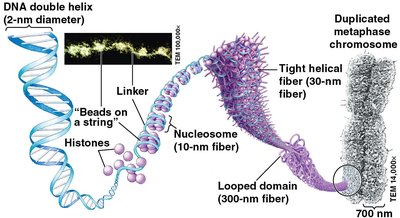
DNA is wrapped around histone proteins, forming nucleosomes and higher-order structures that can block access to transcription machinery.
Chemical modifications (e.g., methylation, acetylation) of DNA or histones can lead to epigenetic inheritance, affecting gene expression without altering the DNA sequence.
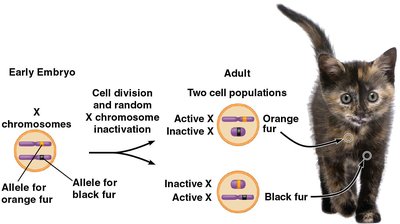
X chromosome inactivation in female mammals is an example of gene silencing through DNA packing.
Transcriptional Control in Eukaryotes
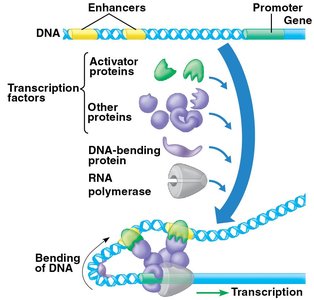
Transcription in eukaryotes is regulated by complex assemblies of proteins called transcription factors, which help RNA polymerase bind to promoters.
Enhancers and activator proteins increase the rate of transcription.
DNA bending proteins help bring distant regulatory elements into contact with the promoter region.
Alternative RNA Splicing
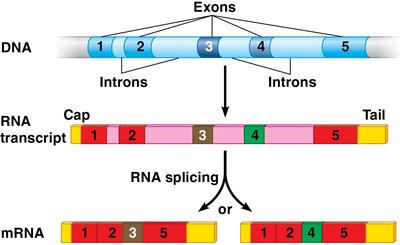
After transcription, eukaryotic RNA can be spliced in different ways to produce multiple mRNA variants from a single gene, increasing protein diversity.
Exons are joined in various combinations, while introns are removed.
Over 90% of human protein-coding genes undergo alternative splicing.
Post-Transcriptional and Translational Regulation
Gene expression can also be regulated after transcription:
The stability and lifetime of mRNA molecules affect how much protein is produced.
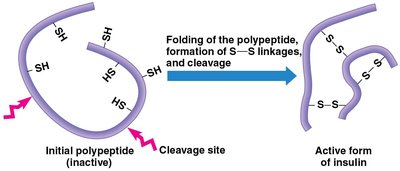
Proteins may require activation (e.g., cleavage, folding) before becoming functional.
Proteins are eventually degraded, regulating their levels in the cell.
Noncoding RNAs and Gene Silencing
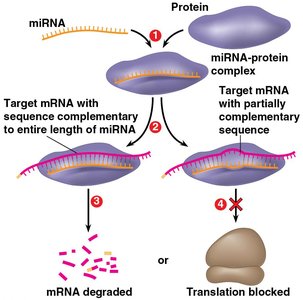
Most of the eukaryotic genome does not code for proteins but produces noncoding RNAs (ncRNAs) that play regulatory roles.
Small RNAs, such as microRNAs (miRNAs), can bind to mRNA and either degrade it or block its translation, preventing protein production.
Multiple Mechanisms of Regulation
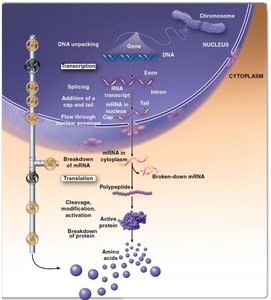
Gene expression in eukaryotes is regulated at many stages, from DNA unpacking to protein degradation.
Regulation can occur in the nucleus (e.g., transcription, RNA processing) and cytoplasm (e.g., translation, protein modification).
Gene Expression and Development
Homeotic Genes and Animal Development
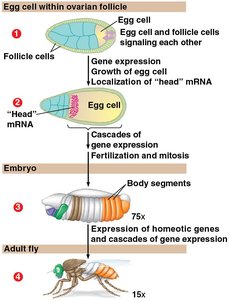
During development, gene expression is tightly regulated to ensure proper formation of tissues and organs.
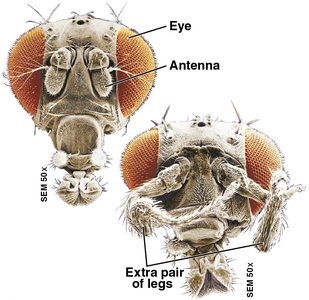
Homeotic genes are master control genes that regulate the expression of other genes, determining the body plan of an organism.
Mutations in these genes can lead to dramatic changes in anatomy, as seen in fruit flies.
Monitoring Gene Expression
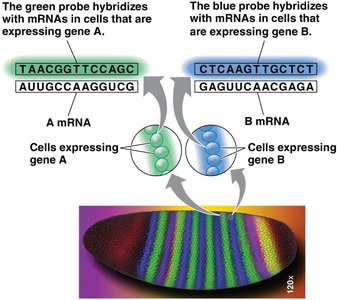
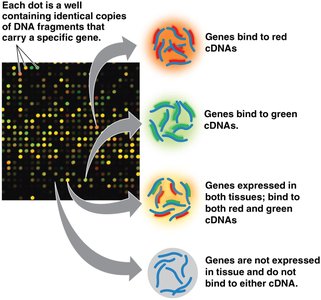
Researchers use techniques such as nucleic acid hybridization and DNA microarrays to study gene expression patterns.
Nucleic acid hybridization identifies cells expressing specific genes.
DNA microarrays allow simultaneous analysis of thousands of genes to determine which are active in a cell.
Cell Signaling and Gene Expression
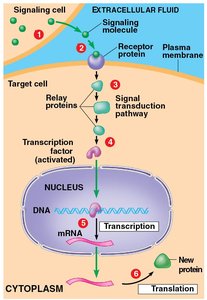
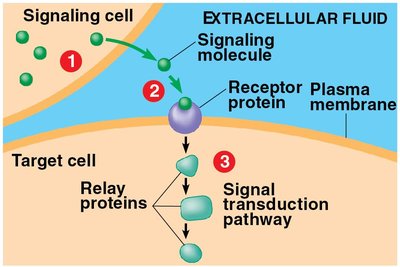
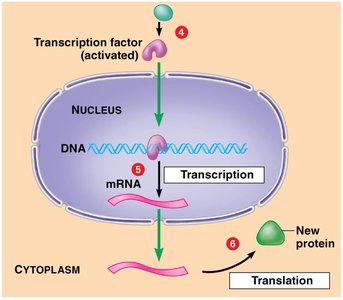
Cells communicate through signaling molecules that trigger changes in gene expression via signal transduction pathways.
A signaling molecule binds to a receptor protein on the target cell's membrane.
This activates a cascade of relay proteins, ultimately leading to the activation of transcription factors and gene expression.
Evolution of Cell-Signaling Systems
Similarities in cell-signaling mechanisms across diverse organisms suggest these systems evolved early in the history of life.
Cloning of Plants and Animals
Plant Cloning and Totipotency
Cloning demonstrates that differentiated cells can retain the genetic potential to produce all cell types.
A clone is an organism produced asexually and genetically identical to its parent.
Totipotent cells can give rise to all cell types in an organism.
Regeneration in animals also shows that differentiation does not necessarily limit genetic potential.
Animal Cloning via Nuclear Transplantation
Animal cloning involves transferring the nucleus from a donor cell into an enucleated egg cell, resulting in a clone of the donor.
In mammals, the resulting embryo (blastocyst) is implanted into a surrogate mother (reproductive cloning).
Therapeutic Cloning and Stem Cells
Therapeutic cloning aims to produce embryonic stem cells for medical applications.
Embryonic stem cells can differentiate into any cell type, while adult stem cells are more limited.
The Genetic Basis of Cancer
Cancer and Gene Mutations
Cancer results from mutations in genes that control cell division, leading to uncontrolled cell growth.
Proto-oncogenes are normal genes that promote cell division; mutations can convert them into oncogenes that cause excessive division.
Tumor-suppressor genes inhibit cell division; mutations that inactivate these genes can also lead to cancer.
Multistep Development of Cancer
Cancer typically develops through a series of genetic changes, as illustrated by the progression of colon cancer.
Multiple mutations accumulate in a single cell, leading to malignancy.
Signal Transduction Pathways and Cancer
Many cancer-related genes encode proteins involved in signal transduction pathways that regulate the cell cycle.
Mutations in these pathways can lead to uncontrolled cell division.
Lifestyle and Cancer Risk
Most cancers are caused by environmental factors (carcinogens) that induce mutations. Lifestyle choices, such as avoiding tobacco and excessive sun exposure, can reduce cancer risk.
Summary Table: Key Mechanisms of Gene Regulation
Level of Regulation | Mechanism | Example |
|---|---|---|
DNA/Chromatin | DNA packing, chemical modification | X chromosome inactivation |
Transcription | Transcription factors, enhancers | Activator proteins in eukaryotes |
RNA Processing | Alternative splicing | Multiple mRNAs from one gene |
Translation | miRNA-mediated silencing | miRNA blocking translation |
Post-Translation | Protein modification, degradation | Activation of insulin |
