 Back
BackHow Populations Evolve: Study Notes for General Biology
Study Guide - Smart Notes
 Tailored notes based on your materials, expanded with key definitions, examples, and context.
Darwin’s Theory of Evolution
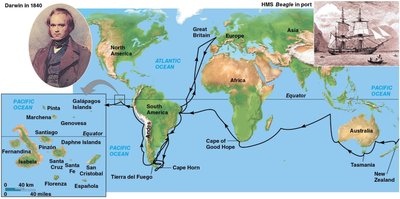
Historical Context and Darwin’s Voyage
Charles Darwin’s observations during his voyage on the HMS Beagle (1831–1836) were foundational to the development of evolutionary biology. His studies of diverse organisms and environments, especially in the Galápagos Islands, led him to propose the theory of evolution by natural selection.
Descent with modification: All life is connected by common ancestry, and species accumulate adaptations over time.
Theory status: Evolution by natural selection is a scientific theory—broad in scope, generating new hypotheses, and supported by extensive evidence.
Evidence for Evolution: The Fossil Record
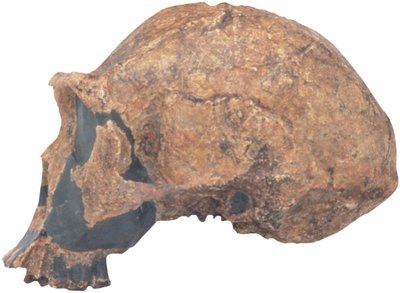
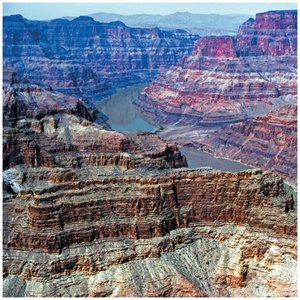
Fossils are the preserved remains or imprints of organisms from the past. They provide crucial evidence for evolutionary change and document the sequence of life on Earth.
Fossil record: Shows differences between past and present organisms and reveals many extinct species.
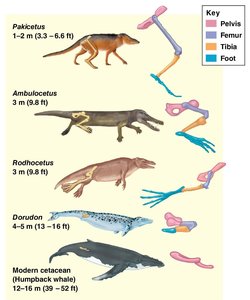
Transitional fossils: Link extinct species with living ones, illuminating evolutionary pathways (e.g., the transition from land mammals to whales).
Homology and Evolutionary Relationships
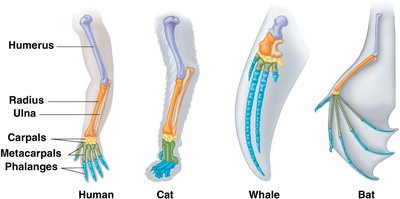
Homology refers to similarity resulting from common ancestry. Evolution is a remodeling process, and related species may have structures with different functions but similar underlying anatomy.
Structural homologies: Example—forelimbs of humans, cats, whales, and bats share the same bone arrangement.
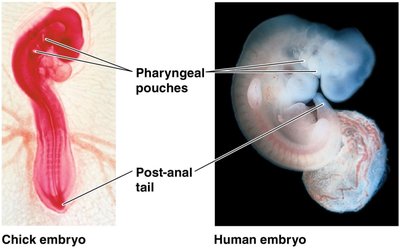
Developmental homologies: Early embryonic stages of vertebrates show similarities not visible in adults.
Vestigial structures: Remnants of features that served important functions in ancestors.
Evolutionary Trees
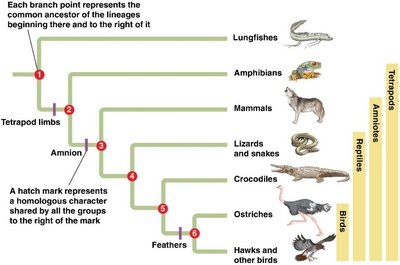
Biologists use evolutionary trees to represent patterns of descent. Homologous anatomical and molecular structures help determine branching sequences.
The Mechanism of Evolution: Natural Selection
Artificial and Natural Selection
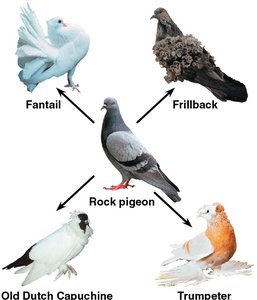
Darwin compared natural selection to artificial selection, where humans breed plants and animals for desired traits. He reasoned that natural selection could similarly shape species over time.
Key points about natural selection:
Populations, not individuals, evolve.
Natural selection acts only on heritable traits.
Evolution is not goal-directed; it does not produce perfect organisms.
Observing Natural Selection
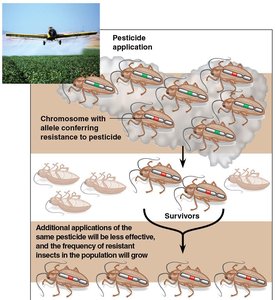
Natural selection can be observed in real time, such as the evolution of pesticide resistance in insects. These adaptations demonstrate that natural selection edits existing variation and is context-dependent.
The Evolution of Populations
Genetic Variation: Mutation and Sexual Reproduction
Genetic variation is the raw material for evolution. Mutations introduce new alleles, while sexual reproduction shuffles alleles through crossing over, independent assortment, and random fertilization.
Sources of genetic variation:
Mutation
Crossing over during meiosis
Independent orientation of chromosomes
Random fertilization
Population Genetics and the Hardy-Weinberg Principle
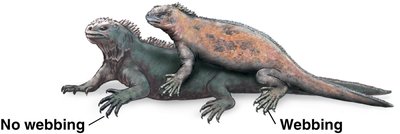
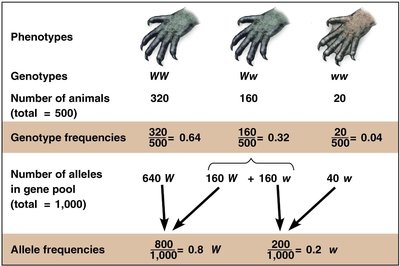
A population is a group of interbreeding individuals of the same species. The gene pool includes all alleles at all loci in the population. Microevolution is a change in allele frequencies over time.
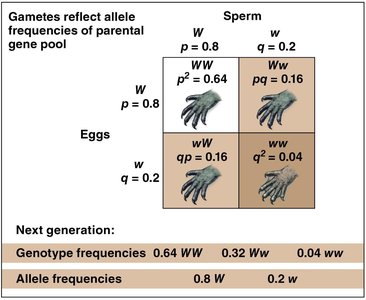
Hardy-Weinberg equilibrium: Allele and genotype frequencies remain constant if the population is large, mating is random, and there is no mutation, gene flow, or natural selection.
Equation: where and are the frequencies of two alleles.
Applications of Hardy-Weinberg
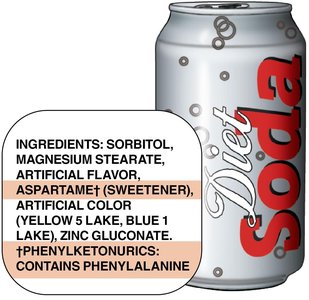
The Hardy-Weinberg equation is used in public health to estimate the frequency of carriers for genetic diseases, such as phenylketonuria (PKU).
Mechanisms of Microevolution
Natural Selection, Genetic Drift, and Gene Flow
Three main mechanisms cause microevolution:
Natural selection: Differential survival and reproduction of individuals with advantageous traits.
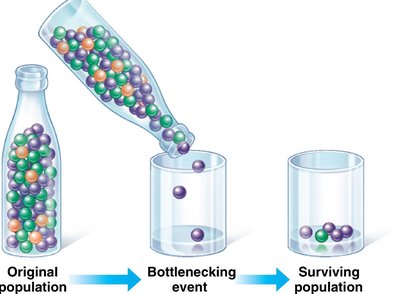
Genetic drift: Random changes in allele frequencies, especially in small populations. Includes the bottleneck effect (drastic reduction in population size) and founder effect (new population started by a few individuals).
Gene flow: Movement of alleles between populations through migration.
Adaptive Evolution and Relative Fitness
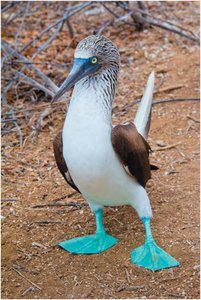
Only natural selection consistently leads to adaptive evolution, increasing the frequency of traits that enhance survival and reproduction. Relative fitness measures an individual’s contribution to the next generation compared to others.
Modes of Natural Selection
Natural selection can alter phenotypic variation in three ways:
Stabilizing selection: Favors intermediate phenotypes.
Directional selection: Favors one extreme phenotype.
Disruptive selection: Favors both extreme phenotypes over intermediates.
Example: Beak size in finches can be subject to different modes of selection depending on environmental conditions.
Sexual Selection
Sexual selection is a form of natural selection where individuals with certain traits are more likely to obtain mates. It can lead to pronounced differences between males and females (sexual dimorphism).
Intrasexual selection: Competition among the same sex for mates.
Intersexual selection (mate choice): One sex (usually females) selects mates based on certain traits.
Evolution of Drug-Resistant Microorganisms
Antibiotic resistance in bacteria is a major public health concern. Overuse and misuse of antibiotics accelerate the evolution of resistant strains.
Preserving Genetic Variation
Genetic variation is maintained through mechanisms such as diploidy (hiding recessive alleles) and balancing selection (e.g., heterozygote advantage, where heterozygotes have higher fitness).
Limits of Natural Selection
Natural selection cannot produce perfect organisms due to several constraints:
Acts only on existing variation
Limited by historical constraints
Adaptations are often compromises
Chance and environmental changes can affect outcomes
Summary Table: Mechanisms of Microevolution
Mechanism | Description | Effect on Genetic Variation |
|---|---|---|
Natural Selection | Favors traits that increase fitness | Can increase or decrease variation |
Genetic Drift | Random changes, especially in small populations | Reduces variation |
Gene Flow | Movement of alleles between populations | Can increase variation within populations |
Additional info: These notes are based on Chapter 13 of Campbell Biology: Concepts & Connections, Tenth Edition, and are suitable for General Biology college students studying evolution and population genetics.
