 Back
BackInside the Cell: Structure and Function of Prokaryotic and Eukaryotic Cells
Study Guide - Smart Notes
 Tailored notes based on your materials, expanded with key definitions, examples, and context.
Inside the Cell
Cell Theory and Universal Cell Features
Cell theory is a foundational concept in biology, stating that all living organisms are composed of cells. Cells share several universal features that are essential for life:
Proteins: Perform most cellular functions, including catalysis, structure, and signaling.
Nucleic acids: Store, transmit, and process genetic information (DNA and RNA).
Carbohydrates: Provide chemical energy, carbon, structural support, and cellular identity.
Plasma membrane: Serves as a selectively permeable barrier, regulating entry and exit of substances.
Classification of Cells and Domains of Life
Cells are classified based on morphology and evolutionary history:
Eukaryotes: Possess a membrane-bound nucleus.
Prokaryotes: Lack a membrane-bound nucleus.
Organisms are divided into three domains:
Bacteria: Prokaryotic
Archaea: Prokaryotic
Eukarya: Eukaryotic
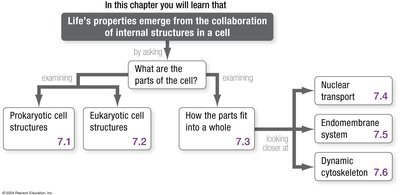
Prokaryotic Cell Structures and Functions
Prokaryotic Cell Parts List
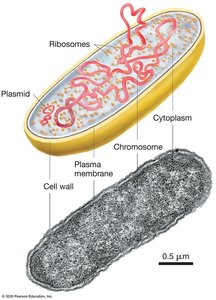
Prokaryotic cells, including bacteria and archaea, possess distinctive structures and functions:
At least one chromosome (usually circular)
Numerous ribosomes for protein synthesis
Phospholipid membrane composition differs between bacteria and archaea
Cytoplasm: All contents inside the plasma membrane
Phospholipid Differences: Bacteria vs. Archaea
Bacterial phospholipids consist of fatty acids bound to glycerol, while archaeal phospholipids use branched isoprenoid chains bound to glycerol. This difference affects membrane stability and adaptation to extreme environments.

Chromosome and Nucleoid Organization
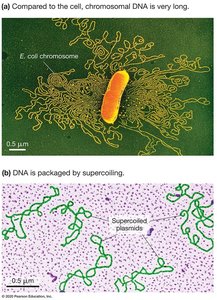
The chromosome is the most prominent structure in prokaryotic cells, typically a single, circular DNA molecule associated with proteins. The DNA is organized in a region called the nucleoid. Prokaryotes may also contain plasmids—small, circular, supercoiled DNA molecules.
Plasmids: Carry genes for specialized functions, such as antibiotic resistance.

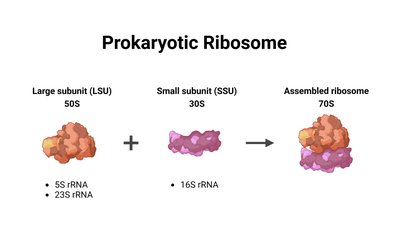
Ribosomes in Prokaryotes
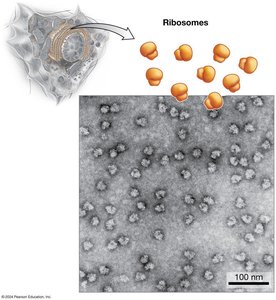
Ribosomes are macromolecular machines composed of RNA and protein, responsible for protein synthesis. Prokaryotic ribosomes consist of a large (50S) and small (30S) subunit, forming a 70S assembled ribosome.
Primary structure of RNA and protein components differs between bacteria and archaea.

Cytoskeleton in Prokaryotes
Bacteria and archaea contain long, thin protein filaments forming the cytoskeleton, which is essential for cell division and maintaining cell shape.
Protein filaments serve various roles, including structural support and division.
Internal Membrane Complexes in Photosynthetic Prokaryotes
Photosynthetic prokaryotes possess internal membrane complexes that convert sunlight into chemical energy. These membranes develop as infoldings of the plasma membrane and contain enzymes and pigments necessary for photosynthesis.

Specialized Organelles in Prokaryotes
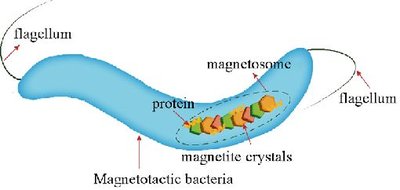
Some bacteria have internal compartments (organelles) for specialized functions, such as storing calcium ions, holding magnetite crystals for navigation, or concentrating enzymes for biosynthesis.

Cell Wall Structure in Prokaryotes
The cell wall forms a protective exoskeleton, providing shape and rigidity. In bacteria, the primary structural component is the polysaccharide peptidoglycan. Some bacteria have an additional outer membrane made of glycolipids.
External Structures: Flagella and Fimbriae
Many prokaryotes interact with their environment using external structures:
Flagella: Long filaments that rotate to propel the cell.
Fimbriae: Needlelike projections that promote attachment to surfaces or other cells.

Eukaryotic Cell Structures and Functions
Size and Diversity of Eukaryotic Cells
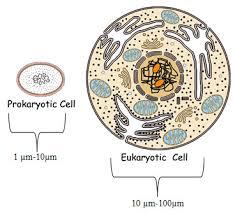
Eukaryotic cells range from microscopic algae to large multicellular organisms. They are generally larger (5–100 µm) than prokaryotic cells (1–10 µm) and may be unicellular or multicellular.
Benefits of Organelles in Eukaryotes
Organelles compartmentalize the cell's interior, allowing separation of incompatible reactions and increasing the efficiency of chemical processes. The cytosol is the fluid portion of the cell, with a relatively small volume.
Compartmentalization offsets low surface-area-to-volume ratio in large cells.


The Nucleus
The nucleus is a large, highly organized compartment surrounded by a double-membrane nuclear envelope. It contains the nucleolus, where ribosomal RNA is synthesized and ribosome subunits are assembled. The nuclear lamina provides structural support.

Ribosomes in Eukaryotes
Eukaryotic ribosomes are complex molecular machines that manufacture proteins. They lack a membrane and are found free in the cytosol or attached to the endoplasmic reticulum. Free ribosomes produce proteins for the cytosol or organelles, while attached ribosomes synthesize proteins destined for membranes or secretion.
Endoplasmic Reticulum (ER)
The ER is an extensive membrane-enclosed factory, continuous with the nuclear envelope. It has two distinct regions:
Rough ER (RER): Studded with ribosomes, synthesizes proteins for organelles, membranes, or secretion.
Smooth ER (SER): Lacks ribosomes, contains enzymes for lipid synthesis, breakdown, detoxification, and serves as a reservoir for Ca2+ ions.

Golgi Apparatus
The Golgi apparatus processes, sorts, and ships proteins synthesized in the RER. It consists of stacked, flat membranous sacs called cisternae, with distinct cis (near nucleus) and trans (toward plasma membrane) sides. Vesicles transport materials to and from the Golgi.
Lysosomes
Lysosomes are recycling centers found only in animal cells, containing about 40 different enzymes specialized for hydrolyzing waste, macromolecules, and foreign invaders. Acid hydrolases work best at pH 5.0, maintained by proton pumps.
Vacuoles
Vacuoles are prominent organelles in plant, fungal, and other eukaryotic cells. They digest and recycle macromolecules, store water and ions, and may contain pigments or noxious compounds for protection.
Peroxisomes
Peroxisomes are globular organelles found in all eukaryotic cells, originating from the ER. They are centers of reduction–oxidation (redox) reactions, including detoxification of hydrogen peroxide by catalase. Specialized plant peroxisomes (glyoxysomes) oxidize fats for energy storage.
Mitochondria
Mitochondria supply ATP to cells and have two membranes. The inner membrane is folded into cristae, enclosing the mitochondrial matrix. Mitochondria are dynamic, capable of fusion and fission, and contain their own DNA and ribosomes, allowing independent growth and division.
Chloroplasts
Chloroplasts are found in plant and algal cells, where photosynthesis occurs. They have three membranes, with thylakoids arranged in stacks (grana) surrounded by stroma. Chloroplasts contain their own DNA and ribosomes, and grow and divide independently. The endosymbiosis theory proposes that mitochondria and chloroplasts originated from free-living bacteria engulfed by ancestral eukaryotes.
Cytoskeleton
The cytoskeleton is an extensive system of protein fibers that gives cells shape, structural stability, and organizes organelles. It also transports materials within the cell.
Cell Wall and Extracellular Matrix
Fungi, algae, and plants have a stiff cell wall outside the plasma membrane, providing structural support. Animal cells lack a cell wall and are supported by the extracellular matrix (ECM), a mixture of secreted proteins and polysaccharides.
Putting the Parts into a Whole
Structure-Function Relationship in Cells
The structure of each cell component correlates with its function. For example, fat cells are rounded and store lipids, while cardiac muscle cells are long and tapered for contraction. Variation in organelle content reflects specialized cellular functions.
Dynamic Nature of Cells
Cells are highly dynamic, with rapid turnover of components. Techniques such as differential centrifugation and fluorescence tagging are used to isolate and analyze cell parts. Cellular enzymes catalyze reactions at high rates, and membranes are fluid, allowing phospholipids to move quickly.
Summary Table: Eukaryotic Cell Components
Organelle | Main Function | Present In |
|---|---|---|
Nucleus | Stores genetic information, site of RNA synthesis | All eukaryotes |
Ribosomes | Protein synthesis | All cells |
Endoplasmic Reticulum (Rough/Smooth) | Protein and lipid synthesis, detoxification | All eukaryotes |
Golgi Apparatus | Processing and sorting proteins | All eukaryotes |
Lysosomes | Digestion and recycling | Animal cells |
Vacuoles | Storage, digestion, protection | Plant, fungal, some protists |
Peroxisomes | Redox reactions, detoxification | All eukaryotes |
Mitochondria | ATP production | All eukaryotes |
Chloroplasts | Photosynthesis | Plants, algae |
Cytoskeleton | Structural support, transport | All eukaryotes |
Cell Wall | Structural support | Plants, fungi, algae |
Extracellular Matrix | Support, signaling | Animals |
Additional info: Academic context was added to clarify the functions and relationships of cell structures, and to provide definitions and examples for key terms.
