 Back
BackBio Chapter 1
Study Guide - Smart Notes
 Tailored notes based on your materials, expanded with key definitions, examples, and context.
Introduction to Biology
What is Biology?
Biology is the scientific study of life, encompassing the structure, function, growth, origin, evolution, and distribution of living organisms. The term derives from the Greek words bios (life) and logos (study or teaching).
Key Characteristics of Living Things:
Reproduction
Energy use and requirement
Growth and development
Response to environment and movement
Evolution and adaptation
Major Themes in Biology
Biological Organization
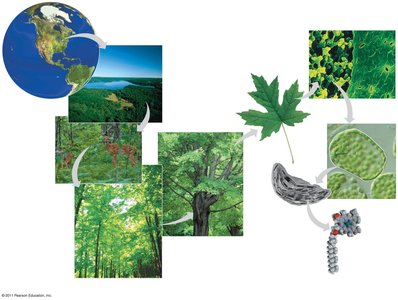
Life is organized in a hierarchical manner, from the smallest chemical building blocks to the entire biosphere. Understanding these levels is fundamental to studying biology.
Levels of Biological Organization:
Biosphere
Ecosystems
Communities
Populations
Organisms
Organs and organ systems
Tissues
Cells (basic unit of life)
Organelles
Molecules
Atoms
Interactions
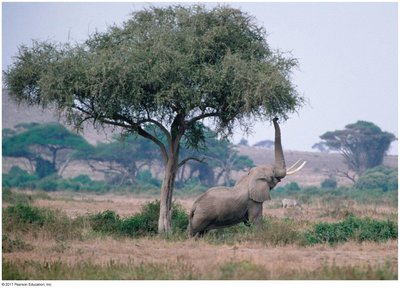
Biological systems depend on complex interactions at all levels, from molecular to ecosystem. These interactions regulate processes and maintain balance.
Examples: Predator-prey relationships, nutrient cycling, cellular signaling.
Energy Use and Transformation
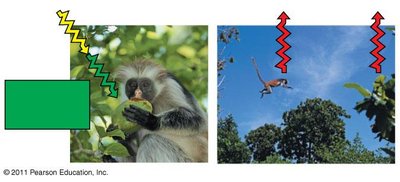
All living organisms require energy to maintain order, grow, and reproduce. Energy flows through ecosystems, primarily entering as sunlight and leaving as heat.
Photosynthesis: Plants convert solar energy into chemical energy.
Cellular Respiration: Organisms break down molecules to release energy.
Form Fits Function
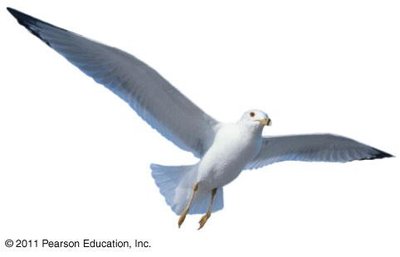
The structure of biological molecules, cells, and organisms is closely related to their function. This principle is evident at all levels of organization.
Examples: Bird wings for flight, enzyme active sites for catalysis.
Information Flow: DNA and Heredity
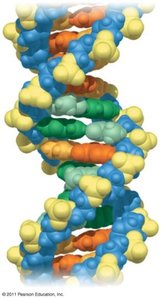
Genetic information is stored in DNA and passed from parent to offspring. This information is used to build proteins, which determine the structure and function of cells.
Central Dogma: DNA → RNA → Protein
Inheritance: Transmission of genetic material across generations.
Evolution
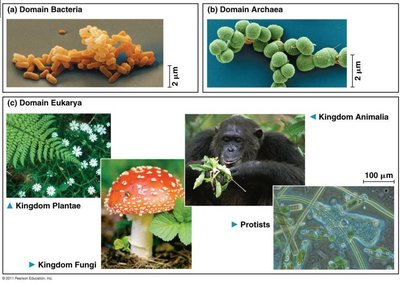
Evolution is the process by which populations of organisms change over generations. It explains the unity and diversity of life and is the unifying theme of biology.
Natural Selection: Mechanism by which advantageous traits become more common in a population.
Adaptation: Traits that enhance survival and reproduction in a specific environment.
Scientific Inquiry and Study Design
The Scientific Method
The scientific method is a systematic approach to understanding the natural world through observation, hypothesis formation, experimentation, and analysis.
Steps:
Observation
Question
Hypothesis (testable and falsifiable)
Experiment
Analysis
Conclusion
Elements of Study Design
Proper experimental design is essential for reliable scientific results. Key components include:
Treatment vs. Control: Treatment group receives the experimental variable; control group does not.
Response Variable: The outcome measured in the experiment (dependent variable).
Replication: Repeating the experiment to ensure results are consistent and reliable.
Independent Variable: The factor manipulated by the researcher.
Dependent Variable: The factor measured in response to changes in the independent variable.
Statistics in Biology
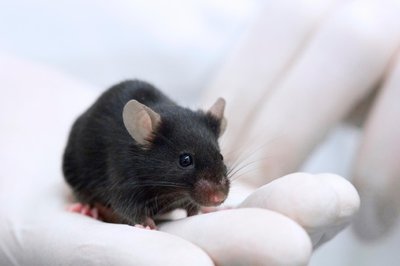
Statistics are used to analyze experimental data, determine significance, and draw conclusions.
Descriptive Statistics: Summarize data (mean, variation).
Inferential Statistics: Allow generalization from sample to population and test hypotheses (e.g., p-values).
Case Study: Lizard-Grass Association
Observation and Hypothesis
Researchers observed a correlation between grass cover and lizard abundance. They hypothesized that grass cover affects lizard sprint performance, which could influence abundance.
Observation: More grass cover, fewer lizards.
Hypothesis: Grass cover reduces lizard sprint performance.
Experimental Design
The experiment used a paired design with grass (treatment) and no-grass (control) conditions. Sprint performance was measured in both environments with replication (n = 21).
Independent Variable: Presence or absence of grass.
Dependent Variable: Lizard sprint velocity.
Replication: Multiple lizards tested in both conditions.
Results and Interpretation
The results showed a negative association: grass cover reduced lizard sprint performance. However, correlation does not imply causation, and further hypotheses were generated to explore the mechanism.
Key Point: Scientific conclusions are based on evidence and are always open to revision with new data.
Rules for Hypotheses and Limits of Science
Formulating Hypotheses
Hypotheses must be testable and falsifiable. Science cannot prove absolute truth but can provide evidence supporting or refuting hypotheses.
Testable: Can be evaluated through observation or experiment.
Falsifiable: Can be shown to be false by evidence.
What Can Science Say?
Science is a process for understanding the natural world, not for proving absolute truths. Scientific knowledge is provisional and subject to change with new evidence.
Example: Theories are supported by extensive evidence but remain open to revision.
Summary Table: Key Themes in Biology
Theme | Description | Example |
|---|---|---|
Organization | Hierarchical structure from molecules to biosphere | Cells, tissues, organs |
Interactions | Organisms interact with each other and their environment | Predator-prey, nutrient cycling |
Energy | Energy flow and transformation | Photosynthesis, respiration |
Form and Function | Structure relates to function | Bird wings, enzyme active sites |
Information | Genetic information in DNA | Inheritance, gene expression |
Evolution | Change in populations over time | Natural selection, adaptation |
