 Back
BackIntroduction to Cell Structure: Prokaryotic and Eukaryotic Cells
Study Guide - Smart Notes
 Tailored notes based on your materials, expanded with key definitions, examples, and context.
Introduction to Cell Structure
Overview
This section introduces the fundamental concepts of cell biology, focusing on the structure and diversity of prokaryotic and eukaryotic cells. Understanding cell structure is essential for grasping the organization and function of all living organisms.
Cell Theory
Principles of Cell Theory
Basic Unit of Life: The cell is the fundamental unit of structure and function in living organisms.
Cellular Composition: All living organisms are composed of one or more cells.
Cellular Reproduction: All cells arise from pre-existing cells through cell division.
Characteristics of Cells
Universal Features
Plasma Membrane: A strong, flexible, and semi-permeable barrier that regulates the movement of substances in and out of the cell.
DNA: The genetic material that contains instructions for cellular processes.
Ribosomes: Small structures responsible for protein synthesis.
Cytosol/Cytoplasm: The fluid matrix inside the cell containing water, biomolecules, ions, and other substances.
Prokaryotic vs. Eukaryotic Cells
Major Categories of Life
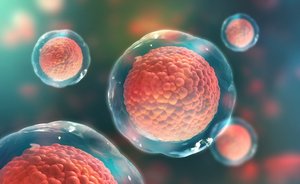
Prokaryotes: Include Bacteria and Archaea; lack a nucleus and membrane-bound organelles.
Eukaryotes: Include Protists, Fungi, Plants, and Animals; possess a nucleus and membrane-bound organelles.
Prokaryotic Cells
Structure and Features
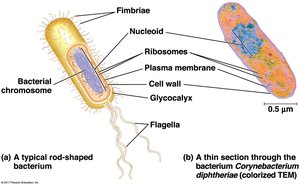
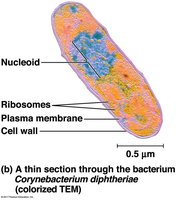
No Nucleus: DNA is located in a region called the nucleoid, not enclosed by a membrane.
No Membrane-Bound Organelles: Cellular functions occur in the cytoplasm or at the plasma membrane.
Cell Wall: Provides structural support and protection; some have an additional capsule.
Ribosomes: Site of protein synthesis.
Small Size: Typically smaller than eukaryotic cells.
Eukaryotic Cells
Structure and Features
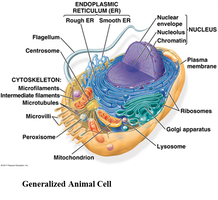
Nucleus: Contains linear DNA organized into chromosomes.
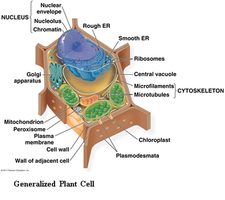
Membrane-Bound Organelles: Specialized compartments for various cellular functions (e.g., mitochondria, endoplasmic reticulum, Golgi apparatus).
Cell Wall: Present in plants and fungi, absent in animals.
Larger Size: Generally larger than prokaryotic cells.
Factors That Limit Cell Size
Surface Area-to-Volume Ratio
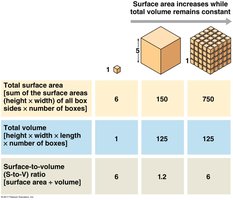
As cells increase in size, their volume grows faster than their surface area, leading to a decreased surface area-to-volume ratio. This limits the efficiency of nutrient uptake and waste removal, ultimately restricting cell size.
Small Cells: Have a high surface area-to-volume ratio, facilitating efficient exchange of materials.
Large Cells: May experience difficulties in transporting materials quickly enough to sustain cellular functions.
Diversity Among Eukaryotic Cell Types
Major Eukaryotic Kingdoms
Protists: Mostly single-celled, aquatic organisms.
Fungi: Includes mushrooms and yeast; cell walls made of chitin.
Plants: Land and aquatic plants; cell walls made of cellulose.
Animals: Multicellular organisms with diverse cell types and functions.
Structure and Function of Eukaryotic Organelles
Nucleus
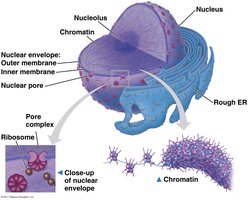
Nuclear Envelope: Double membrane that protects DNA and regulates molecular traffic via nuclear pores.
Chromatin: Complex of DNA and proteins; condenses to form chromosomes during cell division.
Nucleolus: Site of ribosomal RNA synthesis and ribosome assembly; not membrane-bound.
Ribosomes
Structure: Composed of rRNA and proteins; consists of large and small subunits.
Function: Site of protein synthesis; assembled in the nucleolus.
Endomembrane System
Endoplasmic Reticulum (ER):
Rough ER: Studded with ribosomes; synthesizes proteins.
Smooth ER: Lacks ribosomes; synthesizes lipids and hormones.
Golgi Apparatus: Modifies, sorts, and packages proteins and lipids for secretion or delivery to other organelles.
Lysosomes: Contain digestive enzymes for breaking down macromolecules and recycling cellular components.
Vacuoles: Storage organelles; central vacuole in plants maintains turgor pressure and stores nutrients.
Mitochondria
Function: Site of ATP production through cellular respiration; known as the "powerhouse" of the cell.
Structure: Double membrane with inner folds (cristae) and a matrix.
Endosymbiotic Theory: Suggests mitochondria originated from free-living prokaryotes engulfed by ancestral eukaryotic cells.
Mitochondrial DNA: Inherited maternally; useful for tracing maternal lineage.
Chloroplasts (in Plants and Photosynthetic Protists)
Function: Site of photosynthesis; converts sunlight and CO2 into carbohydrates.
Structure: Contains thylakoids, stroma, and its own DNA.
Centrosome
Structure: Microtubule-organizing center; contains two centrioles in animal cells.
Function: Important for cell division and organization of the cytoskeleton.
Cytoskeleton
Microtubules: Hollow rods that maintain cell shape, facilitate intracellular transport, and form spindle fibers during cell division.
Microfilaments: Thin filaments involved in cell movement and muscle contraction.
Intermediate Filaments: Provide mechanical support and maintain cell integrity.
Cilia and Flagella
Cilia: Short, hair-like structures for movement or sensory functions; motile cilia have a 9+2 arrangement of microtubules, while primary cilia have a 9+0 arrangement.
Flagella: Long, whip-like structures specialized for locomotion; also have a 9+2 microtubule arrangement.
Viruses
Basic Characteristics
Not Cells: Viruses are acellular and lack the structures found in prokaryotic and eukaryotic cells.
Structure: Consist of genetic material (DNA or RNA) enclosed in a protein coat; some have an additional lipid envelope.
Replication: Require a host cell to reproduce; do not carry out metabolism independently.
Comparison of Prokaryotes, Eukaryotes, and Viruses
Feature | Prokaryotes | Eukaryotes | Viruses |
|---|---|---|---|
Nucleus | No | Yes | No |
Membrane-bound Organelles | No | Yes | No |
Cell Wall | Yes (most) | Plants, Fungi | No (protein coat) |
DNA Form | Circular | Linear | DNA or RNA |
Size | Small | Larger | Much smaller |
Reproduction | Binary fission | Mitosis/meiosis | Host-dependent |
Summary
Cells are the basic units of life, with prokaryotic and eukaryotic cells differing in complexity and organization. Eukaryotic cells contain specialized organelles that perform distinct functions, while prokaryotic cells are simpler and lack compartmentalization. Viruses, though not considered living cells, interact with cellular life in unique ways. Understanding these differences is foundational for further study in biology.
