 Back
BackLab 6: Enzymes – Effects of pH and Temperature on Catalase Activity
Study Guide - Smart Notes
 Tailored notes based on your materials, expanded with key definitions, examples, and context.
Enzymes and Their Function
Introduction to Enzymes
Enzymes are biological catalysts that speed up chemical reactions in living organisms without being consumed in the process. They are typically proteins and are highly specific for their substrates, meaning each enzyme only catalyzes a particular reaction or set of reactions.
Substrate: The molecule upon which an enzyme acts.
Active Site: The region of the enzyme where the substrate binds and the reaction occurs.
Product: The molecule(s) produced from the enzymatic reaction.
Example: Catalase is an enzyme that catalyzes the breakdown of hydrogen peroxide (H2O2) into water (H2O) and oxygen (O2).
pH and Enzyme Activity
The pH Scale and Its Biological Importance
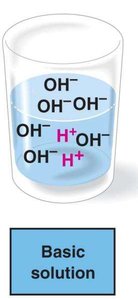
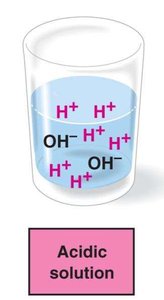
The pH scale measures the concentration of hydrogen ions (H+) in a solution, ranging from 0 (most acidic) to 14 (most basic), with 7 being neutral. Enzyme activity is highly sensitive to pH, as changes can affect the ionization of amino acid side chains and the overall structure of the enzyme.
Acidic Solution: High concentration of H+ ions (pH < 7).
Neutral Solution: Equal concentrations of H+ and OH− ions (pH = 7).
Basic Solution: High concentration of OH− ions (pH > 7).
Amino Acids and Protein Structure
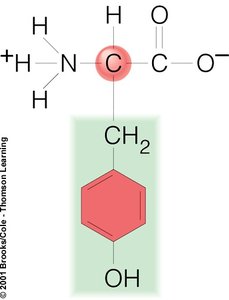
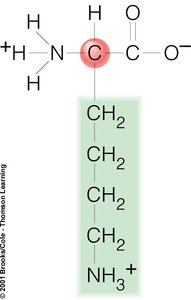
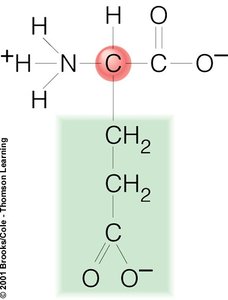
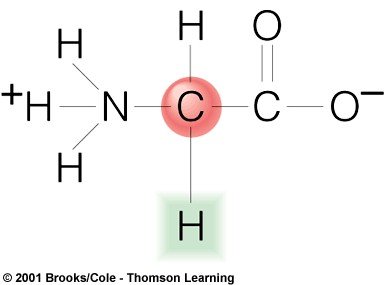
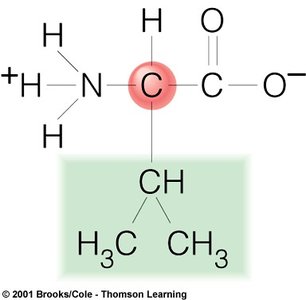
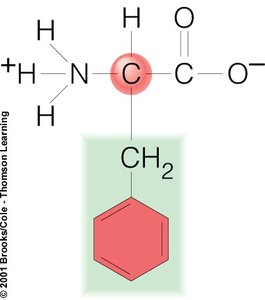
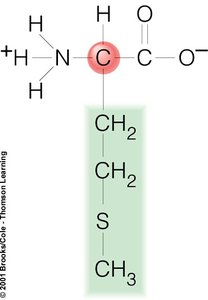
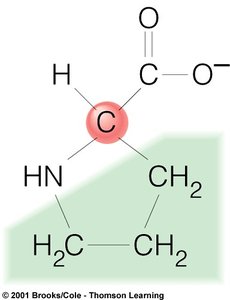
Proteins are polymers of amino acids, each with a unique side chain (R group) that determines its properties. The sequence and chemical nature of amino acids influence protein folding and function.
Examples of Amino Acids: Tyrosine, Lysine, Glutamate, Glycine, Valine, Phenylalanine, Methionine, Proline.
Protein Folding and Structure
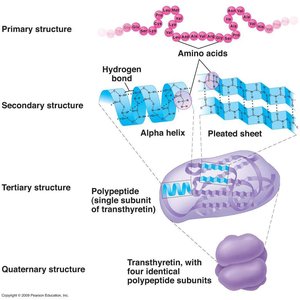
Proteins fold into complex three-dimensional shapes, which are essential for their function. The structure of a protein can be described at four levels:
Primary Structure: Sequence of amino acids.
Secondary Structure: Local folding into alpha helices and beta sheets.
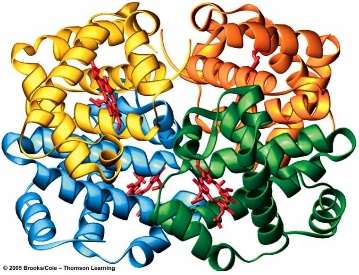
Tertiary Structure: Overall 3D shape of a single polypeptide chain.
Quaternary Structure: Arrangement of multiple polypeptide subunits.
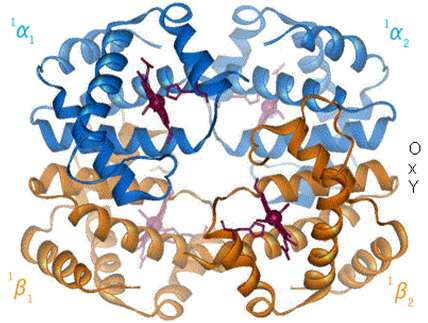
Protein Denaturation
Proteins can change shape reversibly or irreversibly. Denaturation is the loss of a protein's native structure due to external stress (e.g., heat, extreme pH), resulting in loss of function. Denaturation is often irreversible, as seen when cooking an egg.
Reversible Change: Minor changes in shape that do not disrupt function.
Irreversible Denaturation: Permanent unfolding and loss of function.
Example: Cooking an egg causes the egg white proteins to denature and solidify.

Enzyme Specificity and Catalase Reaction
Enzyme Specificity
Enzymes are highly specific, meaning they only bind to particular substrates and catalyze specific reactions. This specificity is due to the precise shape and chemical environment of the enzyme's active site.
Example: Catalase only acts on hydrogen peroxide (H2O2), breaking it down into water and oxygen.
Reaction:
Effect of pH on Catalase Activity
Experimental Investigation
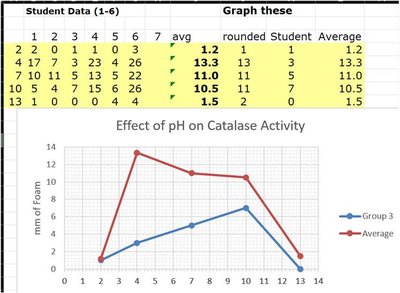
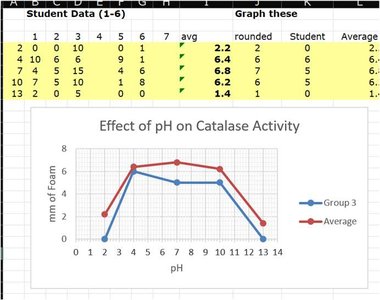
The activity of catalase can be measured by the amount of foam produced when it breaks down hydrogen peroxide. The effect of pH on catalase activity is tested by varying the pH and measuring the resulting foam height.
Hypothesis: Catalase activity will be highest at its optimal pH and decrease at more acidic or basic pH values.
Observation: At very low (pH 2) and very high (pH 13) values, catalase activity is greatly reduced or absent, likely due to denaturation or altered active site structure.
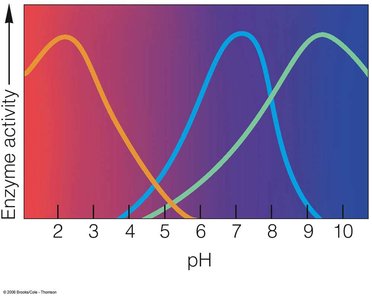
Summary Table: Effect of pH on Catalase Activity
pH | Enzyme Activity (mm foam, avg) |
|---|---|
2 | ~1.2 |
4 | ~13.3 |
7 | ~11.0 |
10 | ~10.5 |
13 | ~1.5 |
Conclusion: Catalase has an optimal pH (often near neutral or slightly acidic/basic, depending on the source), with activity dropping sharply at extreme pH values.
Effect of Temperature on Catalase Activity
Experimental Investigation
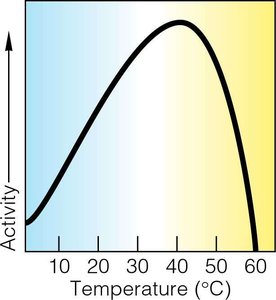
Temperature also affects enzyme activity. Catalase activity is measured at various temperatures, and the amount of foam produced is recorded. Enzyme activity typically increases with temperature up to an optimum, then decreases as the enzyme denatures at higher temperatures.
Hypothesis: Catalase activity will be highest at an optimal temperature (often near body temperature, ~37°C).
Observation: Activity is low at very low and very high temperatures due to reduced molecular motion or denaturation, respectively.
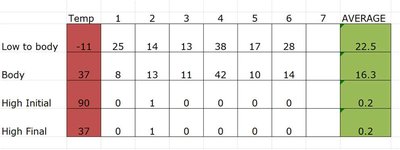
Summary Table: Effect of Temperature on Catalase Activity
Temperature (°C) | Enzyme Activity (avg) |
|---|---|
-11 (Low) | 22.5 |
37 (Body) | 16.3 |
90 (High Initial) | 0.2 |
37 (High Final) | 0.2 |
Conclusion: Catalase activity is highest at moderate temperatures and drops at extreme temperatures due to denaturation or insufficient kinetic energy.
Lab Techniques and Data Collection
Best Practices
Accurate measurement and careful handling are essential for reliable enzyme activity experiments. Key steps include labeling tubes, measuring foam height, using pipettes, mixing samples, and cleaning up properly.
Label all tubes clearly.
Measure foam height in millimeters for quantitative results.
Mix tubes thoroughly before measuring.
Clean up all materials and wash hands after the experiment.
Summary
Enzyme activity is highly dependent on environmental factors such as pH and temperature. Catalase, like many enzymes, has an optimal pH and temperature at which it functions most efficiently. Extreme conditions can lead to denaturation and loss of enzyme function. Understanding these principles is essential for studying metabolism and biochemical reactions in living organisms.
