 Back
BackMeiosis and Sexual Life Cycles: Mechanisms and Biological Significance
Study Guide - Smart Notes
 Tailored notes based on your materials, expanded with key definitions, examples, and context.
Meiosis and Sexual Life Cycles
Overview of Meiosis and Homologous Chromosomes
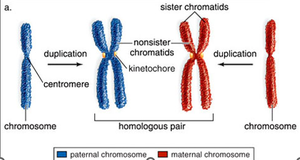
Meiosis is a specialized type of cell division that reduces the chromosome number by half, producing haploid gametes from diploid cells. This process is essential for sexual reproduction and genetic diversity. Homologous chromosomes are pairs found in diploid cells, each consisting of one chromosome from each parent, with the same gene order but possibly different alleles.
Homologous Chromosomes: Chromosome pairs with the same length, centromere position, and gene order; alleles may differ.
Diploid (2n): Cells with two sets of chromosomes.
Haploid (n): Cells with one set of chromosomes, typical of gametes.
Reduction Division and the Stages of Meiosis
Meiosis consists of two sequential divisions: Meiosis I and Meiosis II. The process reduces the chromosome number from diploid to haploid and results in four genetically distinct gametes.
Meiosis I: Homologous chromosomes separate, reducing chromosome number by half.
Meiosis II: Sister chromatids separate, similar to mitosis, but cells are haploid.
Outcome: Four non-identical haploid cells (gametes).
Meiosis I: Prophase I
Prophase I is a complex stage where homologous chromosomes pair and exchange genetic material, increasing genetic diversity.
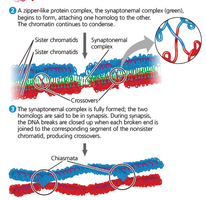
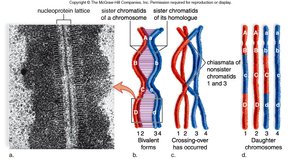
Key Events: Nuclear envelope and nucleolus disappear, chromosomes condense, homologous chromosomes pair (synapsis), and crossing over occurs between non-sister chromatids at chiasmata.
Bivalents: Paired homologous chromosomes.
Meiosis I: Metaphase I
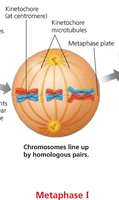
During Metaphase I, homologous chromosome pairs (bivalents) align independently at the metaphase plate, allowing for independent assortment of chromosomes.
Independent Assortment: Each pair of homologous chromosomes aligns independently, contributing to genetic variation.
Meiosis I: Anaphase I
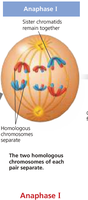
Homologous chromosomes are separated and pulled to opposite poles, while sister chromatids remain attached.
Result: Reduction of chromosome number; each cell receives a haploid set of chromosomes.
Meiosis I: Telophase I and Cytokinesis
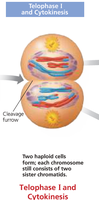
Each daughter cell now has a haploid set of duplicated chromosomes. Cytokinesis divides the cytoplasm, resulting in two haploid cells.
Each chromosome: Still consists of two sister chromatids.
Genetic Variation in Meiosis
Meiosis increases genetic variation through two main mechanisms: crossing over during Prophase I and independent assortment during Metaphase I.
Crossing Over: Exchange of genetic material between non-sister chromatids, creating new allele combinations.
Independent Assortment: Random orientation of homologous pairs during Metaphase I.
Meiosis II: Separation of Sister Chromatids
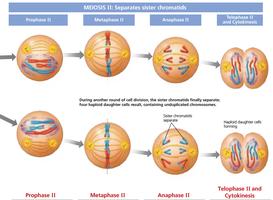
Meiosis II is similar to mitosis but occurs in haploid cells. Sister chromatids are separated, resulting in four haploid daughter cells.
Phases: Prophase II, Metaphase II, Anaphase II, Telophase II, and Cytokinesis.
Result: Four genetically unique haploid gametes.
Biological Significance of Sexual Reproduction
Sexual reproduction generates genetic variation, which is crucial for evolution and adaptation. Gametes are not genetically identical, providing a mechanism for disease resistance and population diversity. The production of haploid gametes prevents the doubling of chromosome number each generation.
Gametogenesis: Spermatogenesis and Oogenesis
Gametogenesis is the process of forming gametes. Spermatogenesis produces sperm cells, while oogenesis produces egg cells. These processes differ in timing, outcome, and cellular events.
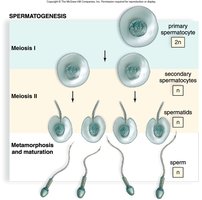
Spermatogenesis: Produces four spermatids per primary spermatocyte; all develop into sperm.
Spermiogenesis: Maturation of spermatids into sperm cells.
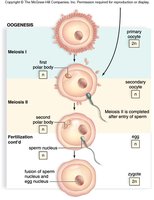
Oogenesis: Produces one ovum and polar bodies; meiosis II is completed only after fertilization.
Fertilization and Further Genetic Variation
Fertilization combines two haploid gametes to form a diploid zygote, further increasing genetic diversity in offspring.
Zygote: The first cell of a new organism, diploid in chromosome number.

Comparison of Mitosis and Meiosis
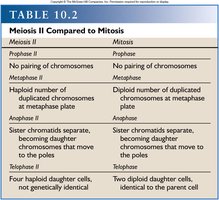
Mitosis and meiosis are both forms of cell division but serve different purposes and have distinct outcomes. Mitosis produces genetically identical diploid cells for growth and repair, while meiosis produces genetically diverse haploid gametes for sexual reproduction.
Meiosis II | Mitosis |
|---|---|
No pairing of chromosomes | No pairing of chromosomes |
Haploid number of duplicated chromosomes at metaphase plate | Diploid number of duplicated chromosomes at metaphase plate |
Sister chromatids separate, becoming daughter chromosomes that move to the poles | Sister chromatids separate, becoming daughter chromosomes that move to the poles |
Four haploid daughter cells, not genetically identical | Two diploid daughter cells, identical to the parent cell |
Summary
Meiosis is essential for sexual reproduction, reducing chromosome number and increasing genetic diversity through crossing over, independent assortment, and fertilization. These mechanisms are fundamental to evolution and the maintenance of stable chromosome numbers across generations.
