 Back
BackMeiosis and the Sexual Life Cycle: Study Guide
Study Guide - Smart Notes
 Tailored notes based on your materials, expanded with key definitions, examples, and context.
Meiosis and Sexual Life Cycle
Introduction to Meiosis and Sexual Life Cycles
Meiosis is a specialized type of cell division that reduces the chromosome number by half, producing haploid gametes (sperm and egg) in sexually reproducing organisms. This process is fundamental to the alternation of generations and the maintenance of genetic diversity.
Meiosis ensures offspring inherit a unique combination of genes from both parents.
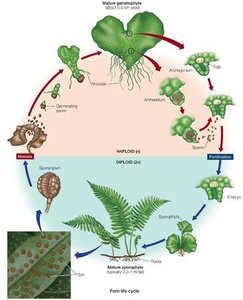
Sexual life cycles alternate between haploid and diploid stages, maintaining chromosome number across generations.
Inheritance of Genes
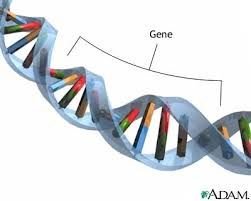
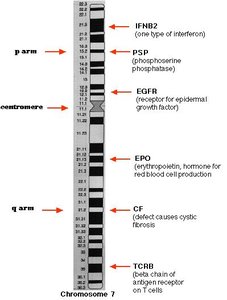
The transmission of traits from one generation to the next is called heredity. Genes, which are segments of DNA, encode hereditary information and are located on chromosomes at specific loci.
Genes: Units of hereditary information, composed of DNA, and responsible for programming traits via proteins and enzymes.
Locus: The specific location of a gene on a chromosome.
Chromosomes: Structures that carry hundreds to thousands of genes.
Gametes and Chromosome Number
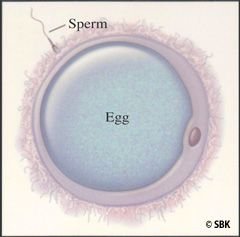
Gametes (sperm and egg) are haploid cells, containing half the full set of chromosomes. Upon fertilization, they unite to form a diploid zygote.
Haploid (n): One set of chromosomes (gametes).
Diploid (2n): Two sets of chromosomes (somatic cells).
Meiosis produces gametes; mitosis produces somatic cells.
Asexual vs Sexual Reproduction
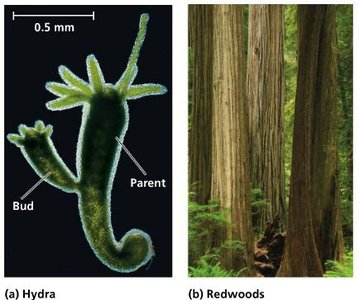
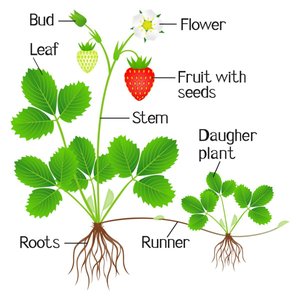
Organisms can reproduce asexually or sexually, each with distinct genetic consequences.
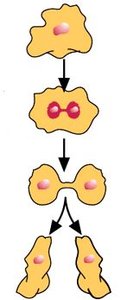
Asexual reproduction: One parent produces genetically identical offspring (clones).
Sexual reproduction: Two parents contribute genetic material, resulting in genetically unique offspring.

Chromosomes and Karyotypes
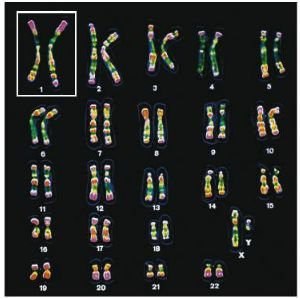
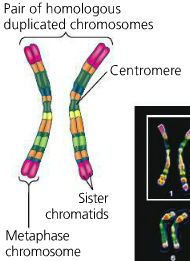
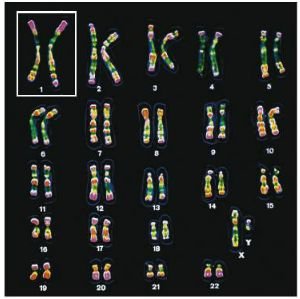
Chromosomes are organized into pairs in diploid organisms. A karyotype is an ordered display of chromosomes, showing homologous pairs.
Homologous chromosomes: Chromosomes of the same length, gene content, and staining pattern, one from each parent.
Autosomes: Non-sex chromosomes.
Sex chromosomes: X and Y chromosomes determine biological sex.
Human Life Cycle
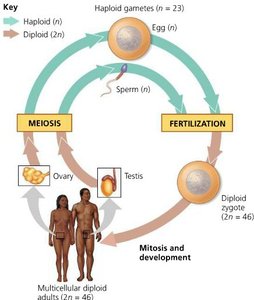
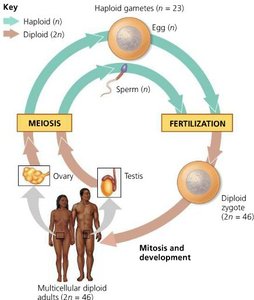
The human life cycle alternates between haploid and diploid stages, involving meiosis, fertilization, and mitosis.
Somatic cells are diploid (2n = 46 chromosomes).
Gametes are haploid (n = 23 chromosomes).
Germ cells undergo meiosis to produce gametes.
Fertilization restores diploid chromosome number.
Meiosis: Process and Stages
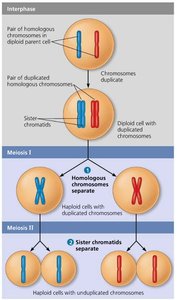
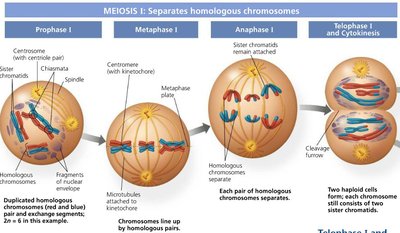
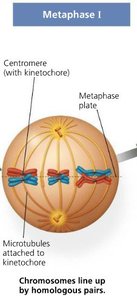
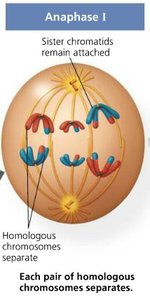
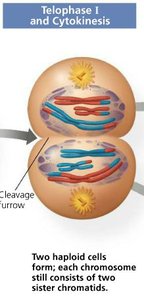
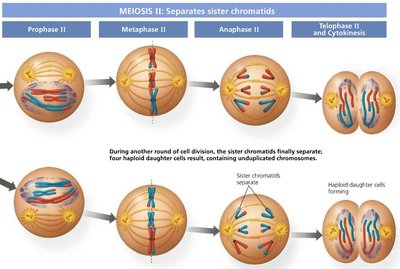
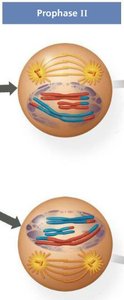
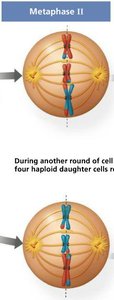
Meiosis consists of two consecutive divisions: Meiosis I and Meiosis II.
Meiosis I: Homologous chromosomes separate, reducing chromosome number by half.
Meiosis II: Sister chromatids separate, producing four haploid cells.
Crossing Over and Genetic Variation
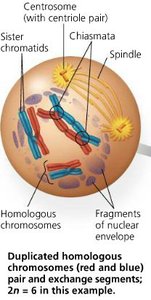
Crossing over occurs during Prophase I, where homologous chromosomes exchange genetic material, increasing genetic variation.
Synapsis: Homologous chromosomes pair up.
Chiasmata: Sites where crossing over occurs.
Recombinant chromosomes: Chromosomes with new combinations of alleles.
Genetic Variation in Sexual Reproduction
Sexual reproduction generates genetic variation through three main mechanisms:
Independent assortment: Random orientation of homologous pairs during Metaphase I.
Crossing over: Exchange of genetic material between homologous chromosomes.
Random fertilization: Any sperm can fertilize any egg, producing numerous possible combinations.
Mitosis vs Meiosis
Mitosis and meiosis are distinct processes with different outcomes.
Mitosis: Produces two genetically identical diploid cells.
Meiosis: Produces four genetically unique haploid cells.
Unique to meiosis: synapsis, crossing over, homologous pairs at metaphase plate, separation of homologues.
Evolutionary Advantage of Sexual Reproduction
Sexual reproduction is energetically costly but provides evolutionary advantages in changing environments by increasing genetic diversity.
Red Queen Hypothesis: Sexual reproduction allows populations to adapt to changing environments and evolving pathogens.
Examples: Variation in venom and jaw strength in populations, banana clones, GMO papaya, rotifers importing foreign genes.
Summary Table: Comparison of Mitosis and Meiosis
Feature | Mitosis | Meiosis |
|---|---|---|
Number of divisions | 1 | 2 |
Number of daughter cells | 2 | 4 |
Chromosome number | Diploid (2n) | Haploid (n) |
Genetic identity | Identical | Unique |
Role | Growth, repair | Gamete production |
Key Equations
Number of possible gamete combinations due to independent assortment: (where n = number of chromosome pairs)
For humans: million combinations
Random fertilization: trillion possible combinations
Concept Map
Meiosis
Homologous Chromosomes
Diploid
Synapsis
Genetic Variation
Independent Assortment
Germ Cells
Gametes
Crossing Over
Haploid
Nuclear Divisions
Conclusion
Meiosis is essential for sexual reproduction, maintaining chromosome number, and generating genetic diversity. The alternation of meiosis and fertilization is fundamental to the life cycle of sexually reproducing organisms and contributes to evolutionary adaptation.
