 Back
BackMini-Textbook Study Notes: Principles of Pharmacology for Biology Students
Study Guide - Smart Notes
 Tailored notes based on your materials, expanded with key definitions, examples, and context.
Overview of Pharmacology
Pharmacology is the integrated medical science that studies drugs, their actions, and their effects on living organisms. It is essential for understanding how drugs interact with biological systems, their therapeutic uses, and their potential risks.
Branches of Pharmacology: Includes pharmacodynamics, pharmacokinetics, pharmacotherapeutics, toxicology, and pharmacy.
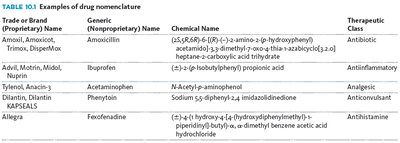
Drug Nomenclature: Drugs have chemical, generic, and proprietary (trade) names.
Sources of Drug Information: Includes clinicians, pharmacists, reference books, and online resources.
Branches of Pharmacology
Major Subfields
Pharmacodynamics: Studies the effects of drugs on physiological and biochemical systems.
Pharmacokinetics: Examines the movement of drugs within the body (absorption, distribution, metabolism, excretion).
Pharmacotherapeutics: Focuses on the use of drugs to treat diseases.
Toxicology: Investigates the harmful effects of chemicals and drugs.
Pharmacy: Involves preparation, compounding, and dispensing of drugs.
Drug Nomenclature
Types of Drug Names
Chemical Name: Describes the chemical structure (e.g., N-acetyl-p-aminophenol for acetaminophen).
Generic (Nonproprietary) Name: The standard name (e.g., ibuprofen).
Proprietary (Trade) Name: Brand name given by the manufacturer (e.g., Advil).
Drugs are classified as prescription (require a licensed practitioner) or nonprescription (over-the-counter, OTC).
Trade or Brand Name | Generic Name | Chemical Name | Therapeutic Class |
|---|---|---|---|
Amoxil | Amoxicillin | (2S,5R,6R)-6-[(R)-2-amino-2-(p-hydroxyphenyl)acetamido]-3,3-dimethyl-7-oxo-4-thia-1-azabicyclo[3.2.0]heptane-2-carboxylic acid trihydrate | Antibiotic |
Advil | Ibuprofen | (±)-2-(p-isobutylphenyl) propionic acid | Antiinflammatory |
Tylenol | Acetaminophen | N-Acetyl-p-aminophenol | Analgesic |
Dilantin | Phenytoin | Sodium 5,5-diphenyl-1,4 imidazolidinedione | Anticonvulsant |
Allegra | Fexofenadine | (±)-4-[1-hydroxy-4-[4-(hydroxydiphenylmethyl)-1-piperidinyl]butyl]α,α-dimethyl benzene acetic acid hydrochloride | Antihistamine |
Sources of Drug Information
People: Clinicians, pharmacists, poison control centers.
Published Information: Textbooks, newsletters, reference books, and the internet.
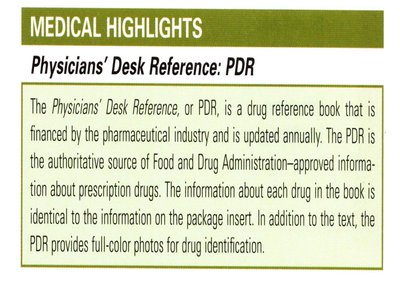
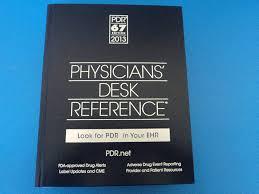
Medical Highlight: The Physicians' Desk Reference (PDR) is a comprehensive drug reference book containing FDA-approved information about prescription drugs, including full-color photos for identification.
Principles of Drug Action
Drug Administration
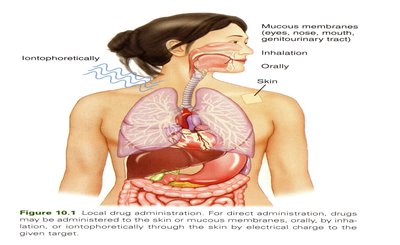
Drugs can be administered locally or systemically, affecting how and where they act in the body.
Local Administration: Skin, mucous membranes, oral (limited), inhalation, iontophoretic.
Systemic Administration: Transdermal, sublingual, oral, rectal, inhalation, subcutaneous, intramuscular, intravenous, intrathecal.
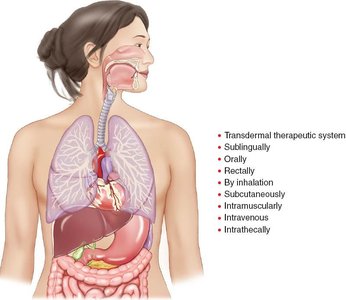
Examples of Systemic Administration
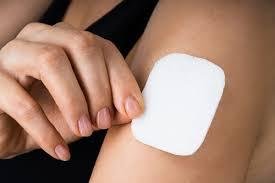
Transdermal: Drug patch on skin for slow release.
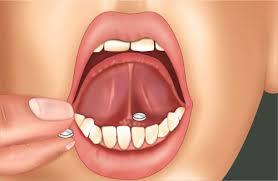
Sublingual: Under the tongue for rapid absorption (e.g., nitroglycerin).
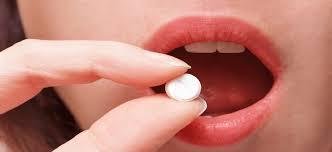
Oral: By mouth, absorbed via GI tract.
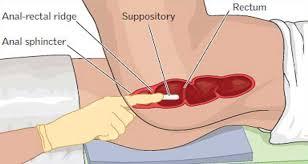
Rectal: Suppositories for rapid absorption, useful in infants or unconscious patients.
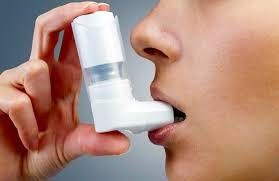
Inhalation: Into the lungs for rapid effect.
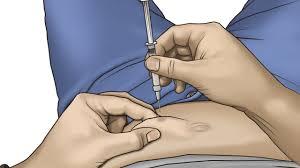
Subcutaneous: Below the skin for slow absorption.
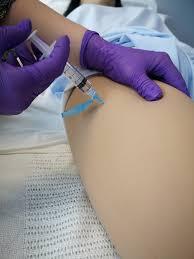
Intramuscular: Into muscle for rapid absorption.
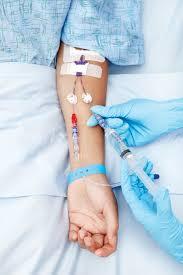
Intravenous: Directly into bloodstream for immediate effect.
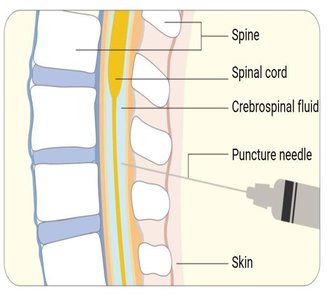
Intrathecal: Into the spinal subarachnoid space for CNS effects.
Drug Absorption
Absorption is the process by which drugs move from the site of administration into the bloodstream. Factors influencing absorption include surface area, rate of dissolution, lipid solubility, and blood flow.
Surface Area: Larger surface area increases absorption (e.g., small intestine).
Rate of Dissolution: Faster dissolution leads to quicker absorption.
Lipid Solubility: Lipid-soluble drugs cross membranes more easily.
Blood Flow: Greater blood flow enhances absorption.
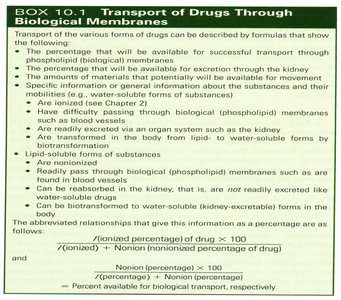
Box: Transport of drugs through biological membranes depends on ionization and lipid solubility. The percentage available for transport can be calculated as:
Drug Distribution
Distribution is the movement of drugs from the bloodstream into tissues and body fluids. Factors include solubility, blood flow, molecular size, and barriers like the blood-brain barrier and placenta.
Water-soluble drugs: Readily excreted.
Lipid-soluble drugs: May cross barriers more easily but require metabolism for excretion.
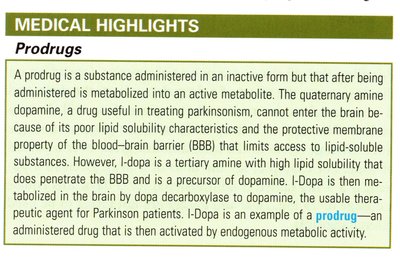
Medical Highlight: Prodrugs are inactive compounds metabolized into active drugs in the body (e.g., L-dopa for Parkinson's disease).
Biotransformation (Drug Metabolism)
Biotransformation is the process by which the body chemically modifies drugs, primarily in the liver, to facilitate their elimination. It involves two phases:
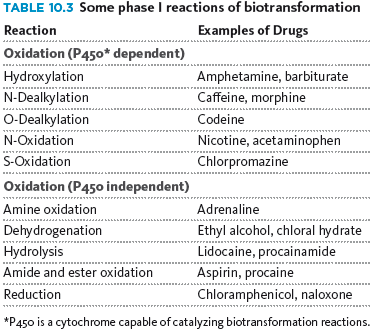
Phase I: Conversion to more ionized molecules (e.g., oxidation, reduction, hydrolysis).
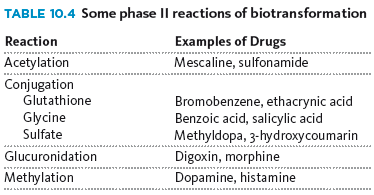
Phase II: Conjugation with other compounds to increase water solubility.
Reaction | Examples of Drugs |
|---|---|
Hydroxylation | Amphetamine, barbiturate |
N-Dealkylation | Caffeine, morphine |
O-Dealkylation | Codeine |
Amine oxidation | Adrenaline |
Hydrolysis | Lidocaine, procainamide |
Reaction | Examples of Drugs |
|---|---|
Acetylation | Mescaline, sulfonamide |
Glutathione conjugation | Bromobenzene, ethacrynic acid |
Glucuronidation | Digoxin, morphine |
Methylation | Dopamine, histamine |
Clearance (Elimination)
Drugs are primarily eliminated via the kidneys (urine), but also through bile (liver), feces, and other routes. The nephron is the functional unit of the kidney responsible for filtration, reabsorption, and secretion.
.l;'
Responses to Drugs
Dose-Response Relationship
The effect of a drug depends on the dose administered. The therapeutic index (TI) is a measure of drug safety, calculated as:
High TI: Drug is relatively safe.
Low TI: Drug is relatively unsafe.
Variability of Drug Action
First-pass effect: Metabolism in the liver or GI tract before reaching systemic circulation.
Chemical properties: Molecular weight, ionic charge, solubility.
Other factors: Age, gender, disease, circadian rhythms, species differences.
Toxicity
Toxic effects are harmful responses to drugs, classified as acute, subacute, or chronic. Toxicology studies the adverse effects and safety of drugs and chemicals.
Animal LD50/kg | Degree of Toxicity | Probable LD50/70-kg Human |
|---|---|---|
0.1 mg | Excessive | Simple taste (<1 mg) |
1–50 mg | High | 1 tsp (5 mL) |
50–500 mg | Average | 1 fl oz |
0.5–5 g | Slight | 1 fluid pint |
5–15 g | Nontoxic | 1 qt |
15 g | Harmless | >1 qt |
New Drug Development and Public Safety
Development Process
New drugs undergo extensive research, development, and regulatory review before approval. Federal laws such as the Pure Food and Drug Act, Federal Food, Drug and Cosmetic Act, and Controlled Substances Act regulate drug safety and distribution.
Schedules of Controlled Substances: Drugs are categorized into five schedules based on their potential for abuse and medical use.
Orphan Drugs: Developed for rare diseases affecting fewer than 200,000 patients in the U.S.
Investigational New Drug Application (IND): Required for FDA approval of new drugs for human use.
Healthcare and Life Applications
Examples of Drugs Used in Various Organ Systems
Drug | System or Condition | Effect |
|---|---|---|
Methylphenidate | Central nervous | Stimulant |
Digitalis | Cardiovascular | Treats congestive heart failure |
Colchicine | Neuromuscular | Analgesic |
Levothyroxine sodium | Endocrine | Treats hypothyroidism |
Sodium bicarbonate | Gastrointestinal | Increases stomach pH |
Sildenafil | Reproductive | Treats erectile dysfunction |
Drug Losses at Sites of Action
Route of Administration | Drug Loss from |
|---|---|
Enteral route only | Degradation in stomach, first-pass effect, small intestine, failure to be absorbed, binding to food, liver metabolism, secretion in bile, biotransformation, tissue binding |
Enteral and parenteral routes | Biotransformation, tissue binding |
General blood circulation | Biotransformation, binding to plasma proteins |
Distribution to body tissues | Drug too dispersed, tissue binding, biotransformation, metabolism, excretion |
