 Back
BackPlant Signaling and Hormones: Mechanisms and Functions
Study Guide - Smart Notes
 Tailored notes based on your materials, expanded with key definitions, examples, and context.
Plant Signaling and Hormones
Introduction to Plant Responses
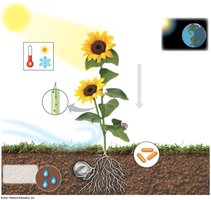
Plants are dynamic organisms that constantly sense and respond to a variety of environmental and internal factors. These responses are mediated by complex signaling pathways and chemical messengers known as hormones. Understanding these mechanisms is essential for grasping how plants grow, develop, and adapt to their surroundings.
Environmental factors: Light, temperature (heat/cold), gravity, mechanical stimuli (touch, wind), water availability (drought/flooding), wounding, and pathogen infection.
Internal signals: Hormones and other chemical messengers coordinate physiological processes.
Signal Transduction Pathways in Plants
Reception, Transduction, and Response
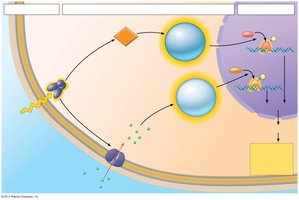
Plants use signal transduction pathways to convert external and internal signals into appropriate cellular responses. These pathways involve three main steps: reception, transduction, and response.
Reception: Specific receptors (proteins) detect signals such as light or hormones.
Transduction: Second messengers (e.g., cGMP, Ca2+) amplify and relay the signal within the cell, often activating protein kinases.
Response: Activation of transcription factors leads to changes in gene expression and physiological responses (e.g., greening, growth).
Plant Hormones: Types and Functions
Overview of Major Plant Hormones
Plant hormones are organic compounds that regulate growth, development, and responses to stimuli. They are active at very low concentrations and can have profound effects on plant physiology.
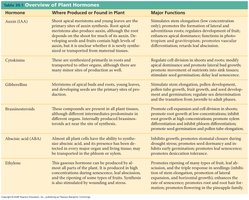
Hormone | Where Produced or Found | Major Functions |
|---|---|---|
Auxin (IAA) | Shoot apical meristems, young leaves, developing seeds | Stimulates stem elongation, root growth, regulates fruit development, phototropism, and gravitropism |
Cytokinins | Roots, embryos, fruits | Stimulate cell division, modify apical dominance, promote lateral bud growth |
Gibberellins | Meristems, young leaves, seeds | Promote stem elongation, fruit growth, seed germination |
Abscisic Acid (ABA) | All plant cells | Promotes seed dormancy, inhibits growth, closes stomata during drought |
Ethylene | Most plant tissues in response to stress | Promotes fruit ripening, leaf abscission, and response to mechanical stress |
Auxin: Mechanisms and Roles
Cell Elongation and the Acid Growth Hypothesis
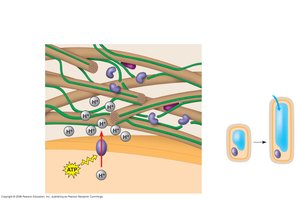
Auxin is a key hormone in regulating cell elongation, particularly in stems. According to the acid growth hypothesis, auxin stimulates proton pumps in the plasma membrane, lowering the pH of the cell wall and activating enzymes called expansins. These enzymes loosen the cell wall, allowing it to stretch as water enters the cell.
Proton pumps: Increase H+ concentration in the cell wall.
Expansins: Enzymes that break bonds between cellulose microfibrils and cross-linking polysaccharides.
Result: Cell wall loosens, and the cell elongates as it takes up water.
Lateral and Adventitious Root Formation
Auxin also promotes the formation of lateral and adventitious roots, contributing to the plant's ability to explore the soil for water and nutrients.
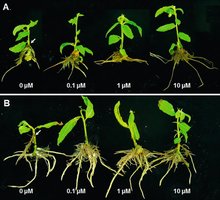
Auxin Overdose and Herbicides
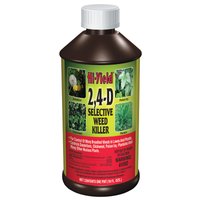
While auxin is essential for growth, an overdose can be lethal to certain plants, especially dicots. Synthetic auxins are used as selective herbicides to control weeds.
Cytokinins: Cell Division and Apical Dominance
Role in Cell Division and Differentiation
Cytokinins are hormones that stimulate cytokinesis (cell division) and are produced in actively growing tissues. They work in conjunction with auxin to regulate cell division and differentiation, especially in shoots and roots.
Control of Apical Dominance
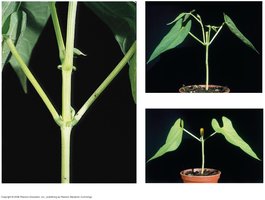
Apical dominance is the phenomenon where the main, central stem of the plant is dominant over (i.e., grows more strongly than) other side stems. Cytokinins and auxin interact to regulate this process. Removal of the apical bud (source of auxin) allows lateral buds to grow, making the plant bushier.
Gibberellins: Growth and Germination
Stem Elongation and Fruit Growth
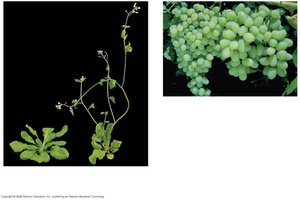
Gibberellins are hormones that promote stem elongation, fruit growth, and seed germination. They are often used in agriculture to increase fruit size and stimulate growth in certain crops.
Bolting: Rapid stem elongation induced by gibberellins.
Fruit set: Both auxin and gibberellins are required for fruit development in many species.
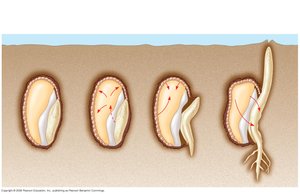
Seed Germination
During seed germination, gibberellins signal the aleurone layer to secrete enzymes such as α-amylase, which break down stored nutrients to fuel seedling growth.
Abscisic Acid (ABA): Dormancy and Stress Responses
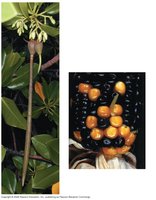
Seed Dormancy
ABA is a hormone that inhibits growth and promotes seed dormancy, ensuring that seeds germinate only under favorable conditions. Dormancy can be broken by environmental cues that reduce ABA levels, such as rain, light, or cold.
Drought Tolerance
ABA also plays a critical role in enhancing drought tolerance by inducing stomatal closure, reducing water loss during periods of water stress.
Ethylene: Stress Responses and Senescence
Triple Response to Mechanical Stress
Ethylene is a gaseous hormone produced in response to stress factors such as drought, flooding, mechanical pressure, injury, and infection. It triggers the 'triple response' in seedlings: slowing of stem elongation, thickening of the stem, and curvature to avoid obstacles.
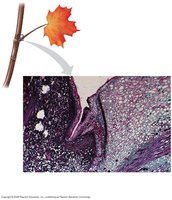
Senescence and Leaf Abscission
Ethylene is involved in programmed cell death (senescence) and the abscission (shedding) of leaves, flowers, and fruits. A change in the balance of auxin and ethylene controls leaf abscission, particularly in autumn.
Fruit Ripening
Ethylene stimulates fruit ripening, making it an important hormone in agriculture for controlling the timing of harvest and post-harvest processes.
Summary Table: Overview of Plant Hormones
The following table summarizes the main plant hormones, their sites of production, and their major functions:
Hormone | Where Produced or Found | Major Functions |
|---|---|---|
Auxin (IAA) | Shoot apical meristems, young leaves, developing seeds | Stimulates stem elongation, root growth, regulates fruit development, phototropism, and gravitropism |
Cytokinins | Roots, embryos, fruits | Stimulate cell division, modify apical dominance, promote lateral bud growth |
Gibberellins | Meristems, young leaves, seeds | Promote stem elongation, fruit growth, seed germination |
Abscisic Acid (ABA) | All plant cells | Promotes seed dormancy, inhibits growth, closes stomata during drought |
Ethylene | Most plant tissues in response to stress | Promotes fruit ripening, leaf abscission, and response to mechanical stress |
