 Back
BackChapter 3 part 2
Study Guide - Smart Notes
 Tailored notes based on your materials, expanded with key definitions, examples, and context.
Properties of Water
Basic Structure: Polarity & Shape
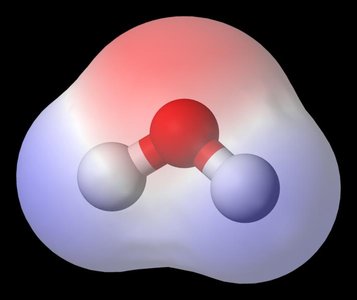
Water (H2O) is a polar molecule, meaning it has a partial positive charge on one side and a partial negative charge on the other. This polarity arises from the bent shape of the molecule and the difference in electronegativity between hydrogen and oxygen atoms. The oxygen atom attracts electrons more strongly, resulting in a partial negative charge, while the hydrogen atoms have partial positive charges.
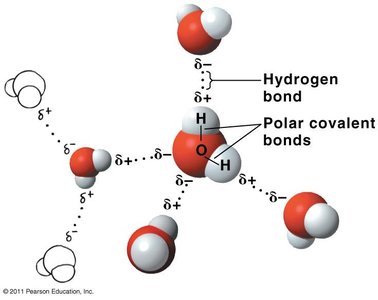
Polarity: Water's polarity enables it to form hydrogen bonds with other water molecules and with other polar substances.
Shape: The bent shape (approximately 104.5° angle) is crucial for its chemical properties.
Hydrogen Bonds: These weak bonds form between the hydrogen of one water molecule and the oxygen of another, giving water many of its unique properties.
Example: Water's polarity allows it to dissolve many substances, making it an excellent solvent.
Four Important Properties of Water
Water exhibits several key properties due to its structure and hydrogen bonding:
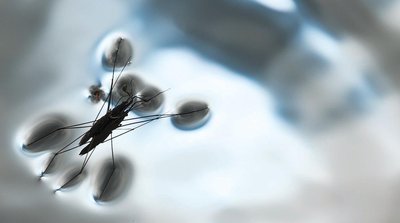
Cohesion: Water molecules stick to each other, resulting in surface tension.
Adhesion: Water molecules stick to other substances.
High Specific Heat: Water can absorb or release large amounts of heat with little temperature change.
Solvent Properties: Water dissolves many ionic and polar substances.
Example: Surface tension allows small insects to walk on water.
Acidic and Basic Conditions
Formation of Ions in Water
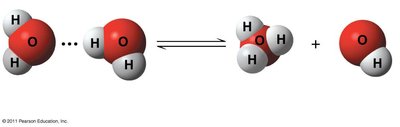
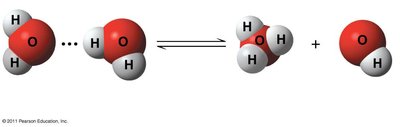
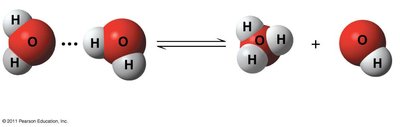
Water molecules can dissociate into ions. A hydrogen atom in a hydrogen bond between two water molecules can shift from one molecule to the other, forming hydronium (H3O+) and hydroxide (OH-) ions.
Hydronium Ion (H3O+): Formed when a water molecule gains an extra proton.
Hydroxide Ion (OH-): Formed when a water molecule loses a proton.
Equation:
Example: This equilibrium is essential for acid-base chemistry in biological systems.
Concentration of Ions in Water
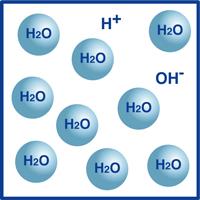
Hydrogen ions (H+) and hydroxide ions (OH-) occur in low concentrations in pure water, but they are very important for cellular chemistry. Changes in their concentrations can drastically affect cell function.
Pure Water: [H+] = [OH-] = M
Acids: Increase [H+] in solution.
Bases: Decrease [H+] in solution.
Example: The addition of acids or bases modifies the concentrations of these ions.
The pH Scale
Definition and Calculation
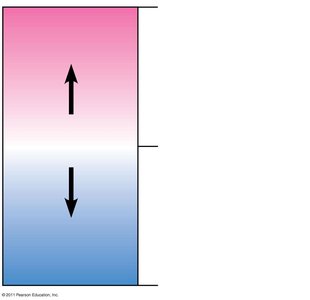
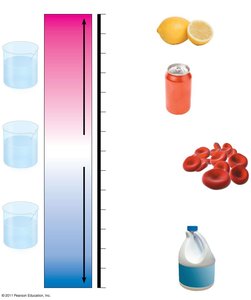
The pH scale measures the concentration of hydrogen ions in a solution. It is a logarithmic scale, where lower values indicate higher acidity and higher values indicate greater basicity.
Formula:
Acidic Solutions: pH < 7 (more H+)
Basic Solutions: pH > 7 (fewer H+)
Neutral Solution: pH = 7 ([H+] = [OH-])
Example: Pure water has a pH of 7; gastric juice has a pH of 1.25–3.0.
Acids and Bases
An acid is any substance that increases the H+ concentration of a solution, while a base reduces the H+ concentration. The pH of a solution is a measure of its hydrogen ion concentration.
Acids: Donate H+ ions and remove OH- ions.
Bases: Donate OH- ions and/or accept H+ ions.
Biological Fluids: Most have pH values between 6 and 8.
Example: Blood plasma has a pH of 7.4; saliva ranges from 6.35–6.85.
Fluid | pH |
|---|---|
Pancreatic Juice | 7.8–8.0 |
Blood Plasma | 7.4 |
Intracellular Fluids (Liver) | 6.9 |
Saliva | 6.35–6.85 |
Cow's Milk | 6.6 |
Gastric Juice | 1.25–3.0 |
Buffers and Biological Importance
Buffer Systems
Buffers are substances that minimize changes in concentrations of H+ and OH- in a solution. Most buffers consist of an acid-base pair that can accept or donate H+ ions. The internal pH of most living cells must remain close to pH 7 for proper function.
Bicarbonate Buffer System: Important in blood and ocean chemistry.
Equation:
Carbonic Acid: Acts as a buffer by donating or accepting H+ ions.
Example: Ocean acidification reduces carbonate ion availability, affecting marine life.
Predicting Molecular Polarity
Classification of Molecules
Molecular polarity depends on the arrangement of atoms and the presence of electronegative elements. Polar molecules have uneven charge distribution, while nonpolar molecules have even charge distribution.
Polar Molecules: Water (H2O), ammonia (NH3), ethanol (C2H5OH).
Nonpolar Molecules: Oxygen (O2), carbon dioxide (CO2).
Example: Water is polar, carbon dioxide is nonpolar.
Practice Questions and Applications
Sample Questions
Which is the solid state of water? (Ice)
An unknown substance has a pH of 9. Is it acidic, basic, or neutral? (Basic)
Tap water has a pH of around 14. True or False? (False; tap water is usually near neutral pH 7)
Adhesion is the ‘stickiness’ between one water molecule and another water molecule. True or False? (False; adhesion is stickiness between water and other substances, cohesion is between water molecules)
Summary Table: Properties of Water
Property | Description | Example |
|---|---|---|
Cohesion | Water molecules stick to each other | Surface tension |
Adhesion | Water molecules stick to other substances | Capillary action |
High Specific Heat | Resists temperature change | Stable climate |
Solvent Properties | Dissolves many substances | Salt dissolving in water |
Additional info: Some explanations and examples were expanded for clarity and completeness based on standard biology textbook content.
