 Back
BackProtein Synthesis: From DNA to Functional Proteins
Study Guide - Smart Notes
 Tailored notes based on your materials, expanded with key definitions, examples, and context.
Protein Synthesis: From DNA to Functional Proteins
Overview of Protein Synthesis
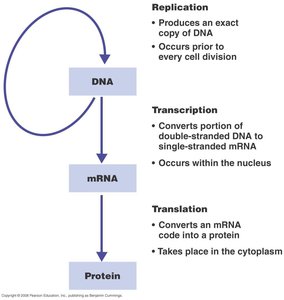
Protein synthesis is the process by which cells generate new proteins, essential for structure and function in all living organisms. This process involves two main steps: transcription and translation, which together convert genetic information in DNA into functional proteins.
Transcription: The process of copying a gene's DNA sequence to make an RNA molecule.
Translation: The process where the RNA sequence is used to build a protein.
Interactions Between DNA & RNA
Genetic Information Flow
DNA contains the complete set of genetic instructions for an organism. Genes, which are specific segments of DNA, encode the information needed to produce proteins. RNA acts as the messenger, carrying the genetic code from DNA to the ribosomes, where proteins are synthesized.
DNA: Stores genetic information and instructions for protein synthesis.
RNA: Transfers the genetic code from the nucleus to the cytoplasm for protein production.
Proteins: Carry out most cellular functions and determine phenotype.
Step 1: Transcription
Transcription Process
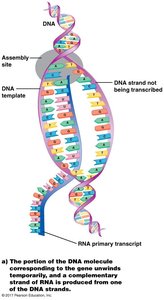
Transcription is the synthesis of RNA from a DNA template. It occurs in the nucleus and involves the enzyme RNA polymerase, which binds to DNA and assembles a complementary strand of RNA.
Initiation: DNA unwinds at the gene region to be transcribed.
Elongation: RNA polymerase adds RNA nucleotides complementary to the DNA template strand.
Termination: The RNA strand (primary transcript) is released.
RNA Processing: Editing the Primary Transcript
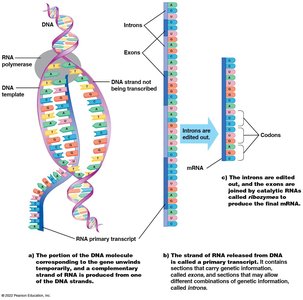
The initial RNA transcript (pre-mRNA) contains both coding (exons) and non-coding (introns) sequences. Before it can be translated, introns are removed and exons are joined together by ribozymes, resulting in mature messenger RNA (mRNA).
Introns: Non-coding regions removed from the RNA transcript.
Exons: Coding regions that remain and are spliced together to form mRNA.
mRNA: The processed RNA that carries the genetic code to the ribosome.
Step 2: Translation
Translation Process
Translation is the process by which the sequence of codons in mRNA is used to assemble amino acids into a polypeptide chain, forming a protein. This occurs in the cytoplasm at the ribosome and involves three main stages: initiation, elongation, and termination.
Initiation: The ribosome assembles around the start codon (AUG) on the mRNA.
Elongation: tRNA molecules bring amino acids to the ribosome, matching their anticodons to the mRNA codons. Peptide bonds form between amino acids, lengthening the chain.
Termination: When a stop codon is reached, the ribosome releases the completed polypeptide.
Key Molecules in Translation
mRNA (Messenger RNA): Contains the codons that specify the amino acid sequence.
rRNA (Ribosomal RNA): Structural and catalytic component of ribosomes, which facilitate the assembly of amino acids into proteins.
tRNA (Transfer RNA): Brings specific amino acids to the ribosome, matching its anticodon to the mRNA codon.
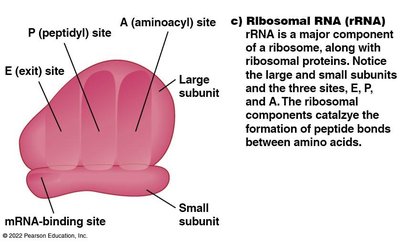
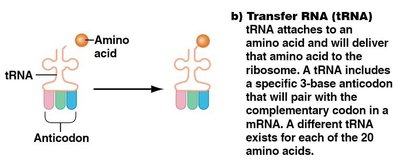
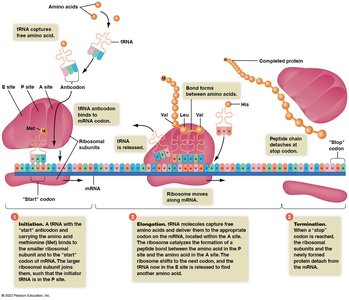
Stages of Translation
Initiation: The small ribosomal subunit binds to mRNA, and the initiator tRNA pairs with the start codon. The large subunit then joins to form the complete ribosome.
Elongation: tRNAs bring amino acids to the ribosome, where peptide bonds are formed between them, creating a growing polypeptide chain.
Termination: When a stop codon is encountered, the ribosome releases the polypeptide and disassembles.
Codons and the Genetic Code
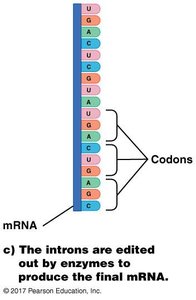
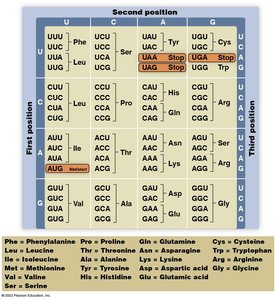
Codons are sequences of three nucleotides on mRNA that correspond to specific amino acids or stop signals during protein synthesis. The genetic code is universal and redundant, meaning multiple codons can code for the same amino acid.
Start Codon: AUG (codes for methionine)
Stop Codons: UAA, UAG, UGA (signal termination of translation)
Protein Structure and Function
Levels of Protein Structure
The function of a protein is determined by its structure, which is organized into four hierarchical levels:
Primary Structure: The unique sequence of amino acids in a polypeptide chain, held together by peptide bonds.
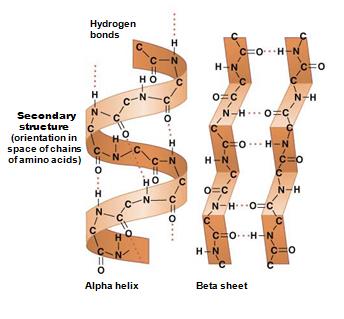
Secondary Structure: Local folding of the polypeptide into alpha-helices and beta-sheets, stabilized by hydrogen bonds.
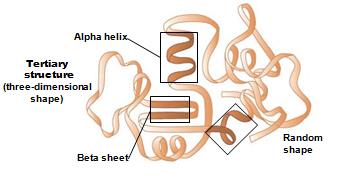
Tertiary Structure: The overall three-dimensional shape of a single polypeptide, determined by interactions among side chains (R groups), including disulfide bonds and hydrophobic interactions.
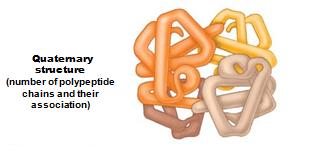
Quaternary Structure: The association of multiple polypeptide chains to form a functional protein complex.
Primary Structure
The linear sequence of amino acids determines the protein's identity and function. Even a single amino acid change can have significant effects (e.g., sickle cell anemia).
Secondary Structure
Alpha-helices and beta-sheets are common motifs formed by hydrogen bonding between backbone atoms.
Tertiary Structure
The three-dimensional folding of a protein is stabilized by various interactions, including hydrogen bonds, ionic bonds, disulfide bridges, and hydrophobic interactions.
Quaternary Structure
Some proteins are composed of more than one polypeptide chain. The quaternary structure describes how these subunits are arranged and interact.
Summary Table: Key Steps and Molecules in Protein Synthesis
Step | Location | Main Molecules Involved | Key Events |
|---|---|---|---|
Transcription | Nucleus | DNA, RNA polymerase, pre-mRNA | DNA is transcribed to produce pre-mRNA; introns are removed to form mature mRNA |
Translation | Cytoplasm (ribosome) | mRNA, rRNA, tRNA, amino acids | mRNA is translated into a polypeptide chain by ribosomes and tRNAs |
Protein Folding | Cytoplasm/ER | Polypeptide chain, chaperone proteins | Polypeptide folds into functional protein structure |
Additional info: The redundancy of the genetic code (multiple codons for one amino acid) helps protect against some mutations. Protein folding is assisted by molecular chaperones, and errors in folding can lead to diseases such as Alzheimer's and cystic fibrosis.
