 Back
BackReptiles: Evolution, Adaptations, and Diversity
Study Guide - Smart Notes
 Tailored notes based on your materials, expanded with key definitions, examples, and context.
Reptiles: Evolution, Adaptations, and Diversity
Introduction to Reptiles
Reptiles are a diverse group of vertebrates that were the first true land vertebrates, evolving key adaptations that freed them from dependence on moist environments. Their evolutionary innovations include waterproof skin, internal fertilization, and the amniotic egg, which enabled them to colonize a wide range of terrestrial habitats.
Evolutionary History of Reptiles
Origin and Fossil Record
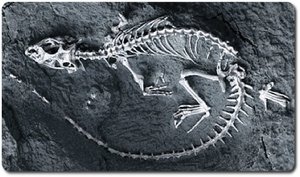
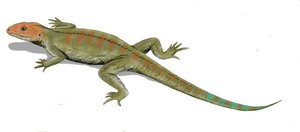
First Reptiles: Appeared in the late Carboniferous period (~312 million years ago), with Hylonomus as one of the earliest known true reptiles.
Major Groups: Modern reptiles diversified during the Mesozoic era, with birds evolving from dinosaurs around 150 million years ago.
Extinct Groups: Many marine and flying reptiles, such as ichthyosaurs, plesiosaurs, and pterosaurs, are now extinct.
Amniote Evolution
Amniotes: Vertebrates with an amniotic egg, including reptiles, birds, and mammals.
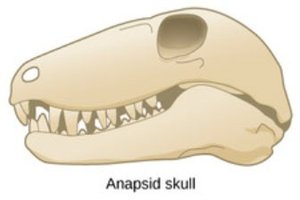
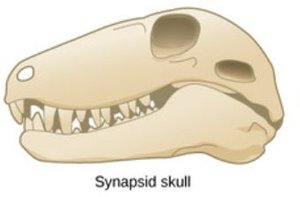
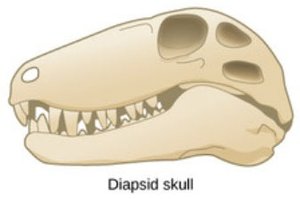
Skull Types: Amniotes are classified by the number of temporal openings in their skulls:
Anapsids: No openings (all extinct).
Synapsids: One opening (mammals).
Diapsids: Two openings (reptiles and birds).
Key Adaptations of Reptiles
Waterproof Skin and Scales
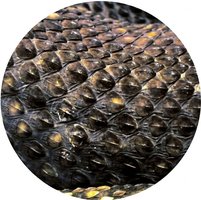
Reptilian skin is covered with keratinized scales, providing several advantages:
Prevention of Desiccation: Reduces water loss in dry environments.
Physical Protection: Shields against abrasion and predation.
Radiation Shield: Protects from ultraviolet radiation.
Trade-off: Waterproofing prevents cutaneous respiration, necessitating the evolution of efficient lungs.
Coloration: Used for camouflage, warning coloration (aposematism), or mimicry.
Internal Fertilization
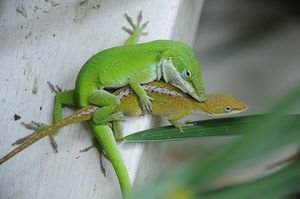
Reptiles evolved internal fertilization, allowing reproduction independent of water:
Copulation: Sperm is deposited directly into the female's body.
Advantage: Fertilization does not require an aquatic environment.
The Amniotic Egg
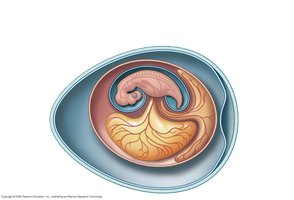
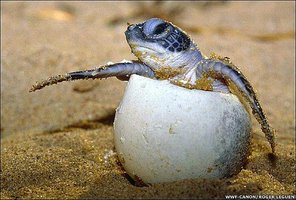
The amniotic egg is a major evolutionary innovation that enabled reptiles to reproduce on land:
Shell: Hard or leathery, porous for gas exchange, and waterproof to prevent desiccation.
Membranes:
Amnion: Surrounds and protects the embryo in fluid.
Chorion: Facilitates gas exchange and provides protection.
Allantois: Stores nitrogenous waste.
Yolk Sac: Provides nutrients.
Albumen: Supplies water and protein.
Significance: Embryos develop out of water, hatch fully formed, and are protected from drying out.
Other Key Traits
Three-Chambered Heart: Most reptiles have a heart with three chambers, except crocodilians, which have four.
Efficient Lungs: High surface area lungs for gas exchange.
Poikilothermy (Ectothermy): Body temperature is regulated by external sources.
Ecydysis: Shedding of the skin.
Ectothermy in Reptiles
Definition and Implications
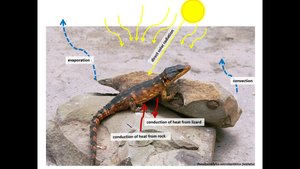
Ectothermy: Reptiles rely on environmental heat sources to regulate body temperature.
Behavioral Adaptations: Basking in the sun to raise body temperature; seeking shade or burrowing to avoid overheating.
Limitations: Reduced activity at night and in cold environments; limited endurance for chasing prey.
Classification of Extant Reptiles
Major Orders
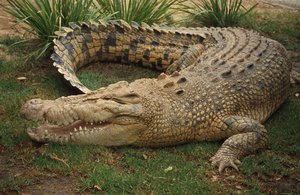
Crocodilia: Crocodiles and alligators; ancient predators with a fixed jaw.
Rhynchocephalia: Tuataras; long-lived, found only in New Zealand, last surviving members of an ancient order.
Testudinata: Tortoises, turtles, and terrapins; possess a unique bony shell and a keratinous beak.
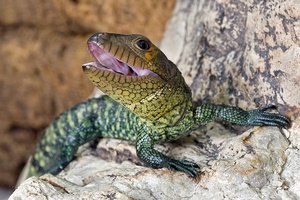
Squamata: Snakes and lizards; characterized by shedding skin and, in snakes, a hinged jaw. Limb reduction or loss is common in some groups.
Reptile Diversity and Anti-Predator Mechanisms
Diet and Reproduction
Diet: Snakes are carnivorous, tortoises are herbivorous, turtles and terrapins are omnivorous, and most lizards are insectivorous.
Reproduction: Most reptiles are oviparous (egg-laying), but some are viviparous (give birth to live young). Parental care is rare but present in some species.
Anti-Predator Mechanisms
Structural Defenses: Armored scales, spines, and the ability to shed skin or tails.
Camouflage: Many species use coloration and body shape to blend into their environment.
Behavioral Adaptations: Playing dead, running on water, gliding, or even spraying blood as a defense.
Chemical Defenses: Venom in some snakes and lizards.
Ecological and Economic Importance of Reptiles
Ecological Role: Control populations of insects, rodents, and other animals, maintaining ecosystem balance.
Economic Impact: Source of leather, food, and medicinal compounds; some species are kept as pets.
Summary Table: Key Reptilian Innovations
Innovation | Function | Evolutionary Significance |
|---|---|---|
Waterproof skin & scales | Prevents desiccation, provides protection | Allowed colonization of dry terrestrial habitats |
Internal fertilization | Fertilization independent of water | Enabled reproduction away from aquatic environments |
Amniotic egg | Protects embryo, provides nutrients and water | Freed vertebrates from dependence on water for reproduction |
Ectothermy | Body temperature regulated by environment | Energy efficient, but limits activity in cold climates |
Revision Points
Evolutionary innovations that freed reptiles from moist environments: Waterproof skin and scales, internal fertilization, amniotic egg.
Functions of reptile scales: Protection, prevention of desiccation, camouflage, movement, heat absorption, predator deterrence, mate attraction.
Structures of the amniotic egg: Yolk sac (nutrients), amnion (protects embryo), allantois (waste storage), chorion (gas exchange), albumen (water/protein), shell (protection).
Evolutionary significance of the amniotic egg: Enabled vertebrates to reproduce away from water.
Impact of ectothermy on reptile distribution: Limits activity to warmer climates and lower altitudes; activity is reduced at night and in cold environments.
