 Back
BackScience as a Cooperative Endeavor: Experimental Design, Model Organisms, and the Interplay of Science, Technology, and Society
Study Guide - Smart Notes
 Tailored notes based on your materials, expanded with key definitions, examples, and context.
Concept 1.4: Science Benefits from a Cooperative Approach and Diverse Viewpoints
Science as a Social and Cooperative Activity
Science is not an isolated pursuit; it thrives on collaboration, communication, and the sharing of ideas. Most scientific research is conducted by teams that include students, postdoctoral researchers, and faculty, and findings are disseminated through peer-reviewed publications and presentations. This cooperative approach ensures that discoveries are scrutinized, validated, and built upon by the broader scientific community.
Peer Review: Research is evaluated by other experts before publication, ensuring accuracy and reliability.
Building on Previous Work: Scientists rely on the discoveries and methodologies developed by their predecessors, advancing knowledge incrementally.
Communication: Effective communication of results is essential for scientific progress and societal impact.
Experimental Design: The Case of Camouflage and Predation in Mice
Scientific inquiry often involves designing experiments to test specific hypotheses. One classic example is the study of how camouflage affects predation rates in mice by owls, considering environmental variables such as soil color and moonlight.
Hypothesis: The contrast between a mouse's coat color and its environment influences its likelihood of being preyed upon by owls, and this effect is modified by moonlight.
Experimental Setup: Pairs of Peromyscus polionotus mice (one light brown, one dark brown) were released into enclosures with either light- or dark-colored soil, under conditions of full moon or no moon. The first mouse caught by an owl was recorded.
Variables:
Independent Variables: Coat color, soil color, and presence/absence of moonlight (displayed on the x-axis of the graphs).
Dependent Variable: Number of mice caught (displayed on the y-axis).
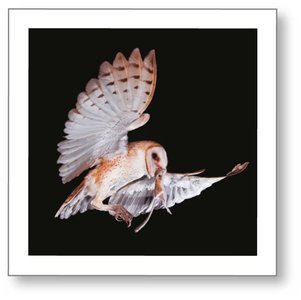
Example: The image above shows an owl capturing a mouse, illustrating the predator-prey interaction studied in the experiment.
Data Interpretation
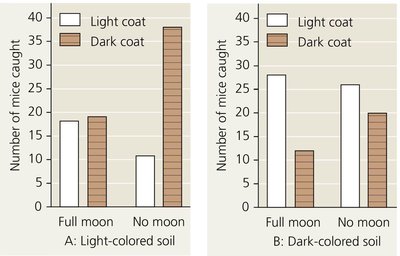
The bar graphs above summarize the experimental results:
Condition | Light Coat Mice Caught | Dark Coat Mice Caught |
|---|---|---|
Light Soil, Full Moon | ~15 | ~20 |
Light Soil, No Moon | ~10 | ~35 |
Dark Soil, Full Moon | ~30 | ~12 |
Dark Soil, No Moon | ~28 | ~20 |
Key Findings:
Camouflage (matching coat and soil color) reduces predation risk.
Moonlight increases the visibility of mice, affecting predation rates.
Dark brown mice are most vulnerable on light soil, especially with no moon.
Light brown mice are most vulnerable on dark soil, especially with a full moon.
Scientific Skills: Interpreting experimental data, identifying variables, and drawing conclusions about adaptation and natural selection.
Example: These results support the concept of natural selection, where traits that enhance survival (such as effective camouflage) are favored in specific environments.
Model Organisms in Biological Research
Model organisms are species that are easy to maintain in the laboratory and are used to study broad biological principles. Because all life shares evolutionary ancestry, discoveries in model organisms often apply to other species, including humans.
Examples of Model Organisms:
Fruit fly (Drosophila melanogaster)
Mustard plant (Arabidopsis thaliana)
Soil worm (Caenorhabditis elegans)
Zebrafish (Danio rerio)
Mouse (Mus musculus)
Bacterium (Escherichia coli)
Importance: Model organisms facilitate cooperation and reproducibility in research, and findings can often be generalized to other species.
Levels of Biological Inquiry and Integration
Biologists investigate life at multiple levels, from molecules and cells to organisms and ecosystems. Integrating knowledge across these levels is essential for a comprehensive understanding of biology.
Example: Research on sickle-cell disease connects genetics, molecular biology, physiology, and evolutionary biology.
Application: Understanding how genetic mutations affect phenotype and fitness in different environments.
Science, Technology, and Society
Science and technology are interdependent but have distinct goals. Science seeks to understand natural phenomena, while technology applies scientific knowledge to solve practical problems. The interplay between science, technology, and society shapes research directions and raises important ethical questions.
Science: Driven by curiosity and the desire to explain the natural world.
Technology: Focused on practical applications of scientific discoveries.
Societal Impact: Advances in science and technology can have profound effects on society, such as the use of DNA technology in medicine, agriculture, and forensics.
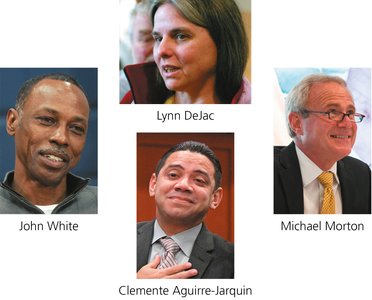
Example: DNA forensic technology has been used to exonerate wrongly convicted individuals, demonstrating the societal benefits of scientific advances.
Ethical Considerations
Debates about technology often focus on ethical, legal, and social implications (e.g., genetic testing, privacy, and discrimination).
All citizens should be informed about science and technology to participate in societal decision-making.
Concept Check
How does science differ from technology? Science aims to understand the natural world, while technology applies that understanding for practical purposes.
Evolutionary Process Example: The higher frequency of the sickle-cell gene in regions with malaria is explained by natural selection: individuals with one copy of the gene are more resistant to malaria, so the gene persists despite its harmful effects in homozygotes.
