 Back
BackSeed Plant Diversity: Gymnosperms and Angiosperms
Study Guide - Smart Notes
 Tailored notes based on your materials, expanded with key definitions, examples, and context.
Seed Plant Diversity
Evolutionary Origins of Seed Plants
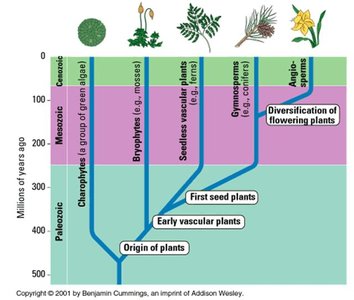
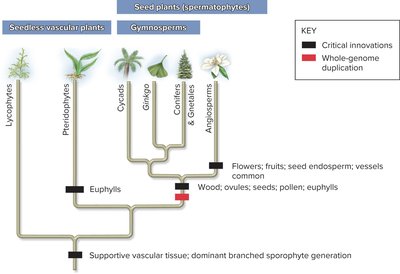
Seed plants, including gymnosperms and angiosperms, evolved from seedless vascular plants. The diversification of gymnosperms preceded the rise of angiosperms, which are the flowering plants. Seed plants are distinguished by their ability to produce seeds, a major evolutionary innovation that allowed them to colonize a wide range of terrestrial environments.
Seedless vascular plants gave rise to the first seed plants.
Gymnosperms evolved before angiosperms.
Angiosperms diversified rapidly, leading to the dominance of flowering plants.
Seeds provide protection and nourishment for the developing embryo.
Progymnosperms: The First Woody Plants
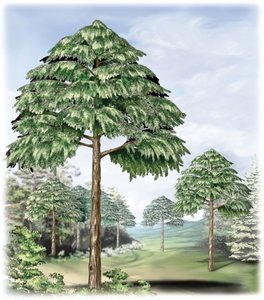
Progymnosperms were the first plants to develop wood, a tissue composed of water-conducting cells strengthened by lignin. However, they reproduced by spores rather than seeds. The vascular tissue arrangement (eustele) in progymnosperms was inherited by seed plants.
Wood evolved before seeds.
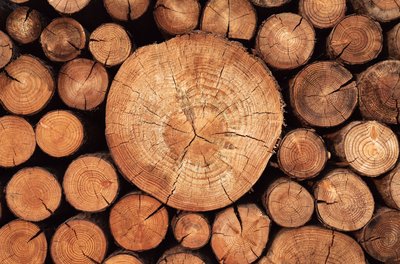
Vascular cambium produces wood and inner bark.
Wood allows for tall growth and structural support.
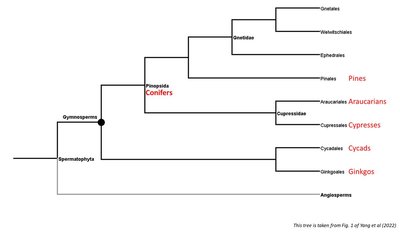
Gymnosperms
General Features of Gymnosperms
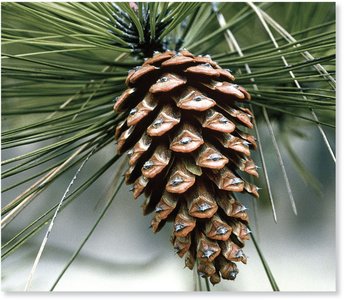
Gymnosperms are seed plants that produce "naked seeds," meaning their seeds are not enclosed in fruits. Most gymnosperms are woody shrubs or trees, and their adaptations allow them to thrive in cold and dry habitats.
Seeds are exposed on cone scales.
Wood strengthens plants, enabling tall growth and extensive branching.
Adaptations include needle-shaped leaves and thick cuticles.
Cycads
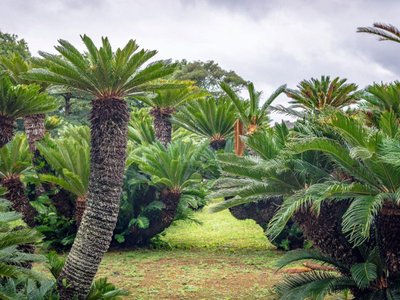
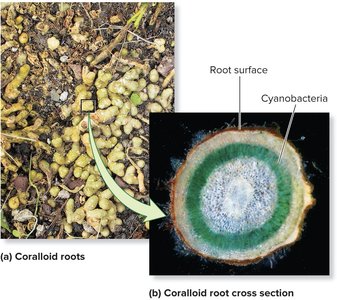
Cycads are a group of gymnosperms with nearly 300 species, mostly found in tropical and subtropical regions. They have nonwoody stems and palm-like leaves. Cycads are notable for their corraloid roots, which house cyanobacteria for nitrogen fixation.
Corraloid roots are above ground and resemble corals.
Cyanobacteria in roots fix nitrogen.
Distinctive reproduction via cones that attract beetles for pollination.
Ginkgos
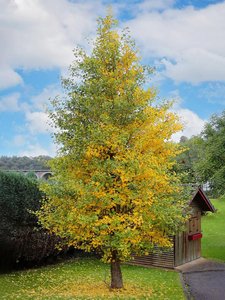
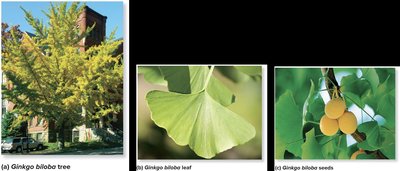
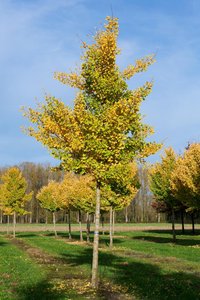
Ginkgos are long-lived trees, with individuals capable of living over a thousand years. Ginkgo biloba is the only extant species, characterized by two-lobed leaves and wind-dispersed pollen.
Nearly extinct in the wild.
Individual trees are either male (produce pollen) or female (produce ovules and seeds).
Widely planted in urban areas (male trees preferred due to odorless seeds).
Conifers
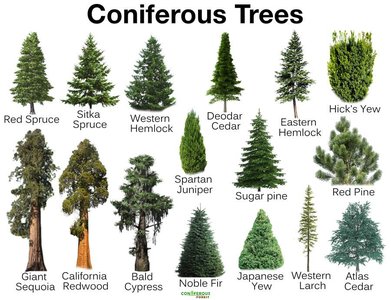
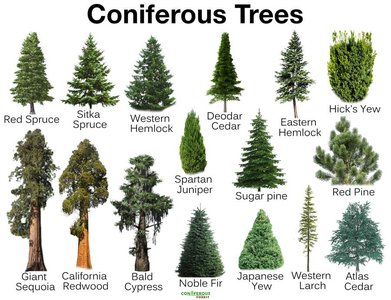
Conifers are the most diverse modern gymnosperm lineage, with more than 50 genera and over 600 species. They are common in mountain and high-latitude forests and are adapted to cold climates.
Conical shape and flexible branches.
Scalelike or needle-shaped leaves with thick waxy cuticle.
Most conifers are evergreen.
Gymnosperm Reproduction
Gymnosperms reproduce via cones. Male cones produce pollen, which is wind-dispersed, while female cones house ovules and facilitate fertilization. This wind-driven dispersal allows gymnosperms to colonize arid, temperate, and cold environments.
Male cones produce large amounts of pollen.
Female cones are the site of fertilization.
Seeds are the main advantage over ferns, which require water for reproduction.
Angiosperms
General Features of Angiosperms
Angiosperms are distinguished by the presence of flowers and endosperm. Flowers enhance seed production, and fruits develop from flowers to enclose seeds and aid in dispersal. Endosperm is a nutritive tissue that increases storage efficiency.
Flowers are specialized reproductive structures.
Fruits foster seed dispersal.
Endosperm provides nutrition to the developing embryo.
Flower Structure
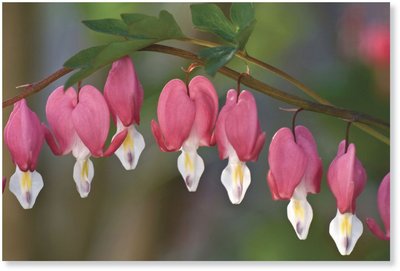
Flowers are complex reproductive structures specialized for efficient production of pollen and seeds, and to attract pollinators. They consist of four types of organs: sepals, petals, stamens, and carpels.
Sepals: Often green, outer layer of flower buds.
Petals: Often colorful, attract pollinators.
Stamens: Produce pollen.
Carpels: Produce ovules.
When petals and sepals are indistinguishable, they are called tepals.
Ecological Benefits of Angiosperms
Angiosperms support diverse pollination networks, providing nectar and pollen to insects, birds, and bats. These mutualistic relationships drive co-evolution and maintain biodiversity.
Pollinators gain nutrition; plants receive pollination services.
Mutualistic relationships strengthen co-evolutionary bonds.
Indicators of animal pollination: large petals, nectar guides, bilateral symmetry, enclosed reproductive parts.
Indicators of wind pollination: reduced petals, exposed anthers, feathery stigma, abundant pollen.
Angiosperm Diversity and Genome Evolution
Angiosperms are highly diverse, with 250,000–400,000 species. Whole-genome duplication events have occurred multiple times in plant evolutionary history, contributing to the diversification of seed plants and the formation of gene families with varied functions.
Whole-genome duplication linked to early seed plant diversification.
Gene families diversify functions after duplication.
Summary Table: Gymnosperms vs. Angiosperms
Feature | Gymnosperms | Angiosperms |
|---|---|---|
Seed Enclosure | Naked seeds (not enclosed in fruit) | Seeds enclosed in fruit |
Reproductive Structure | Cones | Flowers |
Pollination | Mostly wind | Wind or animal |
Nutritive Tissue | Female gametophyte | Endosperm |
Diversity | ~1,100 species | ~250,000–400,000 species |
Key Terms and Concepts
Gymnosperm: Seed plant with naked seeds, typically in cones.
Angiosperm: Seed plant with seeds enclosed in fruit, produces flowers.
Vascular cambium: Tissue that produces wood and inner bark.
Corraloid roots: Specialized roots in cycads that house cyanobacteria.
Endosperm: Nutritive tissue in angiosperm seeds.
Whole-genome duplication: Evolutionary event leading to gene family diversification.
Important Equations
While seed plant biology is not heavily quantitative, the following formula is relevant for understanding genome size:
Genome size (in base pairs):
Conclusion
Seed plants represent a major evolutionary innovation in the plant kingdom, with gymnosperms and angiosperms dominating terrestrial ecosystems. Their adaptations, reproductive strategies, and ecological relationships have shaped the diversity and success of modern flora.
