 Back
BackViruses and Biotechnology: Structure, Replication, Disease, and Applications
Study Guide - Smart Notes
 Tailored notes based on your materials, expanded with key definitions, examples, and context.
Viruses: Structure, Replication, and Disease
Introduction to Viruses
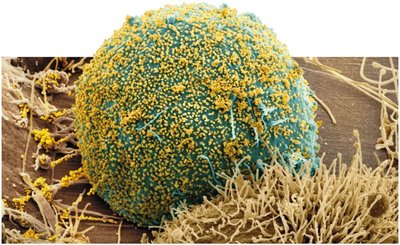
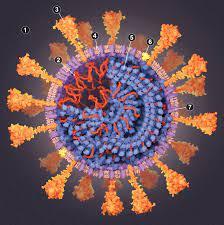
Viruses are infectious particles that consist of genetic material encased in a protein coat, and sometimes a membranous envelope. They are not cells and cannot reproduce or carry out metabolism independently; instead, they require a host cell for replication. - Key Point 1: Viruses are obligate intracellular parasites. - Key Point 2: Viral genomes may be DNA or RNA, single- or double-stranded, and can be linear or circular. - Example: HIV is an RNA virus that infects human immune cells. 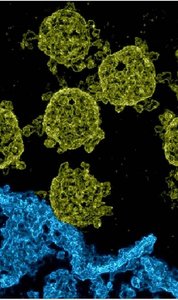
Viral Structure
The structure of viruses is diverse, but all share a protein coat called a capsid, composed of subunits called capsomeres. Some viruses possess a membranous envelope derived from the host cell, which contains viral glycoproteins that facilitate entry into host cells. - Key Point 1: Capsids can be helical or icosahedral in shape. - Key Point 2: Viral envelopes aid in host cell entry via receptor binding and membrane fusion. 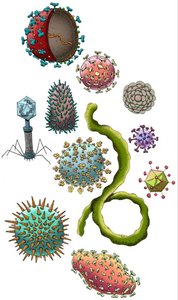

Bacteriophages
Bacteriophages, or phages, are viruses that infect bacteria. They have a distinct structure with an elongated capsid head containing DNA and a tail used for attachment and DNA injection. - Key Point 1: Phages are important models for studying viral replication. 

Viral Replication and Life Cycles
Viruses replicate only within host cells, using host machinery to produce viral proteins and assemble new viruses. The general cycle involves entry, genome replication, protein synthesis, assembly, and release. - Key Point 1: Viral replication depends on host enzymes, ribosomes, and other molecules. - Key Point 2: Self-assembly of viral components forms new virions. 

Phage Replication: Lytic and Lysogenic Cycles
Phages exhibit two main reproductive cycles: lytic and lysogenic. The lytic cycle results in host cell lysis and death, while the lysogenic cycle incorporates viral DNA into the host genome as a prophage, allowing replication without immediate destruction. - Key Point 1: Virulent phages reproduce only via the lytic cycle. - Key Point 2: Temperate phages can switch between cycles. 


Viral Classification
Viruses are classified based on their genome type (DNA or RNA, single- or double-stranded) and the presence or absence of an envelope. Animal viruses often have both an envelope and an RNA genome, unlike most bacteriophages. 
Class/Family | Envelope? | Examples |
|---|---|---|
Double-Stranded DNA (dsDNA) | No/Yes | Adenovirus, Herpesvirus, Poxvirus |
Single-Stranded DNA (ssDNA) | No | Parvovirus |
Double-Stranded RNA (dsRNA) | No | Reovirus |
Single-Stranded RNA (ssRNA) | Yes/No | Picornavirus, Coronavirus, Flavivirus |
Retrovirus | Yes | HIV |
Replicative Cycle of Enveloped RNA Viruses
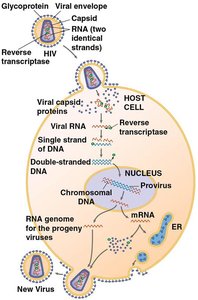
Enveloped RNA viruses use their glycoproteins to bind host cell receptors, fuse with the membrane, and release their genome for replication and protein synthesis. 
Retroviruses and HIV
Retroviruses, such as HIV, are RNA viruses that use reverse transcriptase to synthesize DNA from their RNA genome. This DNA integrates into the host genome as a provirus, remaining a permanent resident. - Key Point 1: Reverse transcriptase is a key enzyme in retrovirus replication. - Key Point 2: Provirus DNA is transcribed to produce new viral genomes and proteins. 
Viral Diseases in Animals and Plants
Viral infections can cause disease by damaging host cells, triggering toxin production, or causing permanent cellular damage. New viral diseases arise through mutation, dissemination, and cross-species transmission. - Key Point 1: RNA viruses mutate rapidly, leading to emerging diseases. - Key Point 2: Plant viruses spread via horizontal (through damaged cell walls) and vertical (inherited) transmission. 


Prions: Infectious Proteins
Prions are misfolded proteins that cause degenerative brain diseases in animals and humans. They are transmitted in food, act slowly, and are virtually indestructible. - Example: Mad cow disease, Creutzfeldt-Jakob disease.
Vaccines and Antiviral Drugs
Vaccines are harmless derivatives of pathogens that stimulate the immune system. DNA and RNA vaccines introduce genetic material coding for antigens, preparing the immune system for defense. Antiviral drugs can treat, but not cure, viral infections. - Key Point 1: Herd immunity occurs when a large portion of the population is immune, reducing disease spread.
Biotechnology: DNA Tools and Applications
DNA Technology and Genetic Engineering
DNA technology encompasses sequencing and manipulating DNA, including nucleic acid hybridization and gene cloning. Genetic engineering is the direct manipulation of genes for practical purposes. - Key Point 1: DNA cloning produces multiple identical copies of a DNA segment. - Key Point 2: Plasmids are used as cloning vectors due to their ease of manipulation and rapid replication.
Making Recombinant DNA
Restriction enzymes cut DNA at specific sites, producing fragments with sticky ends that can be joined by DNA ligase to form recombinant DNA. - Key Point 1: Sticky ends facilitate the joining of DNA fragments from different sources.
Polymerase Chain Reaction (PCR)
PCR amplifies specific DNA segments using heat-stable DNA polymerase (Taq polymerase) and sequence-specific primers. The process involves cycles of denaturation, annealing, and extension, resulting in exponential DNA amplification. - Key Point 1: PCR is used in research, forensics, and medical diagnostics. - Key Point 2: Gel electrophoresis separates and visualizes DNA fragments.
Biotechnology Applications
Biotechnology manipulates organisms or their components to produce useful products. Applications include medicine, forensic evidence, environmental cleanup, and agriculture.
Medical Applications
- Key Point 1: DNA technology identifies mutations and gene expression changes in disease. - Key Point 2: Pharmaceutical products such as insulin and growth hormone are produced using engineered host cells.
Forensic Evidence
- Key Point 1: DNA testing and genetic profiles (using STRs) identify individuals and determine paternity.
Environmental Cleanup
- Key Point 1: Engineered microorganisms degrade toxic waste and aid in wastewater treatment.
Agricultural Applications
- Key Point 1: Genetically modified plants and animals are engineered for insect resistance, improved nutrition, weather resistance, and rapid growth.
Safety and Ethical Questions
Recombinant DNA technology raises concerns about hazardous pathogens, GM food safety, environmental consequences, and allergic reactions. Guidelines are in place to ensure safe practices. Additional info: The notes cover all major aspects of Ch. 19 (Viruses) and Ch. 20 (DNA Tools and Biotechnology) as outlined in a college biology curriculum, including structure, replication, disease, vaccines, and biotechnology applications.
