Pearson+ LogoPearson+ Logo
Ch. 25 Control of Body Temperature and Water Balance
Taylor - Campbell Biology: Concepts & Connections 10th Edition
Taylor, Simon, Dickey, Hogan10th EditionCampbell Biology: Concepts & ConnectionsISBN: 9780136538783Not the one you use?Change textbook
Chapter 25, Problem 16

Compare the water and salt regulation in a salmon when it swims in the ocean to when it migrates into fresh water to spawn.

Verified step by step guidance
1
Understand the different environments: Recognize that the ocean is a hypertonic environment (higher solute concentration than the salmon's body fluids) and fresh water is a hypotonic environment (lower solute concentration than the salmon's body fluids).
Examine osmoregulation in the ocean: In the ocean, salmon are hypoosmotic to their surroundings, meaning they tend to lose water and gain salt. Understand how salmon actively take in water through drinking and excrete excess salts through specialized cells in their gills.
Investigate osmoregulation in fresh water: When in fresh water, salmon are hyperosmotic, meaning they tend to gain water and lose salts. Learn how salmon reduce water intake, produce large amounts of dilute urine, and actively uptake salts through their gills.
Explore hormonal regulation: Study the role of hormones like cortisol and prolactin, which help regulate ion transport and water balance in salmon as they transition between saltwater and freshwater environments.
Consider adaptive mechanisms: Reflect on the physiological adaptations salmon have developed to handle these transitions, such as changes in gill cell function and the structure of the kidney, which allow them to efficiently osmoregulate in both environments.

Verified video answer for a similar problem:

This video solution was recommended by our tutors as helpful for the problem above.
Video duration:
1m
Was this helpful?

Key Concepts

Here are the essential concepts you must grasp in order to answer the question correctly.

Osmoregulation

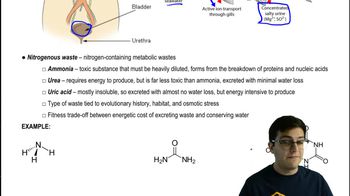
Osmoregulation is the process by which organisms maintain the balance of water and salts in their bodies, crucial for cellular function. In aquatic environments, organisms must adapt to varying salinity levels, which affects their internal osmotic pressure. Salmon exhibit different osmoregulatory strategies when transitioning between saltwater and freshwater, ensuring their survival in both environments.
Recommended video:
Guided course
07:16
Osmoregulation and Nitrogenous Waste

Hyperosmotic and Hypoosmotic Environments

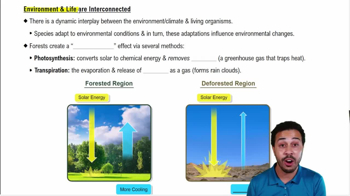
Hyperosmotic environments, like the ocean, have a higher concentration of solutes compared to the organism's body fluids, leading to water loss from the fish. Conversely, hypoosmotic environments, such as freshwater, have a lower solute concentration, causing water to enter the fish. Salmon must adjust their physiological processes, such as gill function and kidney activity, to cope with these contrasting osmotic challenges.
Recommended video:
Guided course
02:29
Environment & Life are Interconnected

Physiological Adaptations

Physiological adaptations in salmon include changes in gill permeability and kidney function to regulate salt and water balance. In saltwater, salmon actively excrete excess salts through specialized cells in their gills and produce small amounts of concentrated urine. When migrating to freshwater, they reverse this process, absorbing salts and producing larger volumes of dilute urine to prevent overhydration.
Recommended video:
Guided course
05:13
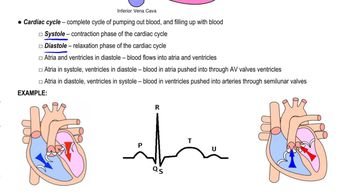
Heart Physiology
Related Practice
Textbook Question

Match each of the following components of blood (on the left) with what happens to it as the blood is processed by the kidney (on the right). Note that each lettered choice may be used more than once.


8. Water

9. Glucose

10. Plasma protein

11. Toxins or drugs

12. Red blood cell

13. Urea


a. passes into filtrate; almost all excreted in urine

b. remains in blood

c. passes into filtrate; mostly reabsorbed

d. secreted and excreted

1240
views
Textbook Question

You are in a room of empty chairs. As the chairs fill with people, you become hotter and hotter. A ceiling fan is turned on, and you feel cooler. You gained heat by _________ and lost heat to the environment by _________ .

a. Conduction … convection

b. Radiation … convection

c. Radiation … conduction

d. Convection … radiation

758
views
Textbook Question

Which process in the nephron is least selective?

a. Secretion

b. Reabsorption

c. Filtration

d. Passive diffusion of salt

1108
views
Textbook Question
Can ectotherms have stable body temperatures? Explain.
1293
views
Textbook Question
Two endothermic animals are the same size, but one is a carnivore and the other is an herbivore. Predict which of these animals would produce the greatest amount of nitrogenous wastes. Explain.
968
views
Textbook Question
Some diuretics are on a list of substances that the International Olympic Committee has banned for use by athletes. What do diuretics do? Propose an explanation for how diuretic use could be an unfair advantage for a competitor in a sport like wrestling, in which weight classes are part of the competition.
813
views