Pearson+ LogoPearson+ Logo
Ch. 33 Control Systems in Plants
Taylor - Campbell Biology: Concepts & Connections 10th Edition
Taylor, Simon, Dickey, Hogan10th EditionCampbell Biology: Concepts & ConnectionsISBN: 9780136538783Not the one you use?Change textbook
Chapter 33, Problem 20

Imagine the following scenario: A plant biologist has developed a synthetic chemical that mimics the effects of a plant hormone. The chemical can be sprayed on apples before harvest to prevent flaking of the natural wax that is formed on the skin. This makes the apples shinier and gives them a deeper red color. What kinds of questions do you think should be answered before farmers start using this chemical on apples? How might the scientist go about finding answers to these questions?

Verified step by step guidance
1
Identify the specific plant hormone that the synthetic chemical mimics and understand its role and mechanism in natural plant physiology. This will help in predicting potential side effects or interactions when applied externally.
Conduct laboratory tests to determine the optimal concentration and application method of the synthetic chemical that maximizes benefits while minimizing any harmful effects on the apple or the environment.
Perform controlled field trials to observe the effects of the synthetic chemical on apple trees over multiple growing seasons. This includes monitoring the health of the trees, the quality of the fruit, and any changes in the ecosystem around the trees.
Evaluate the long-term effects of the synthetic chemical on consumers' health by conducting toxicological studies. This involves assessing whether any residues of the chemical remain on the apples at harvest and after storage, and if these residues are safe for consumption.
Assess the environmental impact of regular use of the synthetic chemical, including its potential effects on soil health, non-target organisms (such as bees and other pollinators), and local water sources.

Verified video answer for a similar problem:

This video solution was recommended by our tutors as helpful for the problem above.
Video duration:
1m
Was this helpful?

Key Concepts

Here are the essential concepts you must grasp in order to answer the question correctly.

Plant Hormones

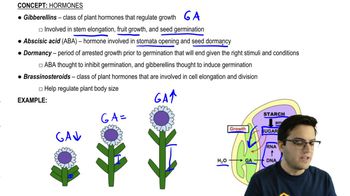
Plant hormones, or phytohormones, are chemical messengers that regulate various physiological processes in plants, including growth, development, and responses to environmental stimuli. They play crucial roles in processes such as fruit ripening, flowering, and stress responses. Understanding how these hormones function is essential for evaluating the synthetic chemical's effectiveness and safety.
Recommended video:
Guided course
08:18
Plant Hormones and Senescence

Chemical Safety and Toxicology

Chemical safety and toxicology involve studying the effects of substances on living organisms and the environment. Before introducing a new chemical, it is vital to assess its potential toxicity, environmental impact, and long-term effects on human health and ecosystems. This ensures that the chemical does not pose risks to consumers or the agricultural environment.
Recommended video:
Guided course
01:56
Chemical Reactions

Regulatory Approval Process

The regulatory approval process is a series of evaluations and assessments that a new agricultural chemical must undergo before it can be marketed. This process typically involves rigorous testing for efficacy, safety, and environmental impact, followed by reviews from governmental agencies. Understanding this process is crucial for the scientist to navigate the necessary steps for the chemical's use in agriculture.
Recommended video:
Guided course
04:19
1) RNA Processing