Pearson+ LogoPearson+ Logo
Ch. 16 Microbial Life: Prokaryotes and Protists
Taylor - Campbell Biology: Concepts & Connections 10th Edition
Taylor, Simon, Dickey, Hogan10th EditionCampbell Biology: Concepts & ConnectionsISBN: 9780136538783Not the one you use?Change textbook
Chapter 16, Problem 16

The buildup of CO2 in the atmosphere resulting from the burning of fossil fuels is regarded as a major contributor to global warming. Diatoms and other microscopic algae in the oceans counter this buildup by using large quantities of atmospheric CO2 in photosynthesis, which requires small quantities of iron. Experts suspect that a shortage of iron may limit algal growth in the oceans. Some scientists have suggested that one way to reduce CO2 buildup might be to fertilize the oceans with iron. The iron would stimulate algal growth and thus the removal of more CO2 from the air. A single supertanker of iron dust, spread over a wide enough area, might reduce the atmospheric CO2 level significantly. Do you think this approach would be worth a try? Why or why not?

Verified step by step guidance
1
Understand the problem: The question revolves around the idea of fertilizing the ocean with iron to stimulate algal growth, which could potentially reduce atmospheric CO2 levels. This involves understanding the biological process of photosynthesis and the role of iron as a limiting nutrient in marine ecosystems.
Step 1: Explain the role of diatoms and algae in photosynthesis. Diatoms and other microscopic algae use sunlight, water, and CO2 to produce glucose and oxygen through photosynthesis. The chemical equation for photosynthesis is: 6CO2 + 6H2O + lightC6H12O6 + 6O2. This process removes CO2 from the atmosphere.
Step 2: Discuss the role of iron as a limiting nutrient. In many parts of the ocean, iron is a micronutrient that is essential for algal growth but is present in very low concentrations. Adding iron to these areas could stimulate algal blooms, increasing photosynthesis and CO2 uptake.
Step 3: Consider the potential benefits. Fertilizing the ocean with iron could lead to increased algal growth, which might reduce atmospheric CO2 levels. This could help mitigate global warming by sequestering carbon in the form of organic matter that eventually sinks to the ocean floor.
Step 4: Evaluate the potential risks and challenges. Large-scale iron fertilization could disrupt marine ecosystems, cause harmful algal blooms, or lead to unintended consequences such as oxygen depletion in deeper waters. Additionally, the long-term effectiveness and feasibility of this approach are uncertain.
Step 5: Formulate a conclusion. Based on the benefits and risks, consider whether the potential reduction in CO2 justifies the ecological and ethical concerns. This approach might be worth exploring further through small-scale, controlled experiments to better understand its impacts before implementing it on a larger scale.

Verified video answer for a similar problem:

This video solution was recommended by our tutors as helpful for the problem above.
Video duration:
2m
Was this helpful?

Key Concepts

Here are the essential concepts you must grasp in order to answer the question correctly.

Photosynthesis

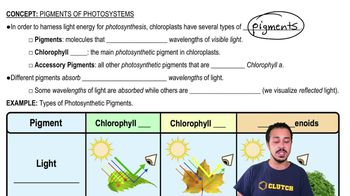
Photosynthesis is the biochemical process by which green plants, algae, and some bacteria convert light energy into chemical energy, using carbon dioxide (CO2) and water to produce glucose and oxygen. This process is crucial for life on Earth as it forms the base of the food chain and plays a significant role in regulating atmospheric CO2 levels.
Recommended video:
Guided course
05:58
Pigments of Photosynthesis

Iron Limitation in Marine Ecosystems

Iron limitation refers to the phenomenon where the availability of iron, an essential micronutrient, restricts the growth of phytoplankton, including diatoms and algae, in oceanic environments. Since these organisms are vital for photosynthesis and CO2 absorption, a shortage of iron can hinder their ability to mitigate atmospheric CO2 levels, impacting global carbon cycles.
Recommended video:
Guided course
01:47
Marine Benthic Zone

Ocean Fertilization

Ocean fertilization is a geoengineering strategy aimed at enhancing the growth of phytoplankton by adding nutrients, such as iron, to ocean waters. The goal is to increase photosynthetic activity, thereby boosting CO2 absorption from the atmosphere. While this approach has potential benefits for reducing greenhouse gases, it also raises ecological concerns and uncertainties about its long-term effects on marine ecosystems.
Recommended video:
Guided course
01:59
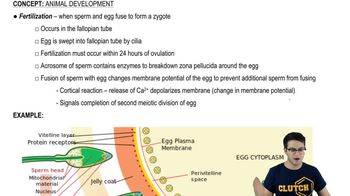
Fertilization