Pearson+ LogoPearson+ Logo
Ch. 14 The Origin of Species
Taylor - Campbell Biology: Concepts & Connections 10th Edition
Taylor, Simon, Dickey, Hogan10th EditionCampbell Biology: Concepts & ConnectionsISBN: 9780136538783Not the one you use?Change textbook
Chapter 14, Problem 13

Explain how each of the following makes it difficult to clearly define a species: variation within a species, geographically isolated populations, asexual species, fossil organisms.

Verified step by step guidance
1
Understand the concept of a species: A species is traditionally defined as a group of organisms that can interbreed and produce fertile offspring under natural conditions. This definition, however, faces challenges due to various biological complexities.
Analyze variation within a species: Genetic diversity within a species can be extensive, leading to significant differences in physical appearance, behavior, and genetic makeup among members of the same species. This variation can blur the lines between different species, making it difficult to determine where one species ends and another begins.
Consider geographically isolated populations: When populations of the same species become geographically separated (e.g., by mountains, rivers, or human activities), they may evolve independently over time. This can lead to the development of distinct characteristics in each population, potentially resulting in speciation. Determining whether they are still the same species or have diverged into new species can be challenging.
Evaluate asexual species: Species that reproduce asexually do not exchange genetic material through mating. This means that traditional biological species concepts based on interbreeding do not apply, complicating the classification of such organisms into distinct species.
Examine fossil organisms: Fossils provide limited information, primarily morphological, and lack genetic data, which is crucial for modern species classification. This makes it difficult to accurately determine the species of fossilized organisms and understand their relationships to current species.

Verified video answer for a similar problem:

This video solution was recommended by our tutors as helpful for the problem above.
Video duration:
1m
Was this helpful?

Key Concepts

Here are the essential concepts you must grasp in order to answer the question correctly.

Variation Within a Species

Variation within a species refers to the differences in traits among individuals of the same species, which can include physical characteristics, behaviors, and genetic makeup. This diversity can complicate species definitions, as it may lead to overlapping traits with other species, making it challenging to establish clear boundaries. For example, the wide range of colors and sizes in a single species of butterfly can blur the lines between species.
Recommended video:
02:16
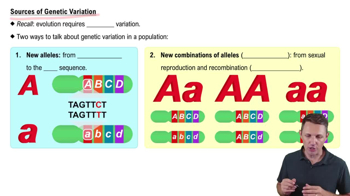
Sources of Genetic Variation

Geographically Isolated Populations

Geographically isolated populations occur when groups of the same species are separated by physical barriers, such as mountains or rivers, leading to divergent evolutionary paths. This isolation can result in distinct adaptations and traits that may cause these populations to be classified as separate species, despite their common ancestry. The concept of 'cryptic species' often arises in such cases, where closely related species are indistinguishable morphologically but are genetically distinct.
Recommended video:
Guided course
03:35
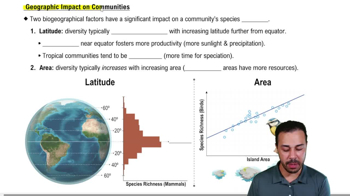
Geographic Impact on Communities

Asexual Species

Asexual species reproduce without the fusion of gametes, leading to offspring that are genetically identical to the parent. This mode of reproduction challenges traditional species definitions based on sexual reproduction, where distinct species are often identified by reproductive isolation. In asexual organisms, such as bacteria or certain plants, the lack of sexual reproduction complicates the identification of species boundaries, as genetic variation may arise through mutations rather than through mating.
Recommended video:
08:17
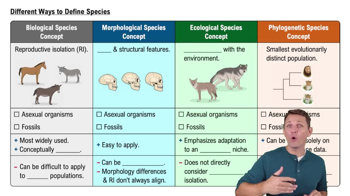
Different Ways to Define Species