Pearson+ LogoPearson+ Logo
Ch. 17 The Evolution of Plant and Fungal Diversity
Taylor - Campbell Biology: Concepts & Connections 10th Edition
Taylor, Simon, Dickey, Hogan10th EditionCampbell Biology: Concepts & ConnectionsISBN: 9780136538783Not the one you use?Change textbook
Chapter 17, Problem 12

What characters support the classification of fungi and plants in different kingdoms?

Verified step by step guidance
1
Identify the fundamental differences in cellular structure between fungi and plants. Fungi are primarily composed of chitin in their cell walls, whereas plants have cell walls made of cellulose.
Examine the nutritional methods of each kingdom. Fungi are heterotrophic, meaning they absorb nutrients from external sources, typically by secreting enzymes and absorbing the digested products. In contrast, most plants are autotrophic and produce their own food through photosynthesis using sunlight, water, and carbon dioxide.
Consider the reproductive methods. Fungi reproduce through spores, which can be either sexual or asexual. Plants generally reproduce sexually through seeds, but can also reproduce asexually through methods like budding or fragmentation.
Look at the growth and development patterns. Fungi grow as a network of hyphae, which collectively form a mycelium. Plants grow from seeds and develop complex structures like roots, stems, leaves, and flowers.
Understand the ecological roles. Fungi often act as decomposers, breaking down dead organic material, while plants are primarily producers in the ecosystem, generating biomass through photosynthesis.

Verified video answer for a similar problem:

This video solution was recommended by our tutors as helpful for the problem above.
Video duration:
2m
Was this helpful?

Key Concepts

Here are the essential concepts you must grasp in order to answer the question correctly.

Cell Structure

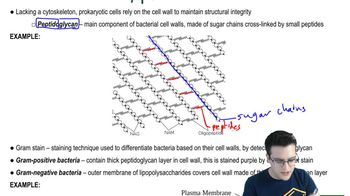
Fungi and plants differ significantly in their cell structure. Plant cells contain chloroplasts for photosynthesis and have a rigid cell wall made of cellulose, while fungal cells have a cell wall composed of chitin. This fundamental difference in cell composition is a key factor in classifying these organisms into separate kingdoms.
Recommended video:
Guided course
09:28
Prokaryotic Cell Structures 1

Nutritional Modes

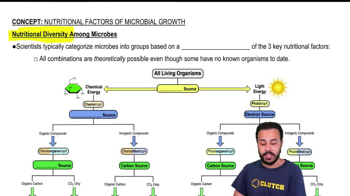
Plants are autotrophic, meaning they produce their own food through photosynthesis, utilizing sunlight, carbon dioxide, and water. In contrast, fungi are heterotrophic; they absorb nutrients from their environment by breaking down organic matter. This distinction in how they obtain energy is crucial for their classification.
Recommended video:
Guided course
05:58
Nutritional Diversity Among Microbes

Reproductive Strategies

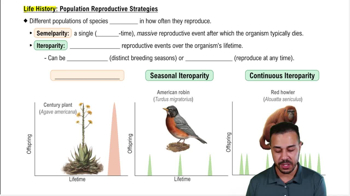
Fungi and plants also exhibit different reproductive strategies. Plants typically reproduce sexually through seeds and asexual methods like vegetative propagation, while fungi reproduce through spores, which can be produced sexually or asexually. These reproductive differences further support their classification into distinct kingdoms.
Recommended video:
Guided course
02:51
Life History: Population Reproductive Strategies
Related Practice
Textbook Question

Which of the following groups is made up exclusively of fungi that form symbioses with plant roots?

a. Ascomycetes

b. Basidiomycetes

c. Glomeromycetes

d. Zygomycetes

1340
views
Textbook Question
Compare a seed plant with an alga in terms of adaptations for life on land versus life in the water.
751
views
Textbook Question

How do animals help flowering plants reproduce? How do the animals benefit?

1394
views
Textbook Question

Truffles (the fungi, not the chocolates) are the reproductive bodies of ascomycetes that form mycorrhizae with certain tree species. They are highly prized by gourmets for the delicious scent they add to food. Because truffles grow underground, they are difficult to find—human noses are not sensitive enough to locate them. Many animals, however, are excellent truffle hunters and eagerly consume the fungi. Why would these fungi produce a scent that attracts fungus-eating animals?

1057
views
Textbook Question

In April 1986, an accident at a nuclear power plant in Chernobyl, Ukraine, scattered radioactive fallout for hundreds of miles. In assessing the biological effects of the radiation, researchers found mosses to be especially valuable as organisms for monitoring the damage. Radiation damages organisms by causing mutations. Explain why it is faster to observe the genetic effects of radiation on mosses than on plants from other groups. Imagine that you are conducting tests shortly after a nuclear accident. Using potted moss plants as your experimental organisms, design an experiment to test the hypothesis that the frequency of mutations decreases with the organism's distance from the source of radiation.

1410
views
Textbook Question

As you learned in Module 17.18, symbiotic relationships with mycorrhizal fungi are found in almost all present-day plant lineages. Mosses are a major exception—most mosses lack mycorrhizal associations. Assuming that mycorrhizae were a key factor in the colonization of land by plants, propose an explanation for the absence of mycorrhizae in present-day moss lineages.

1038
views