Pearson+ LogoPearson+ Logo
Ch. 17 The Evolution of Plant and Fungal Diversity
Taylor - Campbell Biology: Concepts & Connections 10th Edition
Taylor, Simon, Dickey, Hogan10th EditionCampbell Biology: Concepts & ConnectionsISBN: 9780136538783Not the one you use?Change textbook
Chapter 17, Problem 9

Which of the following groups is made up exclusively of fungi that form symbioses with plant roots?
a. Ascomycetes
b. Basidiomycetes
c. Glomeromycetes
d. Zygomycetes

Verified step by step guidance
1
Understand the concept of symbiosis: Symbiosis refers to a close and long-term biological interaction between two different organisms. In this case, the question is asking about fungi that form symbiotic relationships specifically with plant roots.
Review the characteristics of fungal groups: Each fungal group has distinct features and ecological roles. For example, ascomycetes and basidiomycetes include fungi with diverse lifestyles, but not all form symbioses with plant roots. Zygomycetes are primarily known for their role in decomposing organic matter.
Focus on glomeromycetes: Glomeromycetes are a group of fungi that are exclusively known for forming arbuscular mycorrhizal symbioses with plant roots. These fungi help plants absorb nutrients like phosphorus from the soil, while the plants provide carbohydrates to the fungi.
Eliminate incorrect options: Based on the information above, ascomycetes, basidiomycetes, and zygomycetes are not exclusively associated with forming symbioses with plant roots. Glomeromycetes are the correct group for this specific ecological role.
Conclude the reasoning: The correct answer is glomeromycetes because they are the only fungal group that exclusively forms symbiotic relationships with plant roots, aiding in nutrient exchange and plant growth.

Verified video answer for a similar problem:

This video solution was recommended by our tutors as helpful for the problem above.
Video duration:
1m
Was this helpful?

Key Concepts

Here are the essential concepts you must grasp in order to answer the question correctly.

Fungal Symbiosis

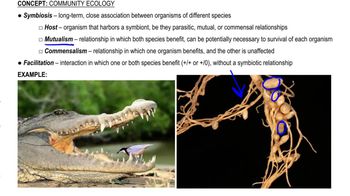
Fungal symbiosis refers to the mutually beneficial relationships formed between fungi and other organisms, particularly plants. In these associations, fungi can enhance nutrient uptake for plants, while receiving carbohydrates and other organic compounds in return. This interaction is crucial for plant health and ecosystem functioning.
Recommended video:

Glomeromycetes

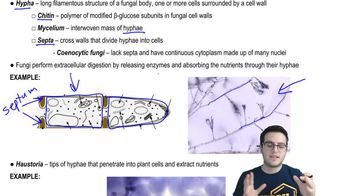
Glomeromycetes are a group of fungi known for forming arbuscular mycorrhizal associations with the roots of most terrestrial plants. These fungi penetrate plant root cells, facilitating the exchange of nutrients, particularly phosphorus, which is vital for plant growth. This group is essential for soil health and plant nutrition.

Mycorrhizae

Mycorrhizae are the symbiotic associations between fungi and plant roots, which can be classified into different types, including arbuscular mycorrhizae formed by glomeromycetes. These relationships improve water and nutrient absorption for plants, while the fungi benefit from organic carbon produced by the plants, highlighting their ecological importance.
Recommended video: