
Pearson+ LogoPearson+ Logo
Ch. 32 Plant Nutrition and Transport
Taylor - Campbell Biology: Concepts & Connections 10th Edition
Taylor, Simon, Dickey, Hogan10th EditionCampbell Biology: Concepts & ConnectionsISBN: 9780136538783Not the one you use?Change textbook
Chapter 32, Problem 10

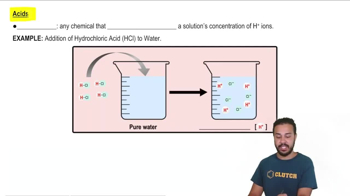
Acid rain contains an excess of hydrogen ions (H+). One effect of acid rain is to deplete the soil of plant nutrients such as calcium (Ca²⁺), potassium (K⁺), and magnesium (Mg²⁺).
Offer a hypothesis to explain why acid rain washes these nutrients from the soil.
How might you test your hypothesis?

Verified step by step guidance
1
Step 1: Understand the chemical interactions involved. Acid rain contains an excess of hydrogen ions (H⁺). These ions can interact with soil particles, which often have negatively charged surfaces that bind positively charged nutrients like calcium (Ca²⁺), potassium (K⁺), and magnesium (Mg²⁺). The H⁺ ions from acid rain can displace these nutrient ions due to competitive binding.
Step 2: Formulate a hypothesis. A possible hypothesis is: 'The hydrogen ions (H⁺) in acid rain displace nutrient ions (Ca²⁺, K⁺, Mg²⁺) from soil particles, causing these nutrients to leach out of the soil and become unavailable to plants.'
Step 3: Design an experiment to test the hypothesis. Collect soil samples and divide them into two groups: one treated with acidified water (simulating acid rain) and the other treated with neutral water (control group). Ensure both groups are exposed to the same environmental conditions.
Step 4: Measure nutrient levels in the soil and leachate. After treatment, analyze the soil samples for concentrations of calcium (Ca²⁺), potassium (K⁺), and magnesium (Mg²⁺). Additionally, collect and analyze the water that drains from the soil (leachate) to determine if these nutrients have been washed out.
Step 5: Compare results between the experimental and control groups. If the acidified water group shows lower nutrient levels in the soil and higher nutrient levels in the leachate compared to the control group, this supports the hypothesis that acid rain causes nutrient leaching by displacing nutrient ions with hydrogen ions.

Verified video answer for a similar problem:

This video solution was recommended by our tutors as helpful for the problem above.
Video duration:
2m
Was this helpful?

Key Concepts

Here are the essential concepts you must grasp in order to answer the question correctly.

Acid Rain

Acid rain is precipitation that has a lower pH than normal rainwater, primarily due to the presence of sulfuric and nitric acids formed from atmospheric pollutants. This increased acidity can lead to harmful environmental effects, including the leaching of essential nutrients from the soil, which can adversely affect plant growth and soil health.
Recommended video:

Nutrient Leaching

Nutrient leaching refers to the process by which soluble substances, such as minerals and nutrients, are washed out of the soil by water. In the case of acid rain, the excess hydrogen ions can displace positively charged nutrient ions like calcium, potassium, and magnesium, leading to their removal from the soil and reducing their availability to plants.
Recommended video:
Guided course
03:25
Soil Nutrients

Soil Chemistry

Soil chemistry involves the study of the chemical composition and properties of soil, including its pH, nutrient content, and the interactions between soil particles and ions. Understanding soil chemistry is crucial for predicting how changes in pH, such as those caused by acid rain, can affect nutrient availability and overall soil fertility.
Recommended video:
Guided course
06:13
Soil Composition
Related Practice
Textbook Question

Transpiration is fastest when humidity is low and temperature is high, but in some plants it seems to increase in response to light as well. During one 12-hour period when cloud cover and light intensity varied frequently, a scientist studying a certain crop plant recorded the data in the table (top right). (The transpiration rates are grams of water per square meter of leaf area per hour.)

Do these data support the hypothesis that the plants transpire more when the light is more intense?

If so, is the effect independent of temperature and humidity?

Explain your answer. (Hint: Look for overall trends in each column, and then compare pairs of data within each column and between columns.)

2367
views
Textbook Question
Certain types of fungi cause diseases in plants. There are a variety of antifungal sprays that can be used to control this problem. Some gardeners constantly spray their plants with fungicides, even when no signs of disease are evident. How might this be disadvantageous to the plant?
1102
views
Textbook Question
If the apples you buy are labeled 'organic,' does that tell you anything about how they were grown? About the nutritional content of the apples?
771
views
Textbook Question
Agriculture is by far the biggest user of water in arid western states, including Colorado, Arizona, and California. The populations of these states are growing, and there is an ongoing conflict between cities and farm regions over water. To ensure water supplies for urban growth, cities are purchasing water rights from farmers. This is often the least expensive way for a city to obtain more water, and some farmers can make more money selling water than growing crops. Discuss the possible consequences of this trend. Is this the best way to allocate water for all concerned? Why or why not?
903
views
Textbook Question

One of the most important properties of proper scientific investigations is their repeatability. Yet, as discussed in Module 32.11, studies that compare the nutritional content of conventional and organic produce sometimes produce contradictory results. Name some possible confounding factors that can account for such uneven results.

771
views