Pearson+ LogoPearson+ Logo
Ch. 31 Plant Structure, Growth, and Reproduction
Taylor - Campbell Biology: Concepts & Connections 10th Edition
Taylor, Simon, Dickey, Hogan10th EditionCampbell Biology: Concepts & ConnectionsISBN: 9780136538783Not the one you use?Change textbook
Chapter 31, Problem 11

How does a fruit develop from a flower?

Verified step by step guidance
1
Understand the structure of a flower: A typical flower consists of male parts (stamens) and female parts (carpels or pistils). The stamens produce pollen, while the carpels contain the ovary, which houses the ovules.
Pollination process: Pollination occurs when pollen from the stamens is transferred to the stigma of a carpel, either from the same flower or a different one. This can happen through various agents like wind, water, or animals, particularly insects.
Fertilization: After pollination, a pollen tube grows from the pollen grain, through the style, and into the ovary. The sperm cells travel down this tube and fertilize the ovules inside the ovary.
Development of the fruit: Post-fertilization, the fertilized ovules develop into seeds. Simultaneously, the ovary begins to grow and transforms into a fruit. The fruit's structure and type depend on the flower and serve primarily to protect the seeds and aid in their dispersal.
Maturation and seed dispersal: The fruit matures and eventually disperses the seeds, completing the plant's reproductive cycle. Seed dispersal mechanisms vary widely among plants and can include factors like being eaten by animals, floating on water, or being blown by the wind.

Verified video answer for a similar problem:

This video solution was recommended by our tutors as helpful for the problem above.
Video duration:
1m
Was this helpful?

Key Concepts

Here are the essential concepts you must grasp in order to answer the question correctly.

Pollination

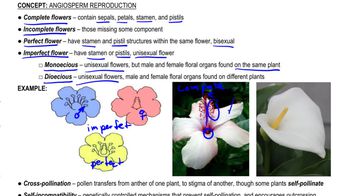
Pollination is the process by which pollen from the male anthers of a flower is transferred to the female stigma. This can occur through various agents such as wind, water, or animals, particularly insects. Successful pollination is crucial for fertilization, which leads to the development of seeds and ultimately fruit.
Recommended video:

Fertilization

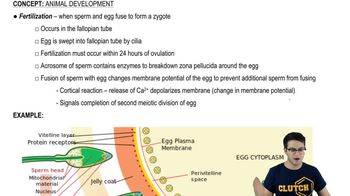
Fertilization occurs when a sperm cell from the pollen grain fuses with an ovule in the ovary of the flower. This union results in the formation of a zygote, which will develop into a seed. The fertilization process is essential for the genetic combination of the parent plants and the subsequent development of fruit.
Recommended video:
Guided course
01:59
Fertilization

Fruit Development

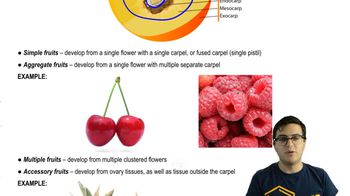
Fruit development begins after fertilization, where the ovary of the flower matures into a fruit. This process involves the growth of the ovary wall and the formation of seeds within. Fruits serve to protect the seeds and aid in their dispersal, ensuring the continuation of the plant species.
Recommended video: