Pearson+ LogoPearson+ Logo
Ch. 19 The Evolution of Vertebrate Diversity
Taylor - Campbell Biology: Concepts & Connections 10th Edition
Taylor, Simon, Dickey, Hogan10th EditionCampbell Biology: Concepts & ConnectionsISBN: 9780136538783Not the one you use?Change textbook
Chapter 19, Problem 8

Studies of DNA support which of the following?
a. Members of the group called australopiths were the first to migrate from Africa.
b. Homo sapiens originated in Africa.
c. Sahelanthropus was the earliest hominin.
d. Chimpanzees are more similar to gorillas and orangutans than to humans.

Verified step by step guidance
1
Step 1: Begin by understanding the context of the question, which involves evolutionary biology and the study of DNA to trace the origins and relationships of species.
Step 2: Recall that DNA studies are used to determine genetic relationships and evolutionary history. Specifically, mitochondrial DNA and nuclear DNA analyses have provided evidence about the origins of Homo sapiens and their migration patterns.
Step 3: Review the 'Out of Africa' hypothesis, which is supported by DNA evidence. This hypothesis states that Homo sapiens originated in Africa and later migrated to other parts of the world.
Step 4: Consider the other options provided in the question. For example, australopiths were early hominins but not the first to migrate from Africa, and Sahelanthropus is considered one of the earliest hominins but not directly related to DNA studies supporting migration patterns.
Step 5: Evaluate the relationship between humans and other primates. DNA studies show that humans are more closely related to chimpanzees than to gorillas or orangutans, which contradicts option d. Based on this analysis, the correct answer is likely related to Homo sapiens originating in Africa.

Verified video answer for a similar problem:

This video solution was recommended by our tutors as helpful for the problem above.
Video duration:
1m
Was this helpful?

Key Concepts

Here are the essential concepts you must grasp in order to answer the question correctly.

Human Evolution

Human evolution refers to the lengthy process of change by which people originated from apelike ancestors. This process is supported by fossil evidence and genetic studies, which trace the lineage of modern humans (Homo sapiens) back to Africa, highlighting the significance of Africa as the cradle of human evolution.
Recommended video:
Guided course
02:58
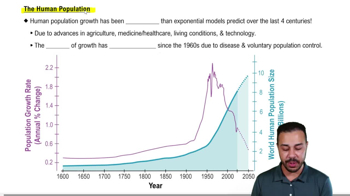
The Human Population

Mitochondrial DNA and Genetic Evidence

Mitochondrial DNA (mtDNA) is inherited maternally and has been used to trace lineage and migration patterns of humans. Genetic studies have shown that all modern humans share a common ancestor from Africa, supporting the theory that Homo sapiens originated there and migrated to other parts of the world.
Recommended video:
Guided course
04:45
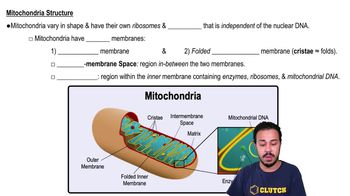
Mitochondria Structure

Comparative Genomics

Comparative genomics involves comparing the genomes of different species to understand evolutionary relationships. Studies have shown that humans share a significant amount of genetic material with chimpanzees, indicating a close evolutionary relationship, while also revealing differences that distinguish humans from other primates like gorillas and orangutans.
Recommended video:
Guided course
05:30
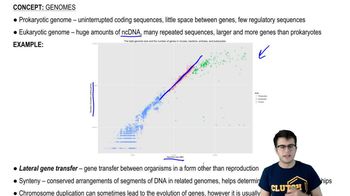
Genomes and Genome Evolution