Pearson+ LogoPearson+ Logo
Ch. 9 - Cellular Respiration and Fermentation
Freeman - Biological Science 7th Edition
Freeman7th EditionBiological ScienceISBN: 9783584863285Not the one you use?Change textbook
Chapter 9, Problem 8

The researchers who observed that magnetite was produced by bacterial cultures from the deep subsurface carried out a follow-up experiment. These biologists treated some of the cultures with a drug that poisons the enzymes involved in electron transport chains. In cultures where the drug was present, no more magnetite was produced. Does this result support or undermine their hypothesis that the bacteria in the cultures perform cellular respiration? Explain your reasoning.

Verified step by step guidance
1
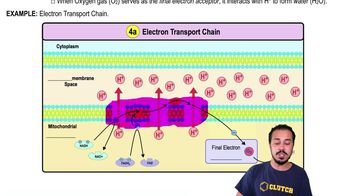
Identify the role of electron transport chains in cellular respiration. Electron transport chains are a series of complexes that transfer electrons from electron donors to electron acceptors via redox reactions, and couple this electron transfer with the transfer of protons (H+ ions) across a membrane. This process creates an electrochemical proton gradient that drives the synthesis of ATP, which is the main energy currency of the cell.
Understand the function of the drug used in the experiment. The drug poisons the enzymes involved in the electron transport chains, effectively inhibiting the process of electron transfer and the subsequent production of ATP.
Relate the inhibition of the electron transport chain to the production of magnetite. Magnetite production in bacteria often involves the reduction of iron, a process that can be linked to the electron transport chain activity. If the electron transport chain is inhibited, the bacteria may not be able to reduce iron to form magnetite.
Analyze the experimental results. In the presence of the drug, no magnetite was produced, suggesting that the normal function of the electron transport chain is crucial for the production of magnetite in these bacteria.
Conclude whether the results support or undermine the hypothesis. Since the inhibition of the electron transport chain (a key component of cellular respiration) stops the production of magnetite, this supports the hypothesis that the bacteria perform cellular respiration, using the electron transport chain to drive processes such as magnetite production.

Verified video answer for a similar problem:

This video solution was recommended by our tutors as helpful for the problem above.
Video duration:
3m
Was this helpful?

Key Concepts

Here are the essential concepts you must grasp in order to answer the question correctly.

Cellular Respiration

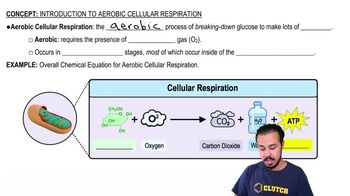
Cellular respiration is a metabolic process in which cells convert nutrients into energy, primarily in the form of ATP, while producing waste products. This process typically involves glycolysis, the Krebs cycle, and the electron transport chain. In bacteria, this can occur anaerobically or aerobically, depending on the organism and environmental conditions.
Recommended video:
Guided course
03:39
Introduction to Cellular Respiration

Electron Transport Chain (ETC)

The electron transport chain is a series of protein complexes located in the inner mitochondrial membrane (or plasma membrane in bacteria) that facilitate the transfer of electrons derived from nutrients. This process generates a proton gradient that drives ATP synthesis. Inhibition of the ETC can severely disrupt cellular respiration, leading to reduced energy production and metabolic byproducts.
Recommended video:
Guided course
07:41
Electron Transport Chain

Magnetite Production

Magnetite is a magnetic iron oxide produced by certain bacteria as a byproduct of their metabolic processes, often linked to their respiratory activities. The production of magnetite can indicate the presence of specific metabolic pathways, including those involved in electron transport. If magnetite production ceases when the ETC is inhibited, it suggests that the bacteria rely on cellular respiration for its synthesis.
Recommended video:
Guided course
04:36
Primary Production in Aquatic Ecosystems