 Back
BackElasticity of Demand- Chapter 3
Study Guide - Smart Notes
 Tailored notes based on your materials, expanded with key definitions, examples, and context.
Additional Derivative Topics
Elasticity of Demand
Elasticity of demand is a fundamental concept in business calculus, used to analyze how changes in price affect the demand for a product and the resulting revenue. Economists use elasticity to determine whether increasing the price will increase or decrease total revenue.
Definition: Elasticity of demand measures the responsiveness of the quantity demanded to changes in price.
Price-Demand Equation: The relationship between price (p) and demand (x) is often given by a price-demand equation.
Revenue Impact: An increase in price may decrease the number of items sold, potentially reducing revenue, or it may increase revenue if the decrease in demand is not significant.
Defining Relative and Percentage Rates of Change
Relative and percentage rates of change are used to compare how a function changes with respect to its current value. These concepts are especially useful in economics and finance for comparing growth rates.
Relative Rate of Change: For a function f(x), the relative rate of change is given by .
Percentage Rate of Change: The percentage rate of change is .
Logarithmic Derivative: The relative rate of change is also known as the logarithmic derivative.
Example: Comparing Stock Gains
Suppose two stocks have different absolute gains but different initial prices. The relative rate of change provides a fair comparison:
Stock A: Price increases by $45,767 from $249,711.
Stock B: Price increases by $59.37 from $113.30.
Relative rate of change for Stock A:
Relative rate of change for Stock B:
Stock B has a higher relative rate of change, making it a better investment in terms of percentage gain.
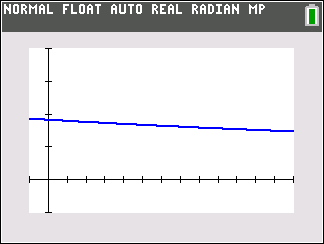
Example: Percentage Rate of Change of GDP
A model for GDP is given, and the percentage rate of change is calculated and graphed. Even if GDP is increasing, the percentage rate of change may decrease over time.
Formula:
Interpretation: The percentage rate of change shows how rapidly GDP is growing relative to its current value.
Elasticity of Demand: Formula and Interpretation
The elasticity of demand at price p is defined mathematically and used to interpret how demand responds to price changes.
Formula: If price and demand are related by a price-demand equation, elasticity is .
Interpretation: Elasticity quantifies the percentage change in demand for a percentage change in price.
Example: Calculating Elasticity
Given a price-demand equation, solve for demand as a function of price and compute elasticity at various prices.
At low prices, demand is more sensitive (elastic).
At high prices, demand is less sensitive (inelastic).
Unit elasticity occurs when the percentage change in price equals the percentage change in demand.
Classifying Elasticity of Demand
Elasticity can be classified into three categories based on its value:
Inelastic Demand: — Demand is not sensitive to price changes; price increases raise revenue.
Elastic Demand: — Demand is sensitive to price changes; price increases lower revenue.
Unit Elasticity: — Percentage change in price equals percentage change in demand.
Example: Classifying Elasticity
For a given price-demand equation, calculate elasticity at different prices and classify:
At , demand is inelastic.
At , demand has unit elasticity.
At , demand is elastic.
Revenue and Elasticity of Demand
The relationship between revenue and elasticity is crucial for pricing strategies:
Inelastic Demand: Price increases lead to higher revenue; price decreases lead to lower revenue.
Elastic Demand: Price increases lead to lower revenue; price decreases lead to higher revenue.
Elasticity of Demand for Different Products
Elasticity varies by product type and market conditions:
Elastic Products: Luxury items and products with close substitutes (e.g., jewelry, furs, furniture) tend to have high elasticity.
Inelastic Products: Necessities and products with few substitutes (e.g., milk, eggs, sugar, light bulbs) tend to have low elasticity.
Product Type | Elasticity | Revenue Impact |
|---|---|---|
Luxury (Jewelry, Furs) | High (Elastic) | Price increase decreases demand and revenue |
Necessity (Milk, Eggs) | Low (Inelastic) | Price increase increases revenue |
Substitutes Available | High (Elastic) | Price increase decreases demand |
No Substitutes | Low (Inelastic) | Price increase increases revenue |
