 Back
BackBusiness Statistics: Introduction to Probability and Counting Principles
Study Guide - Smart Notes
 Tailored notes based on your materials, expanded with key definitions, examples, and context.
Introduction to Probability
Basic Concepts of Probability
Probability is a measure of how likely an event is to occur, expressed as a value between 0 and 1. The set of all possible outcomes of an experiment is called the sample space.
Theoretical Probability: Calculated based on possible outcomes before events occur.
Empirical (Experimental) Probability: Calculated after events occur, based on observed data.
Formula:
Example: When rolling a six-sided die, the probability of rolling a number greater than 3 is (numbers 4, 5, 6).
Sample Space
The sample space is the set of all possible outcomes. For example, flipping a coin yields .
Practice Problems
Probability of randomly selecting a quarter from a purse with 3 quarters, 4 nickels, and 2 dimes: .
Probability of wearing jeans in a group: .
Complementary Events
Definition and Properties
The complement of an event A (written as or ) consists of all outcomes where A does not occur. The total probability of all possible events is always 1.
Formula:
Complement Probability:
Example: Probability of not rolling a 4 on a six-sided die:
Practice Problems
Probability of not drawing a queen from a deck:
Probability of not drawing a green marble when red or yellow is drawn 6 out of 8 times:
Addition Rule for Probability
Mutually Exclusive Events
Events are mutually exclusive if they cannot occur at the same time. The probability of either event A or B occurring is the sum of their individual probabilities.
Formula:
Example: Probability of rolling a 3 or a 5:
Non-Mutually Exclusive Events
Events are not mutually exclusive if they can occur together. The probability of A or B is the sum of their probabilities minus the probability of both occurring.
Formula:
Example: Probability of rolling a number greater than 3 or an even number on a die.
Practice Problems
Probability of drawing a diamond or a king from a deck:
Multiplication Rule for Probability
Independent Events
Events are independent if the occurrence of one does not affect the other. The probability of both events occurring is the product of their probabilities.
Formula:
Example: Probability of getting heads on two consecutive coin flips:
Dependent Events
Events are dependent if the occurrence of one affects the probability of the other. Multiply the probability of the first event by the conditional probability of the second event given the first.
Formula:
Example: Drawing and keeping a blue marble, then drawing a red marble from a bag.
Practice Problems
Probability of drawing two aces from a deck without replacement.
Probability of choosing two nonfiction books from a list.


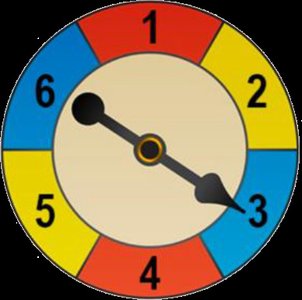
Contingency Tables
Finding Probabilities from Contingency Tables
A contingency table displays frequencies for two categorical variables. Probabilities can be calculated as:
Marginal Probability: Probability of an entire row or column.
Joint Probability: Probability of two events happening together.
Conditional Probability: Probability of one event given another has occurred.
Grade | Drives a Car (Yes) | Drives a Car (No) | Total |
|---|---|---|---|
Senior | 40 | 10 | 50 |
Junior | 20 | 30 | 50 |
Total | 60 | 40 | 100 |
Example: Probability that a randomly selected student is a senior and drives a car:
Conditional Probability and Bayes' Theorem
Conditional Probability
Conditional probability is the probability of event B given event A has occurred.
Formula:
Example: Probability a student has a math major given they have a science major.
Bayes' Theorem
Bayes' Theorem allows calculation of conditional probabilities when direct probabilities are unknown.
Formula:
Example: Probability a marble came from the left bag given it is red.


Counting Principles
Fundamental Counting Principle
The Fundamental Counting Principle states that if there are ways to do one thing and ways to do another, there are ways to do both.
Example: 3 shirts and 4 pants yield outfits.

Permutations
Permutations are arrangements of objects where order matters. The formula for the number of permutations of objects from options is:
Formula:
Example: Ways to arrange 5 shirts for 5 days:
Permutations of Non-Distinct Objects
When objects are not distinct, divide by the factorials of identical objects.
Formula:
Example: Ways to arrange the letters in BANANA:
Combinations
Combinations are selections of objects where order does not matter. The formula is:
Formula:
Example: Ways to select 2 flavors from 32:
Permutations vs. Combinations
Type | Order Matters? | Formula |
|---|---|---|
Permutation | Yes | |
Combination | No |
Example: Ways to form a team of 4 from 9 people:
Summary
This guide covers the foundational concepts of probability, including theoretical and empirical probability, complements, addition and multiplication rules, conditional probability, Bayes' theorem, and counting principles such as permutations and combinations. These concepts are essential for analyzing uncertainty and making informed decisions in business statistics.
