 Back
BackProbability Distributions: Discrete and Continuous Random Variables
Study Guide - Smart Notes
 Tailored notes based on your materials, expanded with key definitions, examples, and context.
Continuous Probability Distributions
Definition and Example
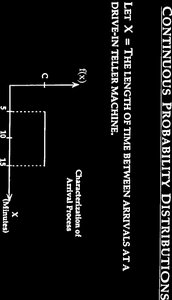
Continuous probability distributions describe the probabilities of the possible values of a continuous random variable. For example, let X be the length of time between arrivals at a drive-in teller machine. The probability distribution of X can be represented graphically and mathematically.
Functional Form of a Continuous Probability Distribution
The probability density function (pdf) for a continuous random variable X is defined as follows:
f(x) = c for 5 < x < 15
f(x) = 0 otherwise
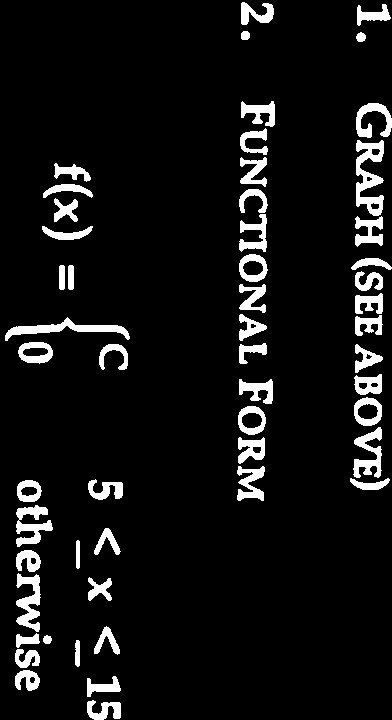
Here, c is a constant that ensures the total probability is 1.
Requirements for a Probability Density Function
For f(x) to be a valid probability distribution, the following must be true:
f(x) ≥ 0 for all x
The total area under the curve must equal 1:

Calculating Probabilities for Continuous Random Variables
Probabilities for continuous random variables are calculated as the area under the probability density function between two points:

For example, to find , use:

Uniform Distribution Example
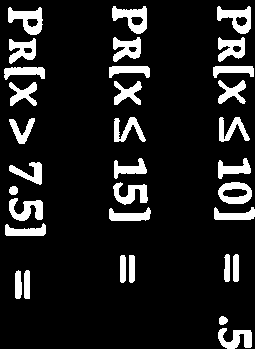
For the uniform distribution defined above, the probability that X falls within a certain interval is proportional to the length of that interval. For example:
(to be calculated)
Using Probability Distributions to Characterize Populations and Processes
Discrete Probability Distributions
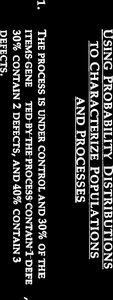
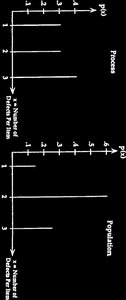
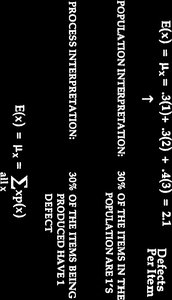
Discrete probability distributions describe the probability of each possible value of a discrete random variable. For example, consider a process where items can have 1, 2, or 3 defects with probabilities 0.3, 0.3, and 0.4, respectively.
Population and Process Interpretation
Suppose a production run generated 1000 items: 150 with 1 defect, 600 with 2 defects, and 250 with 3 defects. The probability distribution can be visualized as follows:
Mean (Expected Value) of a Probability Distribution
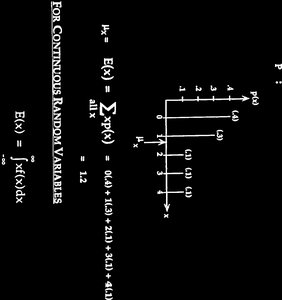
The mean or expected value of a probability distribution is a measure of central tendency. For a discrete random variable, it is calculated as:
For a continuous random variable:
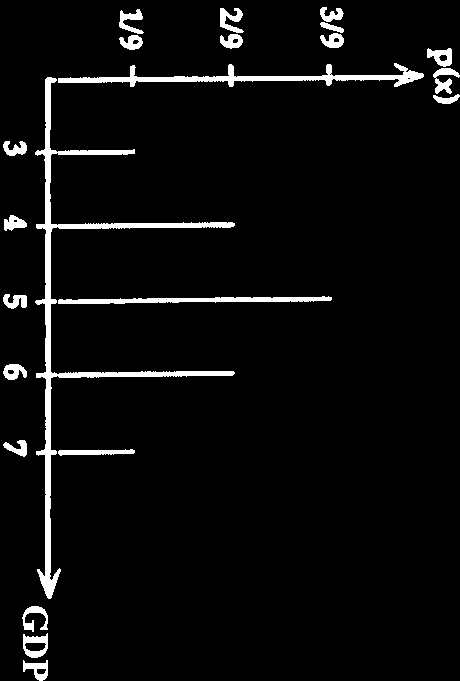
Variance and Standard Deviation of a Random Variable
The variance measures the spread of the distribution. For a discrete random variable:
For a continuous random variable:
Special Probability Distributions
Uniform Distribution
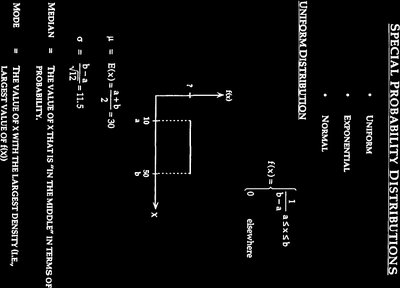
The uniform distribution is a continuous probability distribution where all intervals of the same length within the distribution's range are equally probable. The pdf is:
for
Exponential Distribution
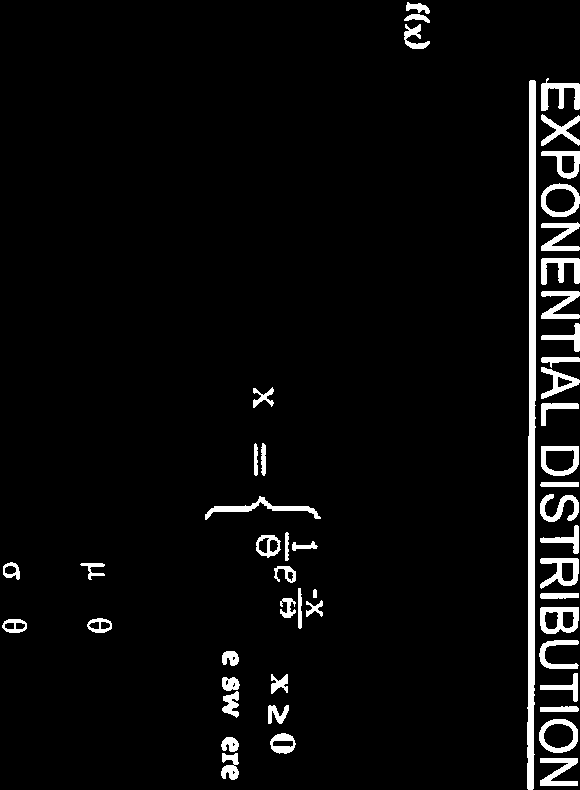
The exponential distribution is used to model the time between events in a Poisson process. The pdf is:
for
where is the mean (average time between arrivals).
Normal Probability Distribution
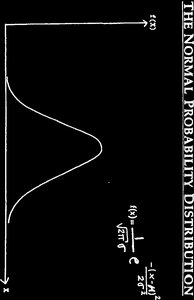
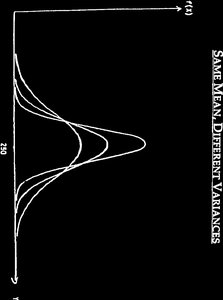
The normal distribution is a continuous probability distribution characterized by its bell-shaped curve. The pdf is:
Standard Normal Distribution and Z-Transformation
Any normal distribution can be transformed into the standard normal distribution (mean 0, standard deviation 1) using the Z-transformation:
Using the Normal Table
The normal table (Z-table) provides the area under the standard normal curve to the left of a given Z value. This area represents the probability that a standard normal random variable is less than or equal to Z.
Example: Calculating Probabilities with the Normal Distribution
Suppose the sales manager believes that next year's sales are normally distributed with mean 10,000 and standard deviation 2500. To find the probability that sales are less than or equal to 9000:
Calculate Z:
Look up the area for Z = -0.4 in the normal table:

Summary Table: Key Probability Distributions
Distribution | Mean | Variance | |
|---|---|---|---|
Uniform | for | ||
Exponential | for | ||
Normal |
