 Back
BackCalculus Chapter 3 Review: Critical Points, Extrema, Concavity, and Applications
Study Guide - Smart Notes
 Tailored notes based on your materials, expanded with key definitions, examples, and context.
Q1. Sketch the graph that possesses the characteristics listed:
It is concave down at (1,4), concave up at (5,-6), and has an inflection point at (3,-1). Choose the correct graph below.
Background
Topic: Concavity and Inflection Points
This question tests your understanding of how to identify and sketch graphs based on concavity and inflection points.
Key Terms:
Concave up: The graph is shaped like a cup (second derivative > 0).
Concave down: The graph is shaped like a cap (second derivative < 0).
Inflection point: Where the graph changes concavity.
Step-by-Step Guidance
Identify the regions of concavity: At (1,4) the graph is concave down, at (5,-6) it is concave up.
Locate the inflection point at (3,-1): This is where the graph changes from concave down to concave up or vice versa.
Sketch or select the graph that matches these features, making sure the inflection point is at (3,-1).
Check that the graph transitions from concave down to concave up at the inflection point.
Try solving on your own before revealing the answer!
Q2. Find a) any critical values and b) any relative extrema for
Background
Topic: Critical Points and Relative Extrema
This question tests your ability to find critical points and relative extrema using derivatives.
Key Terms and Formulas:
Critical value: Where or does not exist.
Relative extrema: Local maximum or minimum values.
Product Rule:
Step-by-Step Guidance
Find the derivative using the product rule:
Simplify the derivative and set to find critical values.
Check where does not exist (if any).
Use the first or second derivative test to determine if the critical values are relative maxima or minima.
Try solving on your own before revealing the answer!
Q3. For the function , find the absolute maximum and minimum values over the interval .
Background
Topic: Absolute Extrema on a Closed Interval
This question tests your ability to find absolute maximum and minimum values using calculus techniques.
Key Terms and Formulas:
Absolute maximum/minimum: Highest/lowest value of on the interval.
Critical points: Where or does not exist.
Check endpoints: Evaluate at and .
Step-by-Step Guidance
Find and solve to find critical points within .
Evaluate at each critical point and at the endpoints and .
Compare these values to determine which is the absolute maximum and minimum.
Be sure to check all points in the interval, including endpoints.
Try solving on your own before revealing the answer!
Q4. For , find any relative extrema.
Background
Topic: Relative Extrema and Critical Points
This question tests your ability to use derivatives to find relative maxima and minima.
Key Terms and Formulas:
Relative extrema: Local maximum or minimum values.
Critical points: Where or does not exist.
Product Rule:
Step-by-Step Guidance
Find using the product rule:
Simplify and set to find critical points.
Use the first or second derivative test to classify the critical points as relative maxima or minima.
Check if is undefined anywhere.
Try solving on your own before revealing the answer!
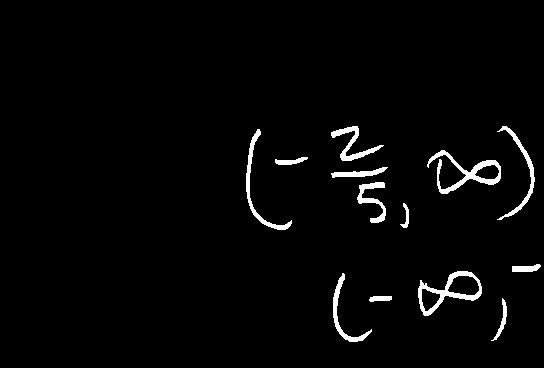
Q5. For , find the coordinates of the relative extrema and intervals of increase/decrease.
Background
Topic: Relative Extrema, Increasing/Decreasing Intervals
This question tests your ability to use derivatives to find where a function is increasing, decreasing, and its relative extrema.
Key Terms and Formulas:
Relative extrema: Local maximum or minimum values.
Increasing/Decreasing: Determined by the sign of .
Critical points: Where or does not exist.
Step-by-Step Guidance
Find and solve to find critical points.
Use the first derivative test to determine intervals of increase and decrease.
Classify the critical points as relative maxima or minima.
Write the intervals in proper notation.
Try solving on your own before revealing the answer!



Q6. An employee's monthly productivity , . Find the maximum productivity and the year in which it is achieved.
Background
Topic: Optimization and Applications
This question tests your ability to use calculus to optimize a real-world function.
Key Terms and Formulas:
Maximum productivity: Highest value of in the interval.
Critical points: Where or does not exist.
Check endpoints: Evaluate at and .
Step-by-Step Guidance
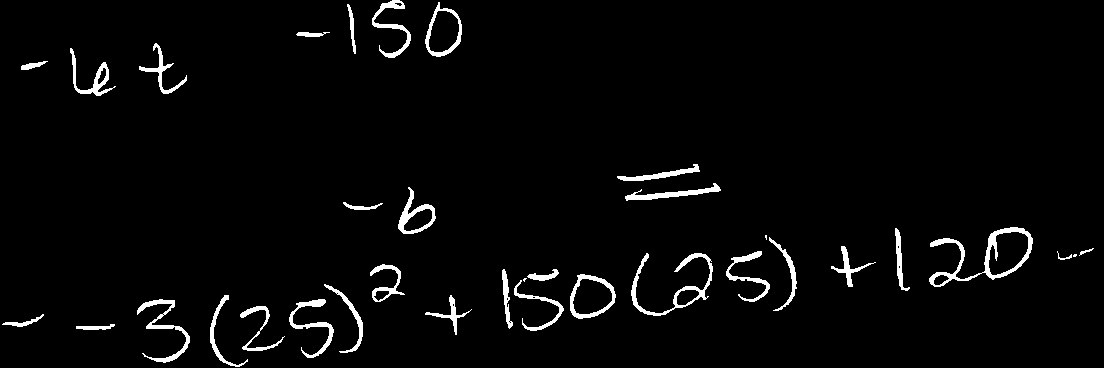
Find and solve to find critical points within .
Evaluate at each critical point and at the endpoints and .
Compare these values to determine the maximum productivity and the year it is achieved.
Be sure to check all points in the interval, including endpoints.
Try solving on your own before revealing the answer!
Final Answer Example (for Q1):
The correct graph is the one that is concave down at (1,4), concave up at (5,-6), and has an inflection point at (3,-1).
We identified the regions of concavity and the inflection point, then matched the graph accordingly.
